


Updated September 2026
In 2025 the market to rent GPU for AI flipped from scarcity to surplus. Prices deflated, capacity exploded, and decentralized networks began aggregating idle GPUs from thousands of owners. This case study distills what changed, why it matters to startups and providers, and how ShareAI turns “dead time” on GPUs and servers into revenue—while giving AI teams cheaper, elastic compute for both training and inference.
Why teams rent GPU for AI in 2025
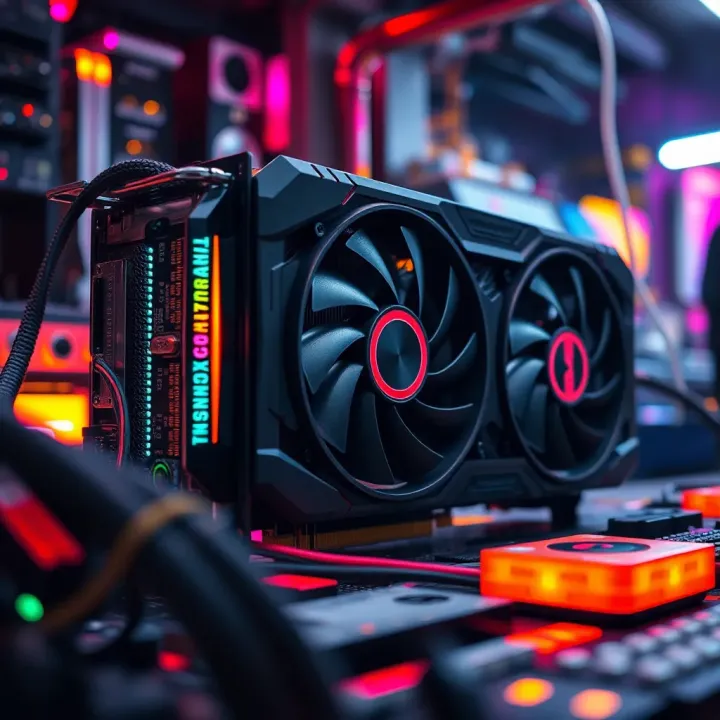
- Inference at scale is the new normal. GenAI apps now serve millions of requests; GPU hours are shifting from training bursts to always-on inference.
- Capacity is plentiful but fragmented. Hyperscalers, specialist clouds, community marketplaces, and decentralized networks all compete—great for buyers, complex to navigate.
- Cost and utilization dominate outcomes. When models are product-critical, shaving 50–80% off GPU cost or boosting utilization by 20–40 points changes business math overnight.
Key takeaway: The winners in 2025 aren’t those who merely rent more GPUs; they’re the ones who use GPUs better—squeezing idle time, placing workloads close to users, and avoiding lock-in premiums. Explore ShareAI’s model landscape to plan your mix: Browse Models or try a quick test in the Playground.
The utilization gap hiding inside every GPU cluster
Even in well-funded environments, GPUs often sit idle waiting on data prep, storage I/O, orchestration, or job scheduling. Typical symptoms include data loaders starving GPUs, bursty training cycles that leave machines quiet for hours or days, and inference that doesn’t always need top-tier training GPUs—leaving expensive cards underutilized.
If you rent GPU for AI the old way (static clusters, single vendor, fixed regions), you pay for this idle time—whether you use it or not.
What changed: pricing deflation + a wider supply graph
- Deflation: On-demand rates for flagship GPUs dropped into the low single digits (USD/hour) across many platforms; specialists and community pools often undercut big clouds.
- Choice: 100+ viable providers plus decentralized networks aggregate individual operators, research labs, and edge sites.
- Elasticity: Capacity can now be pulled together on short notice—if your scheduler and network can find it.
Net effect: buyers get leverage—but only if they can route workloads to the best-fit capacity in real time. For a deeper technical primer, see our Documentation and Releases.
Enter ShareAI: turn dead time into value (for both sides)
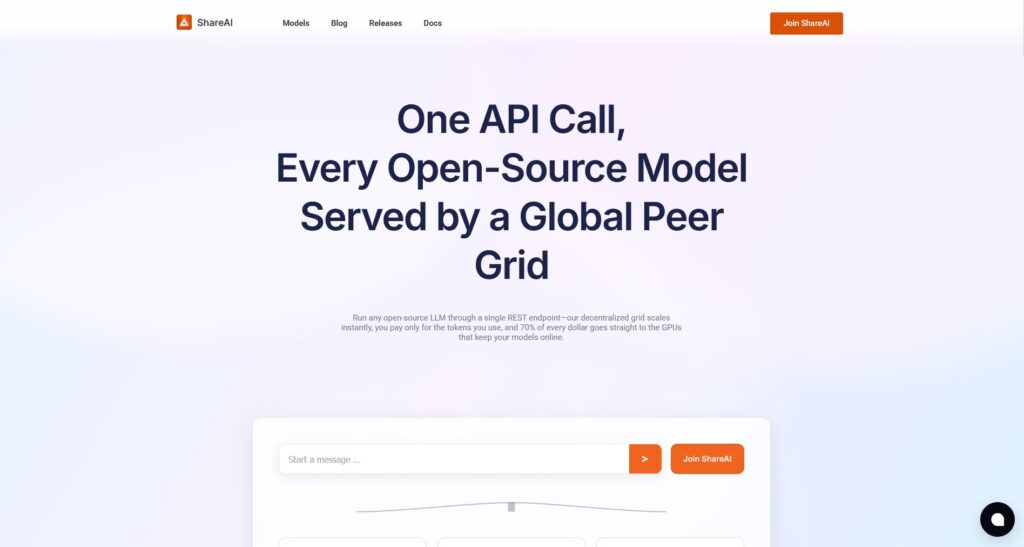
For GPU owners & providers
- Monetize idle windows. If your H100/A100/consumer GPUs aren’t 100% booked, ShareAI lets you sell the gaps—minutes to months—without committing entire machines full-time.
- Keep full control. You choose pricing floors, availability windows, and which workloads run.
- Get paid for what you already own. You’ve sunk capital into gear; ShareAI converts “dead time” into predictable income instead of depreciation.
- Provider facts: installers for Windows/Ubuntu/macOS/Docker; idle-time friendly scheduling; transparent rewards for uptime, reliability, and throughput; preferential exposure as reliability rises.
Ready to set up? Start with the Provider Guide. You can also fine-tune Sign in or Sign up to access provider settings like Rewards, Exchange, and region policies.
For AI teams (startups, MLEs, researchers)
- Lower effective $/token and $/step. Dynamic placement pushes non-urgent or interruptible jobs to lower-cost nodes; latency-sensitive inference routes closer to end users.
- Hybrid by default. Keep “must-have” capacity where you want it; overflow and experiments spill onto ShareAI’s decentralized pool.
- Less vendor lock-in. Mix and match providers without rewriting your stack.
- Better real-world utilization. Our orchestration targets high GPU occupancy (fewer stalls from I/O or scheduling), so the hours you buy do more work.
New to ShareAI? Skim the User Guide, then experiment in the Playground.
How ShareAI captures idle GPU time (under the hood)
- Supply onboarding: Providers connect nodes via lightweight agents (Kubernetes- and Docker-friendly). Nodes advertise capabilities, policies, and location for latency-aware routing.
- Demand shaping: Workloads arrive with SLAs (latency, price ceiling, reliability). The matcher assembles the right micro-pool per job.
- Economic signals: Reverse-auction + reliability weighting means cheaper, more reliable nodes are chosen first; providers see immediate feedback in fill rate and earnings.
- Utilization maximization: Backfilling tiny gaps; data-aware placement to avoid GPU starvation; preemption lanes for interruptible tasks.
- Proofs & telemetry: Attestations and continuous telemetry verify job completion, uptime, and hardware integrity—building trust without central gatekeepers.
Result: GPU owners earn during otherwise unproductive intervals; renters get meaningfully cheaper compute without sacrificing outcome quality.
When to rent GPU for AI via ShareAI (decision checklist)
- You need cheaper inference without SLA compromise.
- You experience out-of-stock on your primary provider.
- Your jobs are bursty or interruptible (fine-tuned LLMs, batch inference, evaluation, hyper-param sweeps).
- You have regional latency targets (AR/VR, realtime UX).
- Your data is already sharded or cacheable near edge sites.
Stick with your primary cloud for hard compliance boundaries that require specific regions/certifications, or deeply stateful, ultra-sensitive data that can’t leave a narrow enclave. Most teams run a hybrid: core on primary → elastic/interruptible on ShareAI. See our Documentation for routing policies and best practices.
Provider economics: why “dead time” pays
- Fills micro-gaps between bookings with short jobs.
- Dynamic pricing boosts rates in peak windows and keeps gear earning in off-peak.
- Reputation → revenue: Higher reliability scores surface your nodes earlier in matches.
- No monolithic commitments: Offer just the windows you want; keep your primary customers and still monetize the rest.
For many operators, this flips ROI from “long slog to breakeven” to steady monthly yield—without adding sales headcount or contracts. Review the Provider Guide and adjust Auth settings for Rewards/Exchange to start earning on idle time.
Practical setup (both sides)
For renters (startups & MLEs)
- Define SLO tiers: “gold” (reserved, low-latency), “silver” (on-demand), “bronze” (interruptible/spot).
- Declare constraints: max price/hour, acceptable preemption, min VRAM, region affinity.
- Bring your containers: Use standard Docker/K8s images; ShareAI supports popular frameworks and drivers.
- Data strategy: Pre-stage datasets or enable cache warming to keep GPUs fed.
- Observe & iterate: Watch utilization, p95 latency, $/token; tighten policies as confidence grows.
For providers (GPU owners)
- Install the agent on hosts or K8s nodes; publish your calendar and policies.
- Set floors & alerts: Minimum price, allowed workloads, thermal/power limits.
- Harden the edge: Isolate jobs with containers/VMs; enable encrypted volumes; rotate credentials.
- Chase the badge: Improve uptime and throughput → unlock higher-value queues.
- Compound the yield: Roll earnings into more nodes or upgrades.
Security & trust (quick notes)
- Runtime isolation via containers/VMs and per-job sandboxes.
- Data controls: Encrypted storage, memory scrubbing, no-persistence policies.
- Attestations: Hardware/driver fingerprints plus telemetry-based proof of execution; optional cryptographic proofs for sensitive flows.
- Governance: Transparent rules for upgrades and slashing in case of fraud or policy violations.
ROI lens: what “good” looks like
- Training: Fewer idle stalls and better tokens/sec or images/sec at the same spend—or same throughput for less.
- Inference: Lower p95 latency with regional pools, and 30–70% savings when bronze/silver tiers absorb non-urgent traffic.
- Providers: Meaningful yield on idle windows, with peak windows priced to market and off-peak windows still earning.
The road ahead
The 2025–2030 arc favors hybrid + decentralized: centralized clouds for baseline and compliance; ShareAI for elastic, price-efficient, edge-aware compute. As more owners onboard GPUs and more AI teams adopt utilization-first practices, the market moves from “who has GPUs” to “who uses GPUs best.” That’s where ShareAI lives. Keep an eye on our Releases for updates and improvements as we expand capacity and features.
Frequently asked, answered briefly
Is this only for H100/A100?
No. We match by workload. Many inference jobs run great on lower-tier GPUs; training bursts can request premium silicon.
What if a job gets preempted?
You can forbid preemption or mark jobs interruptible; pricing adjusts accordingly.
Can I keep data in-region (e.g., EU)?
Yes—set region and residency requirements in your policies; ShareAI will only route to compliant nodes.
I’m a provider with small windows (e.g., nights/weekends). Worth it?
Yes. Those dead times are prime slots for batch inference and eval; ShareAI fills them and pays you. Start with the Provider Guide and Sign in or Sign up.