
Teams usually start looking for Hugging Face alternatives when they need one of two things: simpler access to open models through an API, or more control over how those models run in production. Those are related needs, but they are not the same decision.
Some platforms help you route requests across many models with less provider complexity. Others help you package, host, fine-tune, or self-manage GPU workloads. The right choice depends on whether you care more about API access, deployment control, or owning more of the infrastructure stack.
What to compare before choosing a Hugging Face alternative
Model access and compatibility
If your team wants fast access to open models, check how broad the catalog is and how easy it is to swap providers or models later. A platform with one API and many model options reduces integration churn.
Routing and failover
Some teams only need a single hosted endpoint. Others want routing logic, fallback behavior, and visibility into price or availability across providers. That matters more once AI usage moves from experiments into production.
Pricing and usage control
Hosted inference products are easy to start with, but pricing mechanics vary. Some bill by token, some by runtime, and some expect you to manage your own infrastructure spend. Make sure the billing model matches how your app actually uses AI.
Deployment control
If you need to fine-tune models, run custom containers, or keep workloads on your own cloud, pure API products will feel limiting. In that case, deployment platforms and model-serving frameworks become more relevant than inference marketplaces.
Observability and operator workflow
Logs, usage visibility, and debugging speed matter once traffic grows. If the product hides too much of the stack, operations can get harder later.
Hugging Face at a glance
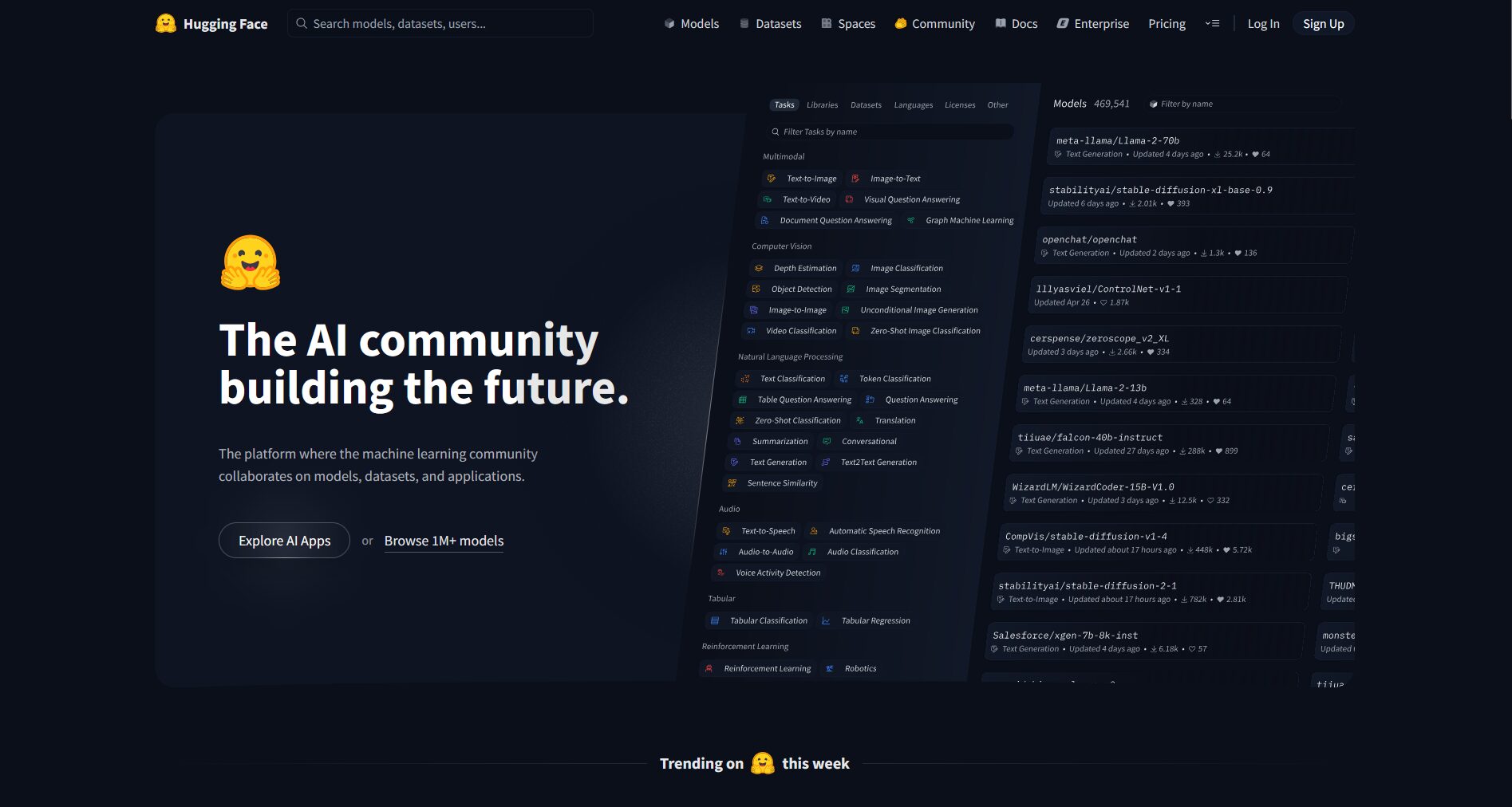
Hugging Face remains an important part of the open-model ecosystem. It is widely used for model discovery, open-source collaboration, and hosted inference products such as Inference Endpoints. But many teams outgrow a single default setup.
The usual pressure points are predictable: they want more flexible routing, a different pricing model, easier production APIs, or more control over deployment and infrastructure.
Best Hugging Face alternatives
ShareAI
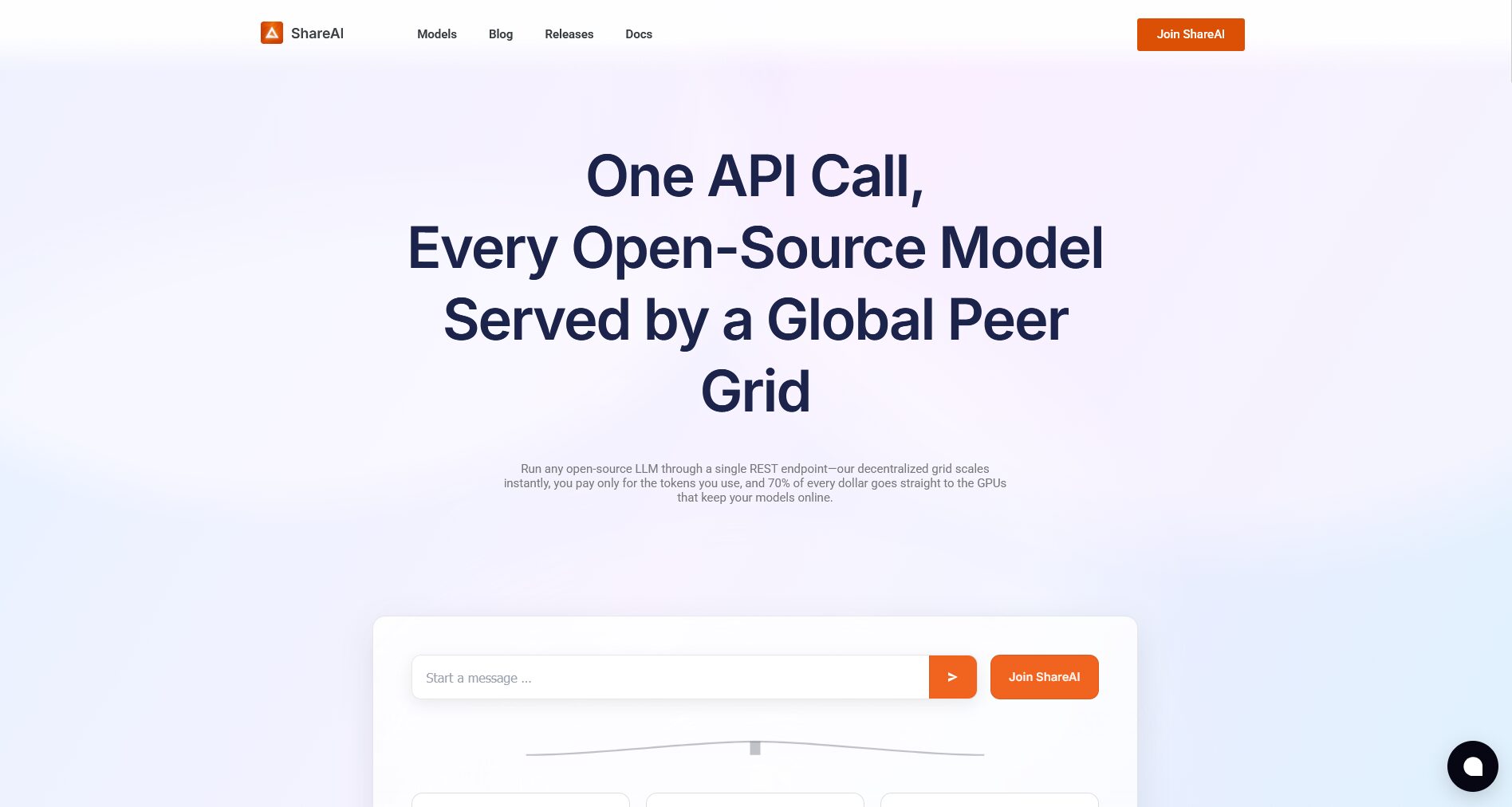
ShareAI is the best fit when you want a simpler way to access many models through one API, compare marketplace signals, and route traffic without stitching together multiple provider integrations yourself.
For teams building production AI features, the appeal is straightforward: one integration, 150+ models, smart routing, failover, and clearer visibility into options across the marketplace. You can browse available routes in the model marketplace, test requests in the Playground, and review the documentation before wiring it into your app.
Where ShareAI stands out is not self-hosted training infrastructure. It is the routing, access, billing, and marketplace layer for teams that want open-model flexibility without rebuilding API access and provider selection from scratch. It is also a strong fit for Builders who want to monetize AI inference traffic from an application they already own outside ShareAI.
Northflank
Northflank is a stronger option when your priority is running models and the rest of your stack on infrastructure you control. Its positioning centers on full-stack deployment, GPU workloads, BYOC, and secure runtime isolation, which is useful if your team needs to run APIs, workers, databases, and model workloads together.
That makes Northflank a better fit than ShareAI when the core problem is deployment ownership rather than model access abstraction. If you need fine-tuning jobs, long-running GPU services, and app infrastructure in one place, Northflank belongs on the shortlist.
BentoML
BentoML is a good choice for teams that want to turn models into Python services with more control over packaging and serving. Its platform is centered on model serving and orchestration, and it is especially useful when your team is comfortable with Python-first workflows and wants to shape its own serving layer.
Compared with ShareAI, BentoML asks more from your engineering team. Compared with Hugging Face-hosted inference, it gives you more control. That makes it a strong middle path for teams that want to own the service layer without committing to a full platform rewrite on day one.
Replicate

Replicate is one of the simplest ways to run open-source models through a hosted API. Its docs position it as a cloud API for running machine learning models without managing infrastructure, which is why it works well for fast experiments and lightweight production use cases.
The trade-off is control. Replicate is great when you want speed and convenience. It is less compelling when you need multi-provider routing, deeper deployment control, or an operator view across many routes and billing options.
Together AI

Together AI is a strong option if you want API access to a large set of open-source models and may later want fine-tuning or dedicated endpoints. Its docs emphasize OpenAI-compatible inference and support for a broad open-model catalog, which makes it easy for developers to adopt quickly.
Compared with Hugging Face, Together AI can feel more direct for product teams that simply want inference APIs. Compared with ShareAI, it is more of a single-platform provider choice, while ShareAI is better suited to teams that want broader route comparison and a marketplace-style access layer.
RunPod
RunPod fits teams that want GPU-backed containers with less platform overhead than a full PaaS. It is practical when you want to run model workloads quickly and are comfortable taking on more of the deployment and orchestration decisions yourself.
This is a better lane for compute-oriented teams than for product teams that mainly want a clean multi-model API. If your work starts with infrastructure and container control, RunPod makes sense. If your work starts with app integration speed, ShareAI or Together AI will usually be faster to operationalize.
Where ShareAI fits
ShareAI is not the replacement for every Hugging Face workflow, and that is exactly why it is useful to position clearly.
If your team needs to fine-tune custom models on your own GPUs, host complex training jobs, or run a full application platform around those workloads, Northflank, BentoML, or RunPod may be a closer fit.
If your team wants to ship AI features with one API, compare model options more easily, reduce provider sprawl, and keep routing and failover flexible, ShareAI is the better alternative.
Try the ShareAI route
If you are evaluating Hugging Face alternatives because you want more flexibility without taking on a full infrastructure project, start by comparing live model options in ShareAI. The fastest next step is to browse models, test a request in the Playground, or read the API documentation.

 English
  简体中文
简体中文  हिन्दी
  Español
  العربية
  Français
  বাংলা
বাংলা  Português
  Русский
  Română
  Bahasa Indonesia
  اردو
اردو  Deutsch
  日本語
日本語  मराठी
मराठी  Tiếng Việt
  తెలుగు
  Hausa
Hausa  Türkçe
  Kiswahili
  Tagalog
  தமிழ்
தமிழ்  Cantonese
  فارسی
فارسی  한국어
한국어  ไทย
ไทย  Basa Jawa