RouteLLM Alternatives 2026: When to Pick ShareAI (and What Else to Consider)
Updated September 2026
Developers choose RouteLLM to route prompts to cheaper models while targeting near–GPT-4 quality—especially for benchmark-like tasks where a learned router can confidently downshift. But if you care more about marketplace transparency before each route (live price, latency, uptime, availability), instant failover across multiple providers, edge policy and audit, or a self-hosted proxy/gateway, one of these RouteLLM alternatives may fit your stack better.
This buyer’s guide is written like a builder would: specific trade-offs, quick picks, deep dives, side-by-side comparisons, and a copy-paste ShareAI quickstart so you can ship today.
Understanding RouteLLM (and where it may not fit)
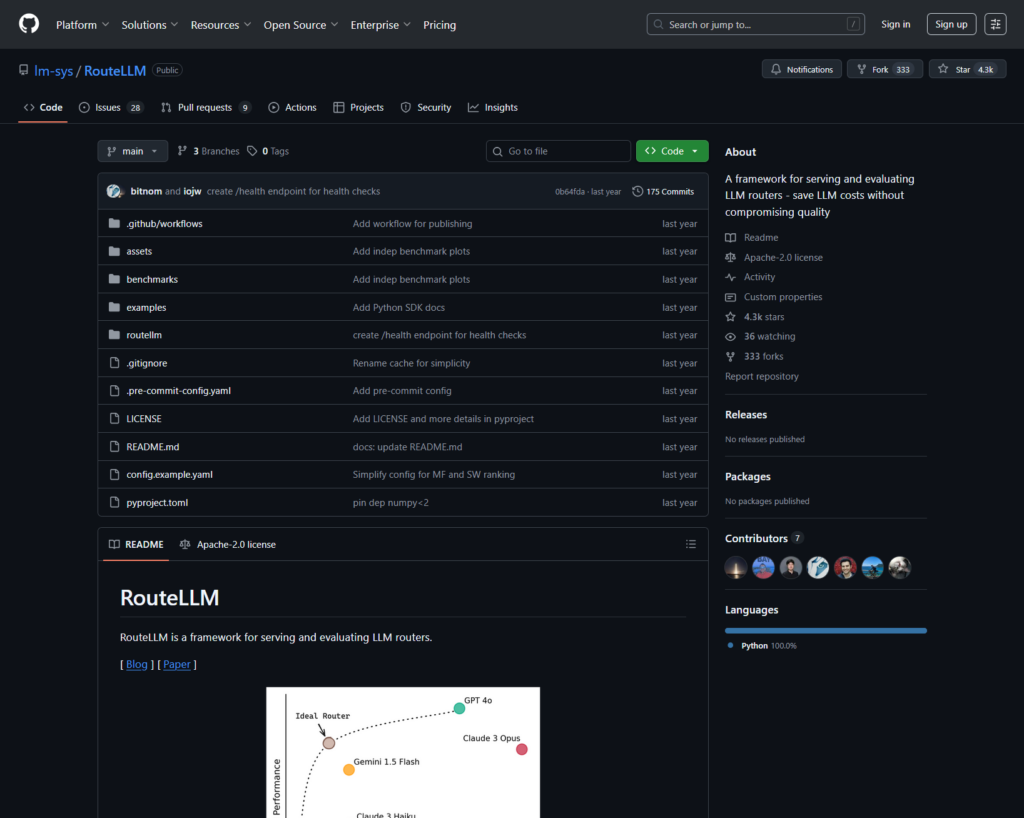
What RouteLLM is. RouteLLM is an open-source framework for serving and evaluating LLM routers. It offers a drop-in OpenAI-compatible client/server and ships trained routing models that can route simpler queries to cheaper models—reported as up to 85% cost reduction while maintaining ~95% of GPT-4 performance on common benchmarks (e.g., MT-Bench).
Why teams pick it.
Cost-aware routing with research-backed policies.
Open source and extensible in Python.
OpenAI-compatible path to trial routing without heavy SDK rewrites.
Where RouteLLM may not fit.
You want live marketplace transparency (price, latency, uptime, availability) before each route—not just a learned policy.
You need multi-provider failover
Your roadmap spans multimodal APIs like OCR, speech, translation, and document parsing under one roof.
How to choose a RouteLLM alternative
Total Cost of Ownership (TCO). Don’t stop at $/1K tokens. Count cache hit rates, retries/fallbacks, queueing, evaluator costs, and the ops burden of logs/alerts. Cache-aware routers and gateways with semantic cache can make a “more expensive list price” cheaper in practice.
Latency & reliability. Favor region-aware routing, provider stickiness when a cache is warm, and precise fallbacks (retry 429s, escalate on timeouts). Hosted routers that keep you on the same provider for warm contexts and fall back when a provider blips tend to win.
Observability & governance. If guardrails, redaction, audit logs, and policy at the edge matter, an AI gateway (Portkey or Kong AI Gateway) is typically stronger than a pure router alone. Many teams pair router + gateway.
Self-host vs. managed. Prefer Docker/K8s/Helm and an OpenAI-compatible proxy? Try LiteLLM. Want hosted speed + marketplace visibility? Consider ShareAI or OpenRouter.
Breadth beyond chat. If you need OCR, speech, translation, or document parsing alongside LLM chat, a multimodal orchestrator such as Eden AI helps.
Data-driven routing. If you prefer live benchmarks to steer cost/speed/quality by region or workload, evaluate Unify.
Best RouteLLM alternatives (quick picks)
ShareAI (our pick for marketplace transparency + builder economics) One API across a large catalog of models/providers with instant failover and a marketplace that surfaces price, latency, uptime, availability before you route. Start fast in the Playground, grab keys in the Console, browse Docs, and compare options in Models.
Eden AI (multimodal orchestrator) Unified API across LLMs plus image, OCR/doc parsing, speech, and translation—alongside model comparison, monitoring, caching, and batch processing.
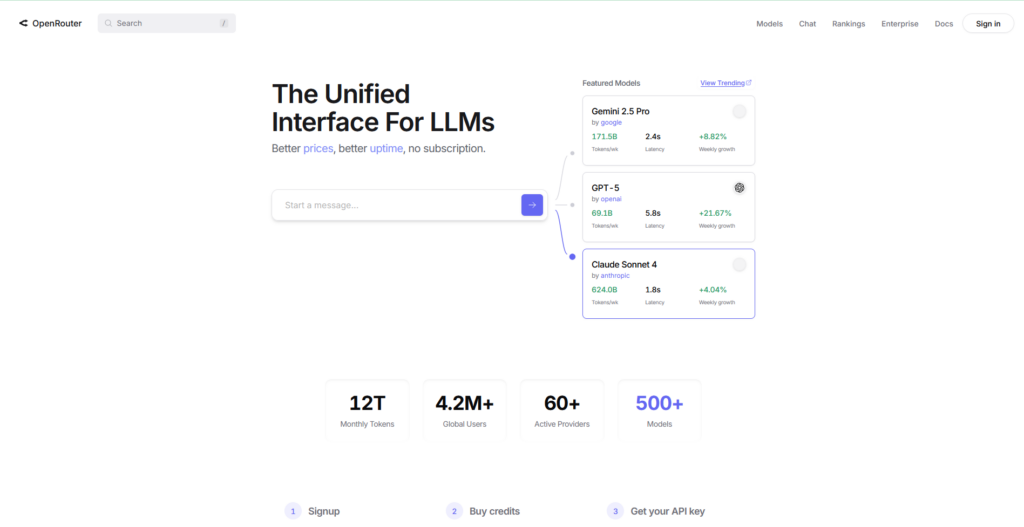
OpenRouter (cache-aware routing) Hosted router across many LLMs with prompt caching and provider stickiness to reuse warm contexts; falls back when a provider is unavailable.
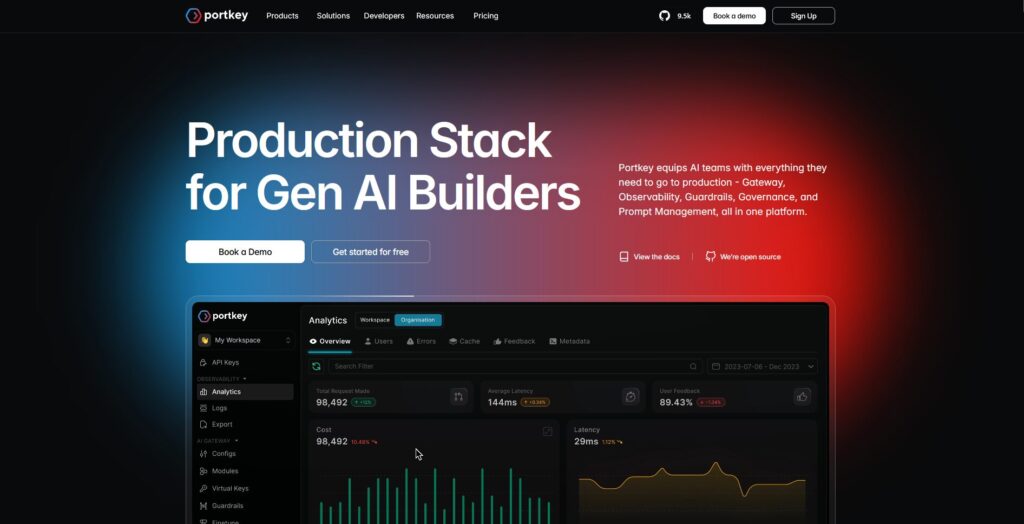
Portkey (policy & SRE ops at the gateway) AI gateway with programmable fallbacks, rate-limit playbooks, and semantic cache—plus detailed traces/metrics for production control.
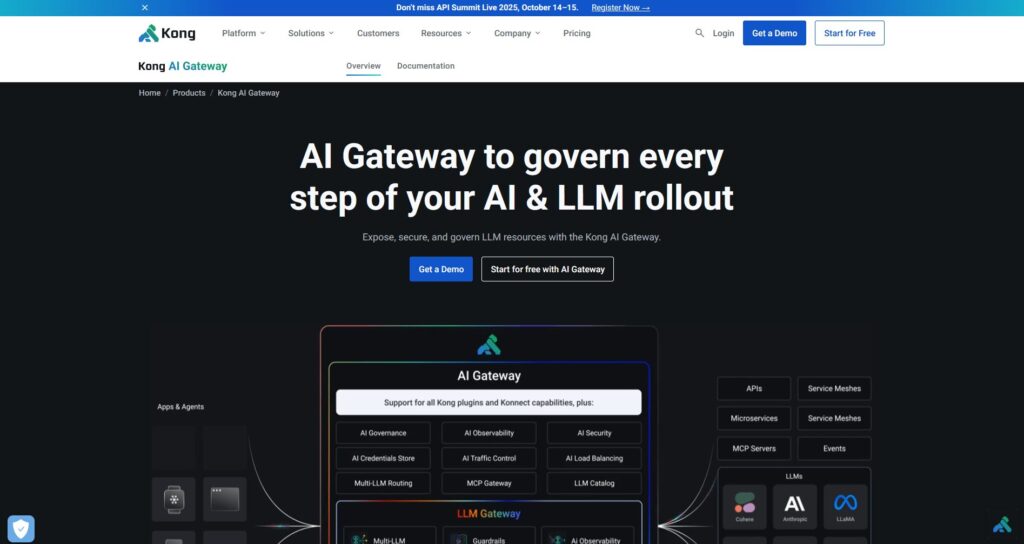
Kong AI Gateway (edge governance & audit) Bring AI plugins, policy, and analytics to the Kong ecosystem; a strong fit when you need centralized edge controls across teams.
Unify (data-driven router) Universal API with live benchmarks to optimize cost/speed/quality by region and workload.
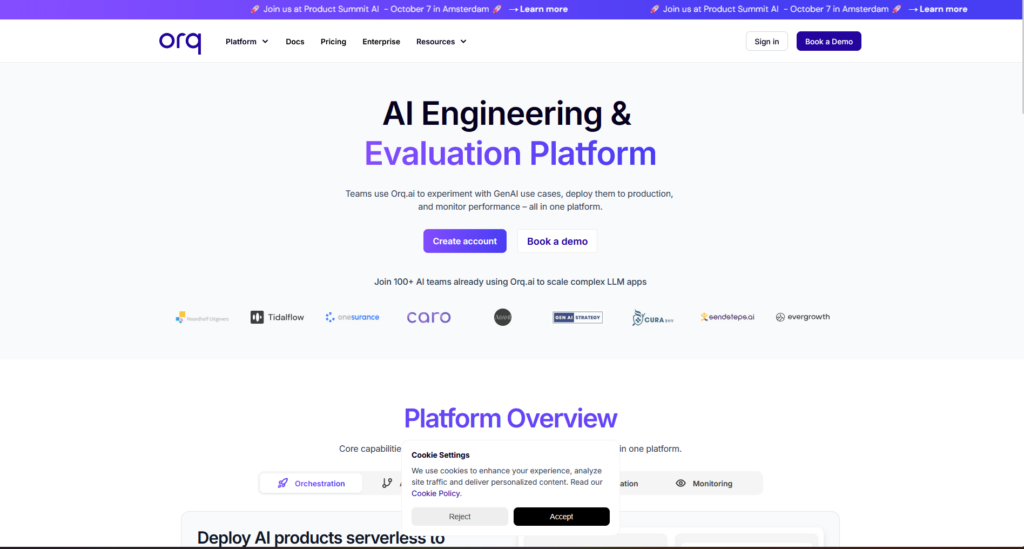
Orq.ai (experimentation & LLMOps) Experiments, evaluators (including RAG metrics), deployments, and RBAC/VPC—great when evaluation and governance need to live together.
LiteLLM (self-hosted proxy/gateway) Open-source, OpenAI-compatible proxy with budgets/limits, logging/metrics, and an Admin UI. Deploy with Docker/K8s/Helm; you own operations.
Deep dives: top RouteLLM alternatives
ShareAI (People-Powered AI API)
What it is. A provider-first AI network and unified API. Browse a large catalog of models/providers and route with instant failover. The marketplace surfaces price, latency, uptime, and availability in one place so you can choose the right provider before each route. Start in the Playground, create keys in the Console, and follow the API quickstart in Docs. Browse the Model Marketplace.
Marketplace transparency — see price/latency/uptime/availability up front.
Resilience-by-default — fast failover to the next best provider when one blips.
Builder-aligned economics — a majority of spend flows to GPU providers who keep models online.
Frictionless start — test in the Playground, then ship.
Provider facts (earn by keeping models online). Anyone can become a provider (Community or Company). Onboard via Windows/Ubuntu/macOS or Docker. Contribute idle-time bursts or run always-on. Choose incentives: Rewards (money), Exchange (tokens/AI Prosumer), or Mission (donate a % to NGOs). See the Provider Guide or open the Provider Dashboard.
Ideal for. Product teams who want marketplace transparency, resilience, and room to grow into provider mode—without vendor lock-in.
Eden AI
What it is. A unified API that spans LLMs + image generation + OCR/document parsing + speech + translation so you don’t have to stitch multiple vendor SDKs. They also emphasize model comparison, monitoring, and batching.
Good fit when. Your roadmap is multimodal and you want to orchestrate OCR/speech/translation alongside LLM chat.
Watch-outs. If you need a marketplace view per request (price/latency/uptime/availability) or provider-level economics, pair a marketplace router like ShareAI.
OpenRouter
What it is. A unified LLM router with provider/model routing and prompt caching. With caching enabled, OpenRouter tends to keep you on the same provider to reuse warm contexts; if that provider is unavailable, it falls back. It also supports strategy hints (e.g., price-weighted).
Good fit when. You want hosted speed and cache-aware routing to cut cost and improve throughput—especially in high-QPS chat workloads with repeat prompts.
Watch-outs. For deep enterprise governance (SIEM exports, org-wide policy), many teams pair OpenRouter with Portkey or Kong AI Gateway.
Portkey
What it is. An AI gateway with programmable fallbacks, rate-limit playbooks, and simple/semantic cache, plus traces/metrics for SRE-style control. Semantic cache is especially helpful for short prompts/messages when similarity thresholds are tuned well.
Good fit when. You need policy-driven routing with first-class observability, and you’re comfortable operating a gateway layer in front of one or more routers/marketplaces.
Kong AI Gateway
What it is. An edge gateway that brings AI plugins, policy, and analytics into the Kong ecosystem (via Konnect or self-managed). If your API platform already revolves around Kong and you need central policy/audit, this is a strong fit.
Good fit when. Edge governance, auditability, data residency, and centralized controls are non-negotiable in your environment.
Unify
What it is. A data-driven router that optimizes cost/speed/quality using live benchmarks, adjusting by region and workload.
Good fit when. You want benchmark-guided selection that continually adapts to real-world performance.
Orq.ai
What it is. A generative AI collaboration + LLMOps platform: experiments, evaluators (including RAG metrics), deployments, and RBAC/VPC. Great when evaluation and governance need to live together.
Good fit when. You need experimentation + evaluation with governance in one place—then deploy directly from the same surface.
LiteLLM
What it is. An open-source proxy/gateway with OpenAI-compatible endpoints, budgets & rate limits, logging/metrics, and an Admin UI. Deploy via Docker/K8s/Helm; keep traffic in your own network.
Good fit when. You want self-hosting and full infra control with straightforward compatibility for popular OpenAI-style SDKs.
Watch-outs. As with any OSS gateway, you own operations and upgrades.
// ShareAI — Chat Completions (JavaScript, Node 18+)
// Usage:
//   SHAREAI_API_KEY="YOUR_KEY" node chat.js

const API_URL = "https://api.shareai.now/v1/chat/completions";
const API_KEY = process.env.SHAREAI_API_KEY;

async function main() {
  if (!API_KEY) {
    throw new Error("Missing SHAREAI_API_KEY in environment");
  }

  const res = await fetch(API_URL, {
    method: "POST",
    headers: {
      Authorization: `Bearer ${API_KEY}`,
      "Content-Type": "application/json"
    },
    body: JSON.stringify({
      model: "llama-3.1-70b",
      messages: [
        { role: "user", content: "Summarize RouteLLM alternatives in one sentence." }
      ],
      temperature: 0.3,
      max_tokens: 120
    })
  });

  if (!res.ok) {
    const text = await res.text();
    throw new Error(`HTTP ${res.status}: ${text}`);
  }

  const data = await res.json();
  console.log(data.choices?.[0]?.message ?? data);
}

main().catch(err => {
  console.error("Request failed:", err);
  process.exit(1);
});
Migration tip. Map your current RouteLLM-selected models to ShareAI equivalents, mirror request/response shapes, and start behind a feature flag. Send 5–10% of traffic first, compare latency/cost/quality, then ramp. If you also run a gateway (Portkey/Kong), ensure caching/fallbacks don’t double-trigger between layers.
Comparison at a glance
Platform
Hosted / Self-host
Routing & Fallbacks
Observability
Breadth (LLM + beyond)
Governance / Policy
Notes
RouteLLM
OSS
Learned router; OpenAI-compatible client/server
CLI/logs; research focus
LLM-centric
Policy via your infra
Great for research-grade cost-savers; bring your own edge controls.
Pick ShareAI if you want a transparent marketplace that surfaces price/latency/uptime/availability before each route, plus instant failover and builder-aligned economics. Pick RouteLLM if you prefer a research-driven, learned router and you’re comfortable operating infra around it (gateways, logging, audit). Start with the Playground and Model Marketplace.
RouteLLM vs Eden AI — what’s the difference?
Eden AI spans LLMs and multimodal (vision/OCR, speech, translation) with comparison and monitoring. RouteLLM focuses on learned routing for LLMs. If your roadmap needs OCR/speech/translation under one API, Eden AI simplifies delivery; if routing research is the priority, RouteLLM fits. Pair with ShareAI when you want marketplace transparency per request.
RouteLLM vs OpenRouter — when to pick each?
Pick OpenRouter when prompt caching and warm-cache reuse matter (it tends to keep you on the same provider, and falls back on outages). Pick RouteLLM for learned policies you operate yourself. Many stacks pair OpenRouter with a gateway for policy/observability—and still use ShareAI when they want marketplace transparency before each route.
RouteLLM vs Portkey — router or gateway?
RouteLLM is a router. Portkey is a gateway: it excels at policy/guardrails (fallback playbooks, semantic cache) and detailed traces/metrics. Many teams run both: a gateway for org-wide policy + a router/marketplace for model choice and cost control. ShareAI pairs well here when you want pre-route marketplace visibility.
RouteLLM vs Kong AI Gateway — who needs which?
Choose Kong AI Gateway when edge governance (centralized policy/audit, data residency) is non-negotiable. Keep RouteLLM behind it if you still want learned routing for price/perf. Use ShareAI alongside when you want to pick providers by price/latency/uptime/availability before each route.
RouteLLM vs Unify — what’s unique about Unify?
Unify uses live benchmarks and dynamic policies to optimize for cost/speed/quality. If you want data-driven selection that evolves by region/workload, Unify is compelling; RouteLLM focuses on learned routing models you host. Use ShareAI when you prefer to choose providers with a marketplace view and instant failover.
RouteLLM vs Orq.ai — which for evaluation & RAG?
Orq.ai provides an experimentation/evaluation surface (including RAG evaluators), plus deployments and RBAC/VPC. If you need LLMOps + evaluators, Orq.ai may complement or replace a pure router early on. Bring ShareAI when you want provider choice with marketplace transparency and resilience in production.
RouteLLM vs LiteLLM — hosted vs self-hosted?
RouteLLM is OSS routing logic; LiteLLM is an OpenAI-compatible proxy/gateway with budgets, rate limits, and an Admin UI—great if you want to keep traffic inside your VPC and own the control plane. Teams often combine LiteLLM for self-hosting with ShareAI for marketplace visibility and instant failover across providers.
Which is cheapest for my workload: RouteLLM, ShareAI, OpenRouter, LiteLLM?
It depends on model choice, region, cacheability, and traffic patterns. Routers like ShareAI/OpenRouter can reduce cost via routing and cache-aware stickiness; gateways like Portkey add semantic caching; LiteLLM reduces platform overhead if you’re comfortable operating it. Benchmark with your prompts and track effective cost per result—not just list price.
What is RouteLLM?
An open-source framework for serving and evaluating LLM routers; ships trained routers and OpenAI-compatible paths; often cited to reduce cost substantially while keeping near-GPT-4 quality on MT-Bench-like tasks.
What’s the fastest way to try ShareAI without a full integration?
Open the Playground, pick a model/provider, and run prompts in the browser. When ready, create a key and drop the cURL/JS snippets above into your app.
Can I become a ShareAI provider and earn?
Yes. Anyone can onboard as Community or Company provider using Windows/Ubuntu/macOS or Docker. Contribute idle-time bursts or run always-on. Choose incentives: Rewards (money), Exchange (tokens/AI Prosumer), or Mission (donate % to NGOs). See the Provider Guide or open the Provider Dashboard.
Conclusion
While RouteLLM is a strong OSS router, your best choice depends on priorities:
Marketplace transparency + resilience: ShareAI
Multimodal coverage under one API: Eden AI
Cache-aware routing in hosted form: OpenRouter
Policy/guardrails at the edge: Portkey or Kong AI Gateway
Data-driven routing: Unify
LLMOps + evaluators: Orq.ai
Self-hosted control plane: LiteLLM
If price/latency/uptime/availability before each route, instant failover, and builder-aligned economics are on your checklist, open the Playground, create an API key, and browse the Model Marketplace to route your next request the smart way.
Unify AI Alternatives 2026: Unify vs ShareAI and other alternatives
Updated September 2026
If you’re evaluating Unify AI alternatives or weighing Unify vs ShareAI, this guide maps the landscape like a builder would. We’ll define where Unify fits (quality-driven routing and evaluation), clarify how aggregators differ from gateways and agent platforms, and then compare the best alternatives—placing ShareAI first for teams that want one API across many providers, a transparent marketplace that shows price, latency, uptime, and availability before you route, smart routing with instant failover, and people-powered economics where 70% of spend goes to GPU providers who keep models online.
Inside, you’ll find a practical comparison table, a simple TCO framework, a migration path, and copy-paste API examples so you can ship quickly.
TL;DR (who should choose what)
Pick ShareAI if you want one integration for 150+ models across many providers, marketplace-visible costs and performance, routing + instant failover, and fair economics that grow supply. • Start in the Playground to test a route in minutes: Open Playground • Compare providers in the Model Marketplace: Browse Models • Ship with the Docs: Documentation Home
Stick with Unify AI if your top priority is quality-driven model selection and evaluation loops within a more opinionated surface. Learn more: unify.ai.
Consider other tools (OpenRouter, Eden AI, LiteLLM, Portkey, Orq) when your needs skew toward breadth of general AI services, self-hosted proxies, gateway-level governance/guardrails, or orchestration-first flows. We cover each below.
What Unify AI is (and what it isn’t)
Unify AI focuses on performance-oriented routing and evaluation: benchmark models on your prompts, then steer traffic to candidates expected to produce higher-quality outputs. That’s valuable when you have measurable task quality and want repeatable improvements over time.
What Unify isn’t: a transparent provider marketplace that foregrounds per-provider price, latency, uptime, and availabilitybefore you route; nor is it primarily about multi-provider failover with user-visible provider stats. If you need those marketplace-style controls with resilience by default, ShareAI tends to be a stronger fit.
Aggregators vs. gateways vs. agent platforms (why buyers mix them up)
LLM aggregators: one API over many models/providers; marketplace views; per-request routing/failover; vendor-neutral switching without rewrites. → ShareAI sits here with a transparent marketplace and people-powered economics.
AI gateways: governance and policy at the network/app edge (plugins, rate limits, analytics, guardrails); you bring providers/models. → Portkey is a good example for enterprises that need deep traces and policy enforcement.
Agent/chatbot platforms: packaged conversational UX, memory, tools, channels; optimized for support/sales or internal assistants rather than provider-agnostic routing. → Not the main focus of this comparison, but relevant if you’re shipping customer-facing bots fast.
Many teams combine layers: a gateway for org-wide policy and a multi-provider aggregator for marketplace-informed routing and instant failover.
How we evaluated the best Unify AI alternatives
Model breadth & neutrality: proprietary + open; easy to switch without rewrites
Community & economics: whether spend grows supply (incentives for GPU owners)
#1 — ShareAI (People-Powered AI API): the best Unify AI alternative
Why teams choose ShareAI first With one API you can access 150+ models across many providers—no rewrites, no lock-in. The transparent marketplace lets you compare price, availability, latency, uptime, and provider typebefore you send traffic. Smart routing with instant failover gives resilience by default. And the economics are people-powered: 70% of every dollar flows to providers (community or company) who keep models online.
For providers: earn by keeping models online ShareAI is open supply. Anyone can become a provider—Community or Company—on Windows, Ubuntu, macOS, or Docker. Contribute idle-time bursts or run always-on. Choose your incentive: Rewards (earn money), Exchange (earn tokens), or Mission (donate a % to NGOs). As you scale, you can set your own inference prices and gain preferential exposure. Provider Guide
The best Unify AI alternatives (neutral snapshot)
Unify AI (reference point)
What it is: Performance-oriented routing and evaluation to choose better models per prompt. Strengths: Quality-driven selection; benchmarking focus. Trade-offs: Opinionated surface area; lighter on transparent marketplace views across providers. Best for: Teams optimizing response quality with evaluation loops. Website:unify.ai
OpenRouter
What it is: Unified API over many models; familiar request/response patterns. Strengths: Wide model access with one key; fast trials. Trade-offs: Less emphasis on a provider marketplace view or enterprise control-plane depth. Best for: Quick experimentation across multiple models without deep governance needs.
Eden AI
What it is: Aggregates LLMs and broader AI services (vision, translation, TTS). Strengths: Wide multi-capability surface; caching/fallbacks; batch processing. Trade-offs: Less focus on marketplace-visible per-provider price/latency/uptime before you route. Best for: Teams that want LLMs plus other AI services in one place.
LiteLLM
What it is: Python SDK + self-hostable proxy that speaks OpenAI-compatible interfaces to many providers. Strengths: Lightweight; quick to adopt; cost tracking; simple routing/fallback. Trade-offs: You operate the proxy/observability; marketplace transparency and community economics are out of scope. Best for: Smaller teams that prefer a DIY proxy layer.
Portkey
What it is: AI gateway with observability, guardrails, and governance—popular in regulated industries. Strengths: Deep traces/analytics; safety controls; policy enforcement. Trade-offs: Added operational surface; less about marketplace-style transparency across providers. Best for: Audit-heavy, compliance-sensitive teams.
Orq AI
What it is: Orchestration and collaboration platform to move from experiments to production with low-code flows. Strengths: Workflow orchestration; cross-functional visibility; platform analytics. Trade-offs: Lighter on aggregation-specific features like marketplace transparency and provider economics. Best for: Startups/SMBs that want orchestration more than deep aggregation controls.
Unify vs ShareAI vs OpenRouter vs Eden vs LiteLLM vs Portkey vs Orq (quick comparison)
Platform
Who it serves
Model breadth
Governance & security
Observability
Routing / failover
Marketplace transparency
Pricing style
Provider program
ShareAI
Product/platform teams wanting one API + fair economics
Use marketplace stats to select providers by price + latency + uptime.
Set per-provider timeouts, backup models, and instant failover.
Run parallel candidates and return the first successful to shrink tail latency.
Preflight max tokens and guard price per call to avoid runaway costs.
Keep an eye on availability; route away from saturating providers.
Migration guide: moving to ShareAI from Unify (and others)
From Unify AI
Keep your evaluation workflows where useful. For production routes where marketplace transparency and instant failover matter, map model names, validate prompt parity, shadow 10% of traffic through ShareAI, monitor latency/error budgets, then step up to 25% → 50% → 100%.
From OpenRouter
Map model names; validate schema/fields; compare providers in the marketplace; switch per route. Marketplace data makes swaps straightforward.
From LiteLLM
Replace self-hosted proxy on production routes you don’t want to operate; keep LiteLLM for dev if desired. Trade proxy ops for managed routing + marketplace visibility.
From Portkey / Orq
Define feature-parity expectations (analytics, guardrails, orchestration). Many teams run a hybrid: keep specialized features where they’re strongest, use ShareAI for transparent provider choice and failover.
#!/usr/bin/env bash

# Set your API key
export SHAREAI_API_KEY="YOUR_KEY"

# Chat Completions
curl -X POST "https://api.shareai.now/v1/chat/completions" \
  -H "Authorization: Bearer $SHAREAI_API_KEY" \
  -H "Content-Type: application/json" \
  -d '{
    "model": "llama-3.1-70b",
    "messages": [
      { "role": "user", "content": "Give me a short haiku about reliable routing." }
    ],
    "temperature": 0.4,
    "max_tokens": 128
  }'
JavaScript (fetch) — Node 18+/Edge runtimes
// Set your API key in an environment variable
// process.env.SHAREAI_API_KEY = "YOUR_KEY"

async function main() {
  const res = await fetch("https://api.shareai.now/v1/chat/completions", {
    method: "POST",
    headers: {
      "Authorization": `Bearer ${process.env.SHAREAI_API_KEY}`,
      "Content-Type": "application/json"
    },
    body: JSON.stringify({
      model: "llama-3.1-70b",
      messages: [
        { role: "user", content: "Give me a short haiku about reliable routing." }
      ],
      temperature: 0.4,
      max_tokens: 128
    })
  });

  if (!res.ok) {
    console.error("Request failed:", res.status, await res.text());
    return;
  }

  const data = await res.json();
  console.log(JSON.stringify(data, null, 2));
}

main().catch(console.error);
FAQ — Unify AI vs. each alternative (and where ShareAI fits)
Unify AI vs ShareAI — which for multi-provider routing and resilience?
Choose ShareAI. You get one API across 150+ models, marketplace-visible price/latency/uptime/availability before routing, and instant failover that protects UX under load. Unify focuses on evaluation-led model selection; ShareAI emphasizes transparent provider choice and resilience—plus 70% of spend returns to providers who keep models online. → Try it live: Open Playground
Unify AI vs OpenRouter — what’s the difference, and when does ShareAI win?
OpenRouter offers one-key access to many models for quick trials. Unify emphasizes quality-driven selection. If you need marketplace transparency, per-provider comparisons, and automatic failover, ShareAI is the better choice for production routes.
Unify AI vs Eden AI — which for broader AI services?
Eden spans LLMs plus other AI services. Unify focuses on model quality selection. If your priority is cross-provider LLM routing with visible pricing and latency and instant failover, ShareAI balances speed to value with production-grade resilience.
Unify AI vs LiteLLM — DIY proxy or evaluation-led selection?
LiteLLM is great if you want a self-hosted proxy. Unify is for quality-driven model selection. If you’d rather not operate a proxy and want marketplace-first routing + failover and a provider economy, pick ShareAI.
Unify AI vs Portkey — governance or selection?
Portkey is an AI gateway: guardrails, policies, deep traces. Unify is about selecting better models per prompt. If you need routing across providers with transparent price/latency/uptime and instant failover, ShareAI is the aggregator to pair with (you can even use a gateway + ShareAI together).
Unify AI vs Orq AI — orchestration or selection?
Orq centers on workflow orchestration and collaboration. Unify does evaluation-led model choice. For marketplace-visible provider selection and failover in production, ShareAI delivers the aggregator layer your orchestration can call.
Unify AI vs Kong AI Gateway — infra control plane vs evaluation-led routing
Kong AI Gateway is an edge control plane (policies, plugins, analytics). Unify focuses on quality-led selection. If your need is multi-provider routing + instant failover with price/latency visibility before routing, ShareAI is the purpose-built aggregator; you can keep gateway policies alongside it.
Prompt patterns worth testing • Set per-provider timeouts; define backup models; enable instant failover. • Run parallel candidates and accept the first success to cut P95/P99. • Request structured JSON outputs and validate on receipt. • Guard price per call via max tokens and route selection. • Re-evaluate model choices monthly; marketplace stats surface new options.
Conclusion: pick the right alternative for your stage
Choose ShareAI when you want one API across many providers, an openly visible marketplace, and resilience by default—while supporting the people who keep models online (70% of spend goes to providers). Choose Unify AI when evaluation-led model selection is your top priority. For specific needs, Eden AI, OpenRouter, LiteLLM, Portkey, and Orq each bring useful strengths—use the comparison above to match them to your constraints.
IBM API Connect Alternatives 2026: Top 10 Picks (IBM API Connect vs ShareAI)
Updated September 2026
If you’re evaluating IBM API Connect alternatives, this builder-first guide clarifies what IBM API Connect is (and isn’t) for AI workloads, then compares the 10 best alternatives across model breadth, governance, observability, routing/failover, pricing transparency, and developer experience. We place ShareAI first for teams that want one API across many providers, a transparent marketplace with price/latency/uptime/availability before routing, instant failover, and people-powered economics (70% of spend goes to providers).
IBM API Connect is a full-stack API management platform: design, secure, publish, and observe APIs with a developer portal and enterprise-grade governance. For AI use cases, you typically place LLM providers or your own inference services behind IBM’s gateway to apply centralized credentials, policies, quotas, and analytics. That’s a governance-first gateway and lifecycle suite—not a transparent multi-provider model marketplace.
If your primary need is egress governance and a mature API lifecycle, IBM fits the lane. If your priority is provider-agnostic AI routing with pre-route transparency (price/latency/uptime/availability), instant failover, and one API across many providers/models, choose an aggregator like ShareAI—you can still pair it with a gateway.
Aggregators vs Gateways vs Agent platforms
LLM aggregators: one API across many models/providers with marketplace transparency (price, latency, uptime, availability, provider type) and smart routing/failover. Examples: ShareAI, OpenRouter, Eden AI.
AI/API gateways: enforce policies/quotas/keys at the edge with observability; you bring your providers. Examples: IBM API Connect, Traefik AI Gateway, Kong, Azure API Management, AWS API Gateway, NGINX (DIY).
Agent / orchestration platforms: packaged UX or flow builders (memory, tools, channels) geared to end-user assistants and pipelines. Examples: Orq, Unify.
Most enterprises combine at least two: a gateway for org policy + an aggregator for model choice and resilience.
How we evaluated the best IBM API Connect alternatives
Model breadth & neutrality: proprietary + open; easy switching; no rewrites.
Community & economics: whether your spend grows supply (incentives for providers).
Top 10 IBM API Connect alternatives
#1 — ShareAI (People-Powered AI API)
What it is. A multi-provider API with a transparent marketplace and smart routing. With one integration, browse a large catalog of models and providers, compare price, latency, uptime, availability, provider type, and route with instant failover. Economics are people-powered: 70% of every dollar flows to providers (community or company) who keep models online.
Why it’s #1 here. If you need provider-agnostic aggregation with pre-route transparency and resilience, ShareAI is the most direct fit. Keep a gateway if you need org-wide policies; add ShareAI for marketplace-guided routing.
One API → 150+ models across many providers; no rewrites, no lock-in.
Transparent marketplace: choose by price, latency, uptime, availability, provider type.
Resilience by default: routing policies + instant failover.
Fair economics: 70% of spend goes to providers (community or company).
For providers: earn by keeping models online. Anyone can become a ShareAI provider—Community or Company. Onboard via Windows, Ubuntu, macOS, or Docker. Contribute idle-time bursts or run always-on. Choose your incentive: Rewards (money), Exchange (tokens/AI Prosumer), or Mission (donate a % to NGOs). As you scale, you can set your own inference prices and gain preferential exposure. → Provider Guide
#2 — OpenRouter
What it is. A unified API over many models—great for fast experimentation across a broad catalog.
Fit. Strong for quick multi-model access; routing and transparency differ by design vs a marketplace like ShareAI.
#3 — Traefik AI Gateway
What it is. An LLM-specific control layer atop Traefik Hub’s API gateway: centralized credentials/policies, AI middlewares (e.g., content guard, caching), OpenTelemetry-friendly observability.
Fit. Governance-first gateway; you bring your providers. Often paired with ShareAI for marketplace-guided routing.
#4 — Kong (AI Gateway)
What it is. Enterprise-grade gateway with powerful plugins/policies, analytics, and edge security.
Fit. Governance & policy at the edge; pair with ShareAI when you want provider-agnostic routing and marketplace transparency.
#5 — Azure API Management
What it is. Microsoft’s API management platform covering design, publish, secure, and observe APIs.
Fit. Good for Microsoft-centric stacks; add an AI aggregator for multi-provider model choice and failover.
#6 — AWS API Gateway
What it is. Fully managed gateway for creating and managing APIs in AWS.
Fit. Natural for AWS-native teams; combine with ShareAI to gain transparent provider selection and multi-cloud model access.
#7 — NGINX
What it is. A high-performance proxy you can customize for token enforcement, retries, and caching.
Fit. DIY flexibility if you want to code your own filters—often more ops overhead versus managed gateways/aggregators.
#8 — Eden AI
What it is. Aggregates LLMs plus other AI services (image, translation, TTS) with batching/fallbacks.
Fit. Broad AI surface area; marketplace transparency and provider incentives are less central than in ShareAI.
#9 — Unify
What it is. Quality-oriented routing and evaluation to pick better models per prompt.
Fit. Emphasizes evaluation-driven selection; pair with a gateway for policy—or with ShareAI for marketplace transparency.
#10 — Orq
What it is. Orchestration/collaboration platform for moving from experiments to production with low-code flows.
Fit. Strong for orchestration; complement with ShareAI for provider-agnostic routing and transparent trade-offs.
IBM API Connect vs ShareAI
If you need one API over many providers with transparent pricing/latency/uptime and instant failover, choose ShareAI. If your top requirement is egress governance—centralized credentials, policy enforcement, quotas, and analytics—IBM API Connect fits that lane. Many teams pair them: gateway for org policy + ShareAI for marketplace routing.
Quick comparison
Platform
Who it serves
Model breadth
Governance & security
Observability
Routing / failover
Marketplace transparency
Provider program
ShareAI
Product/platform teams needing one API + fair economics
Teams wanting end-to-end API lifecycle & governance
BYO providers
Strong centralized credentials/policies
Enterprise analytics/portal
Conditional routing via policies/middlewares
No (lifecycle tool, not a marketplace)
n/a
Traefik AI Gateway
Egress governance at the edge
BYO
Centralized credentials/policies
OpenTelemetry metrics/traces
Conditional routing via middlewares
No
n/a
Kong (AI Gateway)
Enterprises needing gateway-level policy
BYO
Strong edge policies/plugins
Analytics
Retries/plugins
No
n/a
Azure APIM
Microsoft-centric stacks
BYO
Azure policies/quotas
Azure Monitor
Policies/retries
No
n/a
AWS API Gateway
AWS-native teams
BYO
IAM/WAF/quotas
CloudWatch/X-Ray
Integrations/retries
No
n/a
NGINX (DIY)
DIY teams wanting code-level control
BYO
Custom
Add-ons
Custom
No
n/a
OpenRouter
Devs wanting one key over many models
Wide catalog
Basic API controls
App-side
Fallbacks
Partial
n/a
Eden AI
Teams needing LLM + other AI services
Broad
Standard controls
Varies
Fallbacks/caching
Partial
n/a
Unify
Quality-driven teams
Multi-model
Standard
Platform analytics
Best-model selection
n/a
n/a
Orq
Orchestration-first teams
Wide support
Platform controls
Platform analytics
Orchestration flows
n/a
n/a
Pricing & TCO: compare real costs (not just unit prices)
Raw $/1K tokens hides the real picture. TCO shifts with retries/fallbacks, latency (which affects usage), provider variance, observability storage, and evaluation runs. A transparent marketplace helps you choose routes that balance cost and UX.
Prototype (~10k tokens/day): Optimize for time-to-first-token (Open Playground, quickstarts).
Mid-scale (~2M tokens/day): Marketplace-guided routing/failover can trim 10–20% while improving UX.
Spiky workloads: Expect higher effective token costs from retries during failover; budget for it.
Migration guide: moving to ShareAI
From IBM API Connect
Keep gateway-level policies where they shine; add ShareAI for marketplace routing + instant failover. Pattern: gateway auth/policy → ShareAI route per model → measure marketplace stats → tighten policies.
From OpenRouter
Map model names, verify prompt parity, then shadow 10% of traffic and ramp 25% → 50% → 100% as latency/error budgets hold. Marketplace data makes provider swaps straightforward.
From Traefik / Kong / Azure APIM / AWS API Gateway / NGINX
Define which policies remain at the edge (quotas, keys, OTel traces). Use ShareAI to select providers by price/latency/uptime/availability and fail over instantly.
From Eden AI
If you need broader AI services, you can keep Eden for non-LLM tasks. Use ShareAI for provider-agnostic LLM routing and marketplace transparency.
From Unify / Orq
Keep evaluation/orchestration where they’re strongest; use ShareAI for transparent provider choice and resilient routing.
// JavaScript (fetch) — Node 18+/Edge runtimes
// Prereqs:
//   process.env.SHAREAI_API_KEY = "YOUR_KEY"

async function main() {
  const res = await fetch("https://api.shareai.now/v1/chat/completions", {
    method: "POST",
    headers: {
      "Authorization": `Bearer ${process.env.SHAREAI_API_KEY}`,
      "Content-Type": "application/json"
    },
    body: JSON.stringify({
      model: "llama-3.1-70b",
      messages: [
        { role: "user", content: "Give me a short haiku about reliable routing." }
      ],
      temperature: 0.4,
      max_tokens: 128
    })
  });

  if (!res.ok) {
    console.error("Request failed:", res.status, await res.text());
    return;
  }

  const data = await res.json();
  console.log(JSON.stringify(data, null, 2));
}

main().catch(console.error);
// JavaScript — simple function to call any model via ShareAI
// Tip: make the model name and provider part of configuration
export async function callShareAI({ model, messages, temperature = 0.4, max_tokens = 256 }) {
  const res = await fetch("https://api.shareai.now/v1/chat/completions", {
    method: "POST",
    headers: {
      "Authorization": `Bearer ${process.env.SHAREAI_API_KEY}`,
      "Content-Type": "application/json"
    },
    body: JSON.stringify({ model, messages, temperature, max_tokens })
  });

  if (!res.ok) throw new Error(await res.text());
  return res.json();
}
Data retention: where prompts/responses are stored, for how long; redaction defaults.
PII & sensitive content: masking; access controls; regional routing for data locality.
Observability: prompt/response logging; ability to filter or pseudonymize; propagate trace IDs consistently (OTel).
Incident response: escalation paths and provider SLAs.
FAQ — IBM API Connect vs other solutions
IBM API Connect vs ShareAI — which for multi-provider routing?
ShareAI. It’s built for marketplace transparency (price, latency, uptime, availability, provider type) and smart routing/failover across many providers. IBM API Connect is an API lifecycle/gateway tool (centralized credentials/policy; analytics; developer portal). Many teams use both.
IBM API Connect vs OpenRouter — quick multi-model access or gateway controls?
OpenRouter makes multi-model access quick; IBM centralizes policy and lifecycle. If you also want pre-route transparency and instant failover, ShareAI combines multi-provider access with a marketplace view and resilient routing.
IBM API Connect vs Traefik AI Gateway — egress governance flavors?
Both are governance-first gateways. Traefik AI Gateway adds a thin AI layer and OTel-friendly observability. If your main need is transparent provider choice + failover, add ShareAI.
IBM API Connect vs Kong (AI Gateway) — enterprise gateway depth or marketplace?
Kong is a strong gateway (plugins, policies, analytics). Neither IBM nor Kong are marketplaces. Pair either with ShareAI for transparent multi-provider routing.
IBM API Connect vs Azure API Management — cloud alignment or provider agnosticism?
Azure APIM fits Microsoft-centric stacks; IBM is cloud-agnostic. For provider-agnostic AI with marketplace transparency, add ShareAI.
IBM API Connect vs AWS API Gateway — native AWS control or cross-provider AI?
AWS API Gateway is perfect for AWS-native teams. For cross-provider AI with pre-route price/latency/uptime and instant failover, choose ShareAI (you can keep AWS for edge policy).
IBM API Connect vs NGINX ?
NGINX offers DIY power via config/Lua; IBM offers packaged lifecycle/governance. To avoid custom ops while gaining transparent provider selection, layer in ShareAI.
IBM API Connect vs Eden AI — many AI services or egress control?
Eden AI aggregates multiple AI services (LLM, image, TTS). IBM centralizes policy/credentials for your APIs. For transparent pricing/latency across many LLM providers and instant failover, use ShareAI.
IBM API Connect vs Unify — evaluation-driven selection vs governance?
Unify emphasizes evaluation-driven model selection; IBM focuses on governance. For one API over many providers with live marketplace stats, use ShareAI.
IBM API Connect vs Orq — orchestration vs egress?
Orq orchestrates flows and collaboration; IBM governs API egress and lifecycle. ShareAI complements either with marketplace routing.
Suggested next steps
Explore the marketplace to pick your first route by price, latency, uptime, and availability → Browse Models
Test in the Playground and measure time-to-first-token → Open Playground
Ship your first request with the JS snippet above; then expand routing policies.
As you scale, set your own inference prices and gain preferential exposure. → Provider Guide
Want to manage access today? Sign in / Sign up and create your first API key.
Portkey Alternatives 2026: Portkey vs ShareAI
Updated September 2026
If you’re searching for a Portkey alternative, this guide compares options like a builder would—through routing, governance, observability, and total cost (not just headline $/1K tokens). We start by clarifying what Portkey is, then rank the best alternatives with criteria, migration tips, and a copy-paste quickstart for ShareAI.
TL;DR — If you want one API across many providers, transparent pre-route data (price, latency, uptime, availability, provider type), and instant failover, start with ShareAI. Keep a gateway if you need org-wide policies; add ShareAI for marketplace-guided routing.
What Portkey is (and isn’t)
Portkey is an AI gateway focused on governance (policies/guardrails), observability (traces/logs), and developer tooling to operate LLM traffic at your edge—centralizing keys, policies, and protections. That’s powerful for compliance and reliability, but it’s not a transparent model marketplace and it doesn’t natively provide a people-powered supply side.
Aggregators vs Gateways vs Agent platforms
LLM aggregators: One API over many models/providers, with pre-route transparency (price, latency, uptime, availability, provider type) and built-in smart routing/failover.
AI gateways: Policy/governance at the edge (credentials, rate limits, guardrails) + observability; you bring providers. Portkey lives here.
Agent/chatbot platforms: End-user UX, memory/tools, channels—less about raw routing, more about packaged assistants.
How we evaluated the best Portkey alternatives
Model breadth & neutrality — proprietary + open; easy switching; no rewrites.
Community & economics — does your spend help grow supply (incentives for providers/GPU owners)?
The 10 Best Portkey Alternatives (ranked)
#1 — ShareAI (People-Powered AI API)
What it is. A multi-provider API with a transparent marketplace and smart routing. One integration gets you a broad catalog of models and providers; you can compare price, latency, uptime, availability, and provider type before you route—then fail over instantly if a provider blips.
Why it’s #1 here. If you’re evaluating Portkey but your core need is provider-agnostic aggregation with pre-route transparency and resilience, ShareAI is the most direct fit. Keep a gateway for org-wide policies, add ShareAI for marketplace-guided routing and no lock-in.
One API → 150+ models across many providers; easy switching.
Transparent marketplace: choose by price, latency, uptime, availability, provider type.
Resilience by default: routing policies + instant failover.
Fair economics: 70% of every dollar flows to providers (community or company).
For providers: earn by keeping models online. Anyone can become a ShareAI provider—Community or Company. Onboard on Windows, Ubuntu, macOS, or Docker. Contribute idle-time bursts or run always-on. Pick an incentive: Rewards (money), Exchange (tokens/AI Prosumer), or Mission (donate a % to NGOs). As you scale, you can set your own inference prices and gain preferential exposure. Provider Guide.
#2 — Kong AI Gateway
Enterprise AI/LLM gateway: policies, plugins, and analytics for AI traffic at the edge. A control plane rather than a marketplace; strong for governance, not for provider transparency.
#3 — Traefik AI Gateway
A thin AI layer atop an API gateway with centralized credentials/policies, specialized AI middlewares, and OTel-friendly observability. Great egress governance; bring your own providers.
#4 — OpenRouter
A unified API over many models; great for fast experimentation across a wide catalog. Less emphasis on governance; more about easy model switching.
#5 — Eden AI
Aggregates not only LLMs but also image, translation, and TTS. Offers fallbacks/caching and batching; a fit when you need many AI service types in one place.
#6 — LiteLLM
A lightweight Python SDK + self-hostable proxy speaking an OpenAI-compatible interface to many providers. DIY flexibility; ops is on you.
#7 — Unify
Quality-oriented routing and evaluation to pick better models per prompt. Strong for best-model selection, less about marketplace transparency.
#8 — Orq
Orchestration/collaboration platform to move from experiments to production with low-code flows and team coordination.
#9 — Apigee (with LLMs behind it)
A mature API management/gateway you can place in front of LLM providers to apply policies, keys, and quotas. Broad, not AI-specific.
#10 — NGINX
DIY approach: build custom routing, token enforcement, and caching for LLM backends if you want maximum control and minimal extras.
Honorable mentions: Cloudflare AI Gateway (edge policies, caching, analytics), OpenAI API (single-provider depth and maturity).
Portkey vs ShareAI (when to choose which)
If your #1 requirement is egress governance—centralized credentials, policy enforcement, and deep observability—Portkey fits well.
If your #1 requirement is provider-agnostic access with transparent pre-route data and instant failover, choose ShareAI. Many teams run both: a gateway for organization-wide policy + ShareAI for marketplace-guided, resilient routing.
Quick comparison
Platform
Who it serves
Model breadth
Governance & security
Observability
Routing / failover
Marketplace transparency
Provider program
ShareAI
Product/platform teams needing one API + fair economics
Pricing & TCO: compare real costs (not just unit prices)
Raw $/1K tokens hides the real picture. TCO moves with retries/fallbacks, latency (affects usage), provider variance, observability storage, and evaluation runs. A transparent marketplace helps you pick routes balancing cost and UX.
Prototype (~10k tokens/day): Optimize time-to-first-token with Playground + quickstarts.
Mid-scale (~2M tokens/day): Marketplace-guided routing/failover can trim 10–20% while improving UX.
Spiky workloads: Expect higher effective token costs from retries during failover—budget for it.
Migration guide: move to ShareAI from Portkey or others
From Portkey → Keep Portkey’s gateway-level policies where they shine; add ShareAI for marketplace routing + instant failover. Pattern: gateway auth/policy → ShareAI route per model → measure marketplace stats → tighten policies.
From OpenRouter → Map model names, verify prompt parity, then shadow 10% of traffic and ramp 25% → 50% → 100% as latency/error budgets hold. Marketplace data makes provider swaps straightforward.
From LiteLLM → Replace the self-hosted proxy on production routes you don’t want to operate; keep LiteLLM for dev if desired. Compare ops overhead vs. managed routing benefits.
From Unify / Orq / Kong / Traefik → Define feature-parity expectations (analytics, guardrails, orchestration, plugins). Many teams run hybrid: keep specialized features where they’re strongest; use ShareAI for transparent provider choice and failover.
Developer quickstart (OpenAI-compatible)
Create an API key in Console, then send your first request.
Data retention: where prompts/responses are stored; default redaction; retention windows.
PII & sensitive content: masking; access controls; regional routing for data locality.
Observability: prompt/response logging; ability to filter or pseudonymize; propagate trace IDs consistently.
Incident response: escalation paths and provider SLAs.
FAQ — Portkey vs other competitors (and where ShareAI fits)
Portkey vs OpenRouter — quick multi-model access or gateway controls?
OpenRouter makes multi-model access quick. Portkey centralizes policy/observability. If you also want pre-route transparency and instant failover, ShareAI combines multi-provider access with a marketplace view and resilient routing. Browse Models.
Portkey vs Traefik AI Gateway — egress governance showdown?
Both are gateways (centralized credentials/policy; observability). Traefik offers a thin AI layer and OTel-friendly signals; Portkey emphasizes guardrails and developer ergonomics. For transparent provider choice + failover, add ShareAI alongside a gateway.
Portkey vs Kong AI Gateway — enterprise policy vs AI-specific guardrails?
Kong brings enterprise-grade policies/plugins; Portkey focuses on AI traffic. Many enterprises pair a gateway with ShareAI to get marketplace-guided routing and no lock-in.
Portkey vs Eden AI — broader AI services or egress control?
Eden aggregates LLM + vision/TTS/translation; Portkey centralizes AI egress. If you want transparent pricing/latency across many providers and instant failover, ShareAI is purpose-built.
Portkey vs LiteLLM — self-host proxy or managed governance?
LiteLLM is a DIY proxy; Portkey is managed governance/observability. If you’d rather not operate the proxy and also want marketplace-driven routing, go ShareAI.
Portkey vs Unify — best-model selection vs policy enforcement?
Unify focuses on evaluation-driven selection; Portkey on policy/observability. Add ShareAI when you need one API over many providers with live marketplace stats.
Portkey vs Orq — orchestration vs egress?
Orq helps orchestrate multi-step flows; Portkey governs egress traffic. Use ShareAI for transparent provider selection and resilient routing behind either approach.
Portkey vs Apigee — API management vs AI-specific egress?
Apigee is broad API management; Portkey is AI-focused egress governance. For provider-agnostic access with marketplace transparency, choose ShareAI.
Portkey vs NGINX
NGINX offers DIY filters/policies; Portkey offers a packaged layer with AI guardrails and observability. To avoid custom Lua and still gain transparent provider selection, layer in ShareAI.
Portkey vs OpenAI API — single-provider depth or gateway control?
OpenAI API gives depth and maturity within one provider. Portkey centralizes egress policy across your providers. If you want many providers, pre-route transparency, and failover, use ShareAI as your multi-provider API.
Portkey vs Cloudflare AI Gateway — edge network or AI-first ergonomics?
Cloudflare AI Gateway leans into edge-native policies, caching, and analytics; Portkey focuses on the AI developer surface with guardrails/observability. For marketplace transparency and instant failover across providers, add ShareAI.
Maxim Bifrost Alternatives 2026: Top 10 Maxim Bifrost Alternatives
Updated September 2026
If you’re evaluating Maxim Bifrost alternatives, this guide compares the best options like a builder would: clear categories, practical trade-offs, and copy-paste quickstarts. We place ShareAI first when you want one API across many providers, a transparent model marketplace (price, latency, uptime, availability, provider type) before you route, instant failover, and people-powered economics (70% of spend goes to providers). If you’re also searching for Portkey alternatives, the same criteria apply—see the notes below for how to compare gateways to marketplace-style aggregators.
What Maxim Bifrost is (at a glance): Bifrost is a high-performance LLM gateway that exposes an OpenAI-compatible API, supports multiple providers, adds fallbacks and observability, and emphasizes throughput and “drop-in” replacement for existing SDKs. Their docs and site highlight performance claims, native tracing/metrics, clustering/VPC options, and migration guides.
Aggregators vs Gateways vs Agent platforms
LLM aggregators (e.g., ShareAI, OpenRouter) provide one API across many models/providers with pre-route transparency (see price/latency/uptime/availability first) and smart routing/failover so you can switch providers without rewrites.
AI gateways (e.g., Maxim Bifrost, Portkey, Kong) focus on egress governance, credentials/policies, guardrails, and observability. They may include fallbacks and catalogs but typically do not offer a live marketplace view of price/latency/uptime/availability before routing.
Agent/chatbot platforms (e.g., Orq, Unify) emphasize orchestration, memory/tools, evaluation, and collaboration flows rather than provider-agnostic aggregation.
How we evaluated the best Maxim Bifrost alternatives
Model breadth & neutrality: proprietary + open; easy switching; no rewrites.
Community & economics: whether your spend grows supply (incentives for GPU owners).
Top 10 Maxim Bifrost alternatives
#1 — ShareAI (People-Powered AI API)
What it is. A multi-provider API with a transparent marketplace and smart routing. With one integration, browse a large catalog of models/providers, compare price, latency, uptime, availability, provider type, and route with instant failover. Economics are people-powered: 70% of every dollar flows to providers (community or company) who keep models online.
Why it’s #1 here. If you want provider-agnostic aggregation with pre-route transparency and resilience, ShareAI is the most direct fit. Keep a gateway if you need org-wide policies; add ShareAI for marketplace-guided routing.
What it is. An AI gateway emphasizing observability, guardrails, and governance—popular in regulated teams. If your priority is policy controls and deep traces, Portkey fits the gateway lane. Pair with ShareAI for marketplace-guided routing.
#3 — OpenRouter
What it is. A unified API over many models—handy for quick multi-model experiments and broad catalog coverage. Add ShareAI when you want live transparency (price/latency/uptime/availability) and instant failover across providers.
#4 — Traefik AI Gateway
What it is. Gateway-style egress governance (credentials/policies) with OpenTelemetry-friendly observability; a thin LLM layer on top of Traefik Hub—more “control plane” than marketplace. Pair with ShareAI for provider-agnostic routing.
#5 — Eden AI
What it is. A broad AI services aggregator (LLM + vision + TTS). Add ShareAI when you need marketplace transparency and resilient multi-provider routing for LLMs.
#6 — LiteLLM
What it is. A lightweight Python SDK/self-hostable proxy that speaks OpenAI-compatible to many providers—good for DIY. Use ShareAI to reduce ops overhead and gain marketplace-driven provider choice + failover.
#7 — Unify
What it is. Evaluation-driven routing to pick higher-quality models per prompt. If you want pre-route transparency and instant failover across providers, ShareAI complements this well.
#8 — Orq AI
What it is. Orchestration/collaboration platform—flows and productionization rather than marketplace routing. Use ShareAI for provider-agnostic access and resilience.
#9 — Apigee (front AI with it)
What it is. Mature API management/gateway you can place in front of LLM providers to apply policies, keys, quotas. ShareAI adds transparent multi-provider routing when you want to avoid lock-in.
#10 — NGINX
What it is. DIY reverse proxy—token enforcement, simple routing/caching if you like to roll your own. Pair with ShareAI to skip custom Lua and still get marketplace-guided provider selection + failover.
Maxim Bifrost vs ShareAI
Choose ShareAI if you want one API over many providers with transparent pricing/latency/uptime/availability and instant failover. Choose Bifrost if your top requirement is egress governance + high throughput with features like native tracing/metrics, clustering, and VPC deploys. Many teams pair a gateway with ShareAI: gateway for org policy; ShareAI for marketplace-guided routing.
Quick comparison
Platform
Who it serves
Model breadth
Governance & security
Observability
Routing / failover
Marketplace transparency
Provider program
ShareAI
Product/platform teams needing one API + fair economics
On Bifrost’s positioning: “LLM gateway… connects 1000+ models… drop-in style, observability, and migration.” On performance/benchmarks and tracing, see their product/docs/blog.
Pricing & TCO: compare real costs (not just unit prices)
Raw $/1K tokens hides the real picture. Your TCO shifts with retries/fallbacks, latency (impacts usage/UX), provider variance, observability storage, and evaluation runs. A transparent marketplace helps you choose routes that balance cost and UX.
Prototype (~10k tokens/day): Optimize for time-to-first-token (Playground, quickstarts). Mid-scale (~2M tokens/day): Marketplace-guided routing/failover can trim 10–20% while improving UX. Spiky workloads: Expect higher effective token costs from retries during failover; budget for it.
Developer quickstart (OpenAI-compatible)
Replace YOUR_KEY with your ShareAI key—get one at Create API Key. Then try these:
Anyone can become a ShareAI provider—Community or Company. Onboard via Windows, Ubuntu, macOS, or Docker. Contribute idle-time bursts or run always-on. Choose your incentive: Rewards (money), Exchange (tokens/AI Prosumer), or Mission (donate a % to NGOs). As you scale, set inference prices and gain preferential exposure.
FAQ — Maxim Bifrost vs other competitors (and where ShareAI fits)
Maxim Bifrost vs OpenRouter — which for multi-model speed?
OpenRouter is quick for experimenting across many models. Bifrost is a gateway built for throughput with drop-in replacement and governance. If you also want pre-route transparency and instant failover across providers, choose ShareAI.
Maxim Bifrost vs Traefik AI Gateway — which gateway?
Both are gateways: Traefik leans edge policies/observability; Bifrost emphasizes high-throughput LLM routing. If you want marketplace transparency + one API over many providers, add ShareAI.
Maxim Bifrost vs Portkey — who’s stronger on guardrails?
Both emphasize governance and observability. If your main need is transparent provider choice and instant failover across providers, ShareAI is purpose-built for that.
Maxim Bifrost vs Eden AI — many AI services or gateway control?
Eden AI aggregates multiple AI services (LLM, TTS, vision). Bifrost centralizes egress for LLMs. For marketplace-guided routing with price/latency/uptime visibility before you route, pick ShareAI.
Maxim Bifrost vs LiteLLM— DIY proxy or packaged gateway?
LiteLLM is a DIY proxy/SDK. Bifrost is a packaged gateway. If you’d rather not operate infra and want marketplace data + resilient routing, use ShareAI. (Bifrost often cites benchmarks vs LiteLLM; see their repo/blog.)
Maxim Bifrost vs Unify — best-model selection vs policy enforcement?
Unify optimizes selection quality; Bifrost enforces policy/routing. To combine multi-provider access, pre-route transparency, and failover, choose ShareAI.
Maxim Bifrost vs Orq AI — orchestration vs egress?
Orq helps orchestrate flows; Bifrost governs egress. ShareAI complements either with a marketplace view and resilient routing.
Maxim Bifrost vs Kong AI Gateway — enterprise gateway vs dev-speed gateway?
Both are gateways. If you also need transparent marketplace comparisons and instant failover across providers, layer ShareAI.
Maxim Bifrost vs Apigee — API management vs AI-specific gateway?
Apigee is broad API management; Bifrost is AI-focused. For provider-agnostic access with a live marketplace, ShareAI is the better fit.
Maxim Bifrost vs NGINX — DIY vs turnkey?
NGINX offers DIY controls; Bifrost is turnkey. To avoid custom Lua and still get transparent provider selection and failover, use ShareAI.
“I searched for Portkey alternatives — is this relevant?”
Yes—Portkey is also a gateway. The evaluation criteria here (price/latency/uptime transparency, failover, governance, observability, developer velocity) apply equally. If you want Portkey alternatives that add marketplace-guided routing and people-powered supply, try ShareAI first.
Gloo AI Gateway Alternatives 2026: Top 10 Gloo alternatives
Updated September 2026
If you’re evaluating Gloo AI Gateway alternatives, this builder-first guide clarifies what Gloo AI Gateway (and the broader Agentgateway Enterprise) actually is—an egress governance layer with centralized credentials, policy, and observability—then compares the 10 best alternatives. We place ShareAI first for teams that want one API across many providers, a transparent marketplace with price/latency/uptime/availability before routing, instant failover, and people-powered economics (70% of spend flows to providers).
What Gloo AI Gateway is (and isn’t)
Gloo AI Gateway extends Gloo’s Envoy-based API gateway with AI-specific governance: store provider keys centrally, enforce policies (quotas, guardrails), and export metrics/traces so AI usage is auditable. Agentgateway Enterprise pushes further into agent connectivity (A2A/MCP), adding security and telemetry for how agents discover and use tools. This is infrastructure and policy, not a transparent model marketplace.
TL;DR: Gloo AI Gateway is about control and visibility at the edge. It’s great if you already run Gloo and want enterprise policy + observability for LLM traffic. If you need pre-route transparency and resilient multi-provider routing, that’s where an aggregator like ShareAI leads.
Aggregators vs. Gateways vs. Agent platforms
LLM aggregators (e.g., ShareAI, OpenRouter, Eden AI) give you one API across many providers with pre-route data (price, latency, uptime, availability, provider type) and smart routing/failover.
AI gateways (e.g., Gloo, Kong AI Gateway, Portkey) centralize keys, policies, and observability. You bring your providers. These are governance tools, not marketplaces.
Agent & orchestration platforms (e.g., Orq, Unify) focus on evaluation, flows, tool wiring, and runtime behaviors; less on marketplace-grade routing economics.
How we evaluated the best Gloo AI Gateway alternatives
Model breadth & neutrality: Proprietary + open; swap providers without rewrites.
Community & economics: Does your spend grow supply (incentives for GPU owners)?
Top 10 Gloo AI Gateway alternatives
#1 — ShareAI (People-Powered AI API)
What it is. A multi-provider API with a transparent marketplace and smart routing. With one integration, browse a large catalog of models/providers, compare price, latency, uptime, availability, provider type, and route with instant failover. Economics are people-powered: 70% of every dollar flows to providers (community or company) that keep models online.
Why it’s #1 here. If you want provider-agnostic aggregation with pre-route transparency and resilience, ShareAI is the most direct fit. Keep a gateway if you need org-wide policies; add ShareAI for marketplace-guided routing.
One API → 150+ models across many providers; no rewrites, no lock-in.
Transparent marketplace: choose by price, latency, uptime, availability, provider type.
Resilience by default: routing policies + instant failover.
Fair economics:70% of spend goes to providers (community or company).
For providers: earn by keeping models online Anyone can become a ShareAI provider—Community or Company. Onboard via Windows, Ubuntu, macOS, or Docker. Contribute idle-time bursts or run always-on. Choose your incentive: Rewards (money), Exchange (tokens/AI Prosumer), or Mission (donate a % to NGOs). As you scale, you can set your own inference prices and gain preferential exposure. Provider Guide
#2 — Kong AI Gateway
What it is. Enterprise AI/LLM gateway—policies, plugins, analytics, observability for AI traffic at the edge. It’s a control plane, not a marketplace.
Good fit for: Enterprises already on Kong that want centralized governance for LLM egress, with plugin-driven extensibility.
#3 — Portkey
What it is. An AI gateway emphasizing guardrails, governance, and deep observability (popular in regulated industries).
Good fit for: Security-conscious orgs needing granular redaction/masking, strong auditability, and policy ergonomics.
#4 — OpenRouter
What it is. A unified API across many models/providers; strong for fast experimentation on a wide catalog.
Good fit for: Teams prototyping across many LLMs quickly; less emphasis on enterprise governance.
#5 — Eden AI
What it is. An aggregator for LLMs + other AI services (vision, TTS, translation), with fallbacks/caching and task batching.
Good fit for: Multi-modal use cases that want a single surface beyond just LLMs.
#6 — LiteLLM
What it is. A lightweight Python SDK + self-hostable proxy speaking an OpenAI-compatible interface to many providers.
Good fit for: DIY-leaning teams that prefer to operate their own proxy layer and wire policies in infra.
#7 — Unify
What it is.Quality-oriented routing and evaluation to pick better models per prompt.
Good fit for: Teams optimizing outputs via evals and model selection experiments.
#8 — Orq AI
What it is.Orchestration/collaboration platform that connects tools, memory, and flows to move from experiments to production.
Good fit for: Builder teams wanting low-code orchestration and visibility across flows.
#9 — Apigee (fronting LLMs)
What it is. A mature API management platform you can place in front of LLM providers to apply policies, keys, and quotas.
Good fit for: Enterprises standardizing on Apigee and layering AI traffic into the same governance plane.
#10 — NGINX
What it is. The DIY route: build policies, token enforcement, and caching for LLM backends with NGINX.
Good fit for: Shops that want maximum control and are comfortable writing custom filters.
Gloo AI Gateway vs ShareAI
If you need one API over many providers with transparent pricing/latency/uptime/availability and instant failover, choose ShareAI.
If your top requirement is egress governance—centralized credentials, policy enforcement, and OpenTelemetry-friendly observability—Gloo AI Gateway fits that lane. Many teams pair them: gateway for org policy + ShareAI for marketplace routing.
Pricing & TCO: compare real costs (not just unit prices)
Raw $/1K tokens hides the real picture. TCO shifts with retries/fallbacks, latency (affects time-to-first-token and user behavior), provider variance, observability storage, and evaluation runs. A transparent marketplace helps you pick routes that balance cost and UX.
Prototype (~10k tokens/day): Optimize for time-to-first-token (try the Playground for sample traffic and prompts).
Mid-scale (~2M tokens/day): Marketplace-guided routing/failover often trims 10–20% while improving perceived responsiveness.
Spiky workloads: Expect higher effective token costs from retries during failover; budget for it and use backpressure on the gateway side.
Migration patterns: moving to ShareAI
From Gloo AI Gateway / Agentgateway
Keep gateway-level policies where they shine, add ShareAI for marketplace routing + instant failover. Common pattern: gateway auth/policy → ShareAI route per model → measure marketplace stats → tighten policies.
From OpenRouter
Map model names and verify prompt parity. Shadow 10% of traffic, then ramp 25% → 50% → 100% as latency/error budgets hold. Marketplace data makes provider swaps straightforward.
From LiteLLM
Replace the self-hosted proxy on production routes you don’t want to operate; keep LiteLLM for dev if desired. Compare ops overhead vs. managed routing benefits.
From Unify / Portkey / Orq / Kong
Define feature-parity expectations (analytics, guardrails, orchestration, plugins). Many teams run hybrid: keep specialized features where they’re strongest; use ShareAI for transparent provider choice and failover.
Developer quickstart (copy-paste)
These examples use an OpenAI-compatible surface. Replace YOUR_KEY with your ShareAI key — create one via Sign in:
Incident response: escalation paths and provider SLAs.
FAQ — Gloo AI Gateway vs other competitors
Gloo AI Gateway vs ShareAI — which for multi-provider routing?
ShareAI. It’s built for marketplace transparency (price, latency, uptime, availability, provider type) and smart routing/failover across many providers. Gloo AI Gateway is an egress governance tool (centralized credentials/policy; OTel-friendly observability; AI middlewares). Many teams use both.
Gloo AI Gateway vs Portkey — who’s stronger on guardrails?
Both emphasize governance/observability. Depth and ergonomics differ. If your main need is transparent provider choice and instant failover, add ShareAI.
Gloo AI Gateway vs OpenRouter — quick multi-model access or gateway controls?
OpenRouter makes multi-model access quick; Gloo centralizes policy and observability. For pre-route transparency and resilient routing, ShareAI combines multi-provider access with a marketplace view and failover.
Gloo AI Gateway vs Eden AI — many AI services or egress control?
Eden AI aggregates multiple AI services (LLM, image, TTS). Gloo centralizes policy/credentials with AI middlewares. For transparent pricing/latency across many LLM providers and instant failover, choose ShareAI.
Gloo AI Gateway vs LiteLLM — self-host proxy or managed governance?
LiteLLM is a DIY proxy you operate; Gloo is managed governance/observability for AI egress. If you’d rather not run a proxy and want marketplace-driven routing, choose ShareAI.
Gloo AI Gateway vs Unify — best-model selection vs policy enforcement?
Unify focuses on evaluation-driven model selection; Gloo on policy/observability. For one API over many providers with live marketplace stats, use ShareAI.
Gloo AI Gateway vs Orq — orchestration vs egress?
Orq helps orchestrate workflows; Gloo governs egress traffic. ShareAI complements either with transparent provider choice and failover.
Gloo AI Gateway vs Kong AI Gateway — two gateways
Both are gateways (policies, plugins, analytics), not marketplaces. Many teams pair a gateway with ShareAI for multi-provider routing with price/latency/uptime transparency.
Gloo AI Gateway vs Traefik AI Gateway — thin AI layer vs agentic breadth?
Both are AI egress gateways with policy/observability. If you need marketplace transparency and instant failover, ShareAI is built for that. Teams often run: gateway for org policy + ShareAI for routing.
Gloo AI Gateway vs Apigee / NGINX — API management vs DIY
Apigee is broad API management; NGINX lets you DIY token enforcement and caching. Gloo offers packaged AI-aware policy and telemetry. If you also want pre-route transparency and resilient multi-provider routing, layer ShareAI.
F5 NGINX AI Gateway Alternatives (Top 10) — What to Choose Instead
Updated September 2026
If you’re evaluating F5 NGINX AI Gateway alternatives, this guide maps the landscape like a builder would. First, we clarify what F5’s AI Gateway is—a control layer that adds AI-specific processors and policies on top of NGINX—then compare the 10 best alternatives. We place ShareAI first for teams that want one API across many providers, a transparent marketplace with price/latency/uptime/availability before routing, instant failover, and people-powered economics (70% of spend goes to providers).
What F5 NGINX AI Gateway Is (and Isn’t)
What it is: A governance-first AI gateway. You configure routes/policies/profiles and attach AI “processors” (e.g., prompt-safety checks, content filters) that sit in front of your LLM backends. It centralizes credentials and applies protections before forwarding requests.
What it isn’t: A transparent multi-provider marketplace. It doesn’t expose pre-route model pricing, latency, uptime, availability, or provider diversity the way an aggregator does.
How it’s used: Often paired with an API gateway footprint you already have (NGINX), plus OpenTelemetry-friendly observability, to treat AI endpoints like first-class APIs.
Aggregators vs Gateways vs Agent Platforms
LLM aggregators: One API across many models/providers with pre-route transparency (price, latency, uptime, availability, provider type) and smart routing/failover.
AI gateways: Policy/governance at the edge (keys, rate limits, guardrails), plus observability; you bring your providers. F5 NGINX AI Gateway is in this category.
Agent/chatbot platforms: Packaged UX, memory/tools, channels—geared to end-user assistants rather than provider-agnostic aggregation.
How We Evaluated the Best F5 NGINX AI Gateway Alternatives
Model breadth & neutrality: Proprietary + open; easy switching; no rewrites.
Community & economics: Whether your spend grows supply (incentives for GPU owners).
Top 10 F5 NGINX AI Gateway Alternatives
#1 — ShareAI (People-Powered AI API)
What it is. A multi-provider API with a transparent marketplace and smart routing. With one integration, browse a large catalog of models and providers, compare price, latency, uptime, availability, provider type, and route with instant failover. Economics are people-powered: 70% of every dollar flows to providers (community or company) who keep models online.
Why it’s #1 here. If you want provider-agnostic aggregation with pre-route transparency and resilience, ShareAI is the most direct fit. Keep a gateway if you need org-wide policies; add ShareAI for marketplace-guided routing.
One API → 150+ models across many providers; no rewrites, no lock-in.
Transparent marketplace: choose by price, latency, uptime, availability, provider type.
Resilience by default: routing policies + instant failover.
Fair economics: 70% of spend goes to providers.
For providers: earn by keeping models online. Onboard via Windows, Ubuntu, macOS, or Docker. Contribute idle-time bursts or run always-on. Choose your incentive: Rewards (money), Exchange (tokens/AI Prosumer), or Mission (donate a % to NGOs). As you scale, set your own inference prices and gain preferential exposure.
#2 — Kong AI Gateway
Enterprise AI/LLM gateway—governance, policies/plugins, analytics, observability for AI traffic at the edge. It’s a control plane rather than a marketplace.
#3 — Portkey
AI gateway emphasizing observability, guardrails, and governance—popular in regulated industries.
#4 — OpenRouter
Unified API over many models; great for fast experimentation across a wide catalog.
#5 — Eden AI
Aggregates LLMs plus broader AI capabilities (image, translation, TTS), with fallbacks/caching and batching.
#6 — LiteLLM
A lightweight Python SDK + self-hostable proxy that speaks an OpenAI-compatible interface to many providers.
#7 — Unify
Quality-oriented routing and evaluation to pick better models per prompt.
#8 — Orq AI
Orchestration/collaboration platform that helps teams move from experiments to production with low-code flows.
#9 — Apigee (with LLMs behind it)
A mature API management/gateway you can place in front of LLM providers to apply policies, keys, and quotas.
#10 — Cloudflare AI Gateway
Edge-native gateway with usage analytics and caching/fallback features—an alternative if you prefer a global edge footprint.
F5 NGINX AI Gateway vs ShareAI
If you need one API over many providers with transparent pricing/latency/uptime and instant failover, choose ShareAI. If your top requirement is egress governance—centralized credentials, policy enforcement, and OTel-friendly observability—F5 NGINX AI Gateway fits that lane. Many teams pair them: gateway for org policy + ShareAI for marketplace routing.
Quick Comparison
Platform
Who it serves
Model breadth
Governance & security
Observability
Routing / failover
Marketplace transparency
Provider program
ShareAI
Product/platform teams needing one API + fair economics
Pricing & TCO: Compare Real Costs (Not Just Unit Prices)
Raw $/1K tokens hides the real picture. TCO shifts with retries/fallbacks, latency (which affects usage), provider variance, observability storage, and evaluation runs. A transparent marketplace helps you choose routes that balance cost and UX.
Prototype (~10k tokens/day): Optimize for time-to-first-token (Playground, quickstarts).
Mid-scale (~2M tokens/day): Marketplace-guided routing/failover can trim 10–20% while improving UX.
Spiky workloads: Expect higher effective token costs from retries during failover; budget for it.
Migration Guide: Moving to ShareAI
From F5 NGINX AI Gateway
Keep gateway-level policies where they shine; add ShareAI for marketplace routing + instant failover. Pattern: gateway auth/policy → ShareAI route per model → measure marketplace stats → tighten policies.
From OpenRouter
Map model names, verify prompt parity, then shadow 10% and ramp 25% → 50% → 100% as latency/error budgets hold. Marketplace data makes provider swaps straightforward.
From LiteLLM
Replace the self-hosted proxy on production routes you don’t want to operate; keep LiteLLM for dev if desired. Compare ops overhead vs. managed routing benefits.
From Unify / Portkey / Orq / Kong
Define feature-parity expectations (analytics, guardrails, orchestration, plugins). Many teams run hybrid: keep specialized features where they’re strongest; use ShareAI for transparent provider choice and failover.
Developer Quickstart (Copy-Paste)
The following use an OpenAI-compatible surface. Replace YOUR_KEY with your ShareAI key—get one at Create API Key. See the API Reference for details.
Data retention: Where prompts/responses are stored, for how long; redaction defaults.
PII & sensitive content: Masking; access controls; regional routing for data locality.
Observability: Prompt/response logging; ability to filter or pseudonymize; propagate trace IDs consistently (OTel).
Incident response: Escalation paths and provider SLAs.
FAQ — F5 NGINX AI Gateway vs Other Competitors
F5 NGINX AI Gateway vs ShareAI — which for multi-provider routing?
ShareAI. It’s built for marketplace transparency (price, latency, uptime, availability, provider type) and smart routing/failover across many providers. F5’s AI Gateway is an egress governance tool (routes/policies/processors + telemetry). Many teams use both.
F5 NGINX AI Gateway vs OpenRouter — quick multi-model access or gateway controls?
OpenRouter makes multi-model access quick; F5 NGINX AI Gateway centralizes policy and AI-specific protections. If you also want pre-route transparency and instant failover, ShareAI combines multi-provider access with a marketplace view and resilient routing.
F5 NGINX AI Gateway vs LiteLLM — self-host proxy or managed governance?
LiteLLM is a DIY proxy you operate; F5 NGINX AI Gateway is managed governance/observability for AI egress. Prefer not to run a proxy and want marketplace-driven routing? Choose ShareAI.
F5 NGINX AI Gateway vs Portkey — stronger on guardrails & traces?
Both emphasize governance and observability; depth/UX differ. If your main need is transparent provider choice and instant failover, add ShareAI.
F5 NGINX AI Gateway vs Unify — best-model selection vs policy enforcement?
Unify focuses on evaluation-driven model selection; F5 emphasizes policy/observability with AI processors. For one API over many providers with live marketplace stats, use ShareAI.
F5 NGINX AI Gateway vs Eden AI — many AI services or egress control?
Eden AI aggregates LLM + other AI services (image, TTS, translation). F5 AI Gateway centralizes policy/credentials with AI processors and telemetry. For transparent pricing/latency across many providers and failover, ShareAI fits.
F5 NGINX AI Gateway vs Orq — orchestration vs egress?
Orq helps orchestrate workflows; F5 governs egress traffic. ShareAI complements either with marketplace routing.
F5 NGINX AI Gateway vs Kong AI Gateway — two gateways
Both are gateways (policies, plugins, analytics), not marketplaces. Many teams pair a gateway with ShareAI for transparent multi-provider routing and failover.
F5 NGINX AI Gateway vs Apigee — API management vs AI-specific egress
Apigee is broad API management; F5’s AI Gateway is AI-focused egress governance atop NGINX. If you need provider-agnostic access with marketplace transparency, use ShareAI.
F5 NGINX AI Gateway vs Cloudflare AI Gateway — edge footprint or NGINX-centric?
Cloudflare offers edge-native analytics/caching; F5 aligns with NGINX-centric deployments and AI processors. For marketplace transparency and instant failover across providers, add ShareAI.
Try ShareAI Next
Open Playground · Create your API key · Browse Models · Read the Docs · See Releases · Sign in / Sign up
Note: If you’re comparing DIY NGINX configs or community “AI proxies” to gateways, remember they often lack marketplace-level transparency and managed routing/failover out-of-the-box. Gateways emphasize governance; ShareAI adds the marketplace view and resilient multi-provider routing.
MLflow AI Gateway Alternatives 2026: Best Alternatives
Updated September 2026
If you’re researching MLflow AI Gateway alternatives, this builder-first guide clarifies what MLflow’s AI Gateway is (and isn’t), lays out evaluation criteria, and compares the 10 best options. We place ShareAI first for teams that want one API across many providers, transparent marketplace signals (price, latency, uptime, availability) before routing, instant failover, and people-powered economics (70% of spend goes to providers). See the official feature concepts in the MLflow documentation.
What MLflow AI Gateway is (and isn’t)
What it is. An AI/LLM egress control layer within the MLflow ecosystem. It centralizes credentials and policies, exposes a unified surface to talk to multiple model providers, and plugs into MLflow’s experiment/trace/eval workflows. In short: governance and traffic management for LLM calls.
What it isn’t. A transparent model marketplace that shows live price, latency, uptime, and availability across many providers before you route. Gateways focus on control and observability. Marketplaces focus on choice and route-level performance economics.
Takeaway: If your top requirement is provider-agnostic routing with pre-route transparency and instant failover, pair or replace a gateway with ShareAI. If your top requirement is centralized org policy and observability, a gateway fits that lane.
Aggregators vs Gateways vs Agent platforms
LLM aggregators (marketplaces). One API across many models/providers with pre-route transparency (price, latency, uptime, availability, provider type), plus smart routing/failover. Good for: faster experiments, cost/UX tuning, switching providers without rewrites.
AI gateways. Governance at the edge (credentials, scopes, guardrails), quotas/rate limits, and observability. You bring your own providers and accounts. Good for: centralized security, auditability, egress control.
Agent/chatbot platforms. Packaged UX (memory, tools), channels, and team workflows—optimized for end-user assistants rather than provider-agnostic aggregation.
How we evaluated the best MLflow AI Gateway alternatives
Community & economics — whether your spend grows supply (incentives for GPU owners).
Top 10 MLflow AI Gateway alternatives
#1 — ShareAI (People-Powered AI API)
What it is. A multi-provider API with a transparent marketplace and smart routing. With one integration, browse a large catalog of models and providers, compare price, latency, uptime, availability, and provider type, then route with instant failover. Economics are people-powered: 70% of every dollar flows to providers (community or company) who keep models online.
Why it’s #1 here. If you want provider-agnostic aggregation with pre-route transparency and resilience, ShareAI is the most direct fit. Keep a gateway if you need org-wide policies; add ShareAI for marketplace-guided routing.
One API → 150+ models across many providers; no rewrites, no lock-in. • Browse Models
Transparent marketplace: choose by price, latency, uptime, availability, and provider type. • Try it in Playground
Resilience by default: routing policies plus instant failover.
For providers: earn by keeping models online. Anyone can become a ShareAI provider—Community or Company. Onboard via Windows, Ubuntu, macOS, or Docker. Contribute idle-time bursts or run always-on. Choose your incentive: Rewards (money), Exchange (tokens / AI Prosumer), or Mission (donate a % to NGOs). As you scale, you can set your own inference prices and gain preferential exposure. • Provider Guide · Provider Dashboard
#2 — Portkey
What it is. AI gateway emphasizing observability, guardrails, and governance—popular with teams that need strong controls and diagnostics.
Best for. Regulated/enterprise environments where governance depth is the top priority. Complements ShareAI when you need deep policy enforcement but also want marketplace-guided routing.
#3 — Kong AI Gateway
What it is. Enterprise AI/LLM gateway—policies/plugins, analytics, and edge observability for AI traffic. A control plane rather than a marketplace.
Best for. Org-wide policy, quotas, and plugin-driven extensions across heterogeneous teams.
#4 — OpenRouter
What it is. A unified API over many models; great for fast experimentation across a wide catalog.
Best for. Quick multi-model access; complements gateways when you need choice more than policy.
#5 — Eden AI
What it is. Aggregates LLMs plus broader AI capabilities (vision, translation, TTS), with fallbacks/caching and batching.
Best for. Teams needing multiple AI modalities in one place with standard controls.
#6 — LiteLLM
What it is. Lightweight Python SDK plus self-hostable proxy that speaks an OpenAI-compatible interface to many providers.
Best for. DIY control when you prefer to operate the proxy yourself and tune retries/fallbacks.
#7 — Unify
What it is. Quality-oriented routing and evaluation to pick better models per prompt.
Best for. Evaluation-driven teams focusing on response quality and prompt-specific selection.
#8 — Orq AI
What it is. Orchestration/collaboration platform that helps teams move from experiments to production with low-code flows.
Best for. Building workflows and multi-step LLM apps where non-engineers collaborate with engineers.
#9 — Apigee (with LLMs behind it)
What it is. A mature API management/gateway you can place in front of LLM providers to apply policies, keys, and quotas.
Best for. Enterprises consolidating API governance under a single umbrella with familiar controls.
#10 — NGINX
What it is. Use NGINX to build custom routing, token enforcement, and caching for LLM backends if you prefer DIY control.
Best for. Teams with infra DNA that want fine-grained control without adopting a separate AI product.
MLflow AI Gateway vs ShareAI (quick take)
If you need one API over many providers with transparent pricing/latency/uptime and instant failover, choose ShareAI. If your top requirement is egress governance—centralized credentials, policy enforcement, and observability—MLflow AI Gateway fits that lane. Many teams pair them: gateway for org policy plus ShareAI for marketplace routing.
Quick comparison
Platform
Who it serves
Model breadth
Governance & security
Observability
Routing / failover
Marketplace transparency
Provider program
ShareAI
Product/platform teams needing one API and fair economics
Pricing & TCO: compare real costs (not just unit prices)
Raw price per 1K tokens hides the real picture. TCO shifts with retries/fallbacks, latency (which affects usage and user patience), provider variance, observability storage, and evaluation runs. A transparent marketplace helps you choose routes that balance cost and UX.
Prototype (~10k tokens/day). Optimize for time-to-first-token using the Playground and quickstarts. Mid-scale (~2M tokens/day). Marketplace-guided routing/failover can trim 10–20% while improving UX. Spiky workloads. Expect higher effective token costs from retries during failover; budget for it.
Migration guide: moving to ShareAI
From MLflow AI Gateway → ShareAI
Keep gateway-level policies where they shine; add ShareAI for marketplace routing and instant failover. Pattern: gateway auth/policy → ShareAI route per model → measure marketplace stats → tighten policies.
From OpenRouter → ShareAI
Map model names, verify prompt parity, then shadow 10% of traffic and ramp 25% → 50% → 100% as latency/error budgets hold. Marketplace data makes provider swaps straightforward.
From LiteLLM → ShareAI
Replace the self-hosted proxy on production routes you don’t want to operate; keep LiteLLM for dev if desired. Compare ops overhead vs managed routing benefits.
From Unify / Portkey / Orq / Kong → ShareAI
Define feature-parity expectations (analytics, guardrails, orchestration, plugins). Many teams run hybrid: keep specialized features where they’re strongest; use ShareAI for transparent provider choice and failover.
Developer quickstart (copy-paste)
The API surface is OpenAI-compatible. Replace YOUR_KEY in the snippets below. Create a key here: Create API Key. See the docs: API Reference and Docs Home.
Key handling. Rotation cadence; minimal scopes; environment separation.
Data retention. Where prompts/responses are stored and for how long; redaction defaults.
PII & sensitive content. Masking; access controls; regional routing for data locality.
Observability. Prompt/response logging; ability to filter or pseudonymize; propagate trace IDs consistently.
Incident response. Escalation paths and provider SLAs.
FAQ — MLflow AI Gateway vs other competitors
MLflow AI Gateway vs ShareAI — which for multi-provider routing?
ShareAI. It’s built for marketplace transparency (price, latency, uptime, availability, provider type) and smart routing/failover across many providers. MLflow AI Gateway is an egress governance tool (centralized credentials/policy; observability). Many teams use both.
MLflow AI Gateway vs OpenRouter — quick multi-model access or gateway controls?
OpenRouter makes multi-model access quick; MLflow centralizes policy/observability. If you also want pre-route transparency and instant failover, ShareAI combines multi-provider access with a marketplace view and resilient routing.
MLflow AI Gateway vs Portkey — who’s stronger on guardrails?
Both emphasize governance and observability; depth and ergonomics differ. If your main need is transparent provider choice and failover, add ShareAI. Teams searching for “Portkey alternatives” often prefer ShareAI’s marketplace + routing story.
MLflow AI Gateway vs Traefik AI Gateway — two gateways?
Both are gateways (policies, plugins/middlewares, analytics), not marketplaces. Many teams pair a gateway with ShareAI for transparent multi-provider routing and failover.
MLflow AI Gateway vs Kong AI Gateway — enterprise policy or MLflow-native workflows?
Kong offers mature enterprise policies/plugins; MLflow suits MLflow-centric workflows. For marketplace transparency and instant failover across providers, use ShareAI.
MLflow AI Gateway vs Eden AI — many AI services or egress control?
Eden AI aggregates several AI services (LLM, image, TTS). MLflow centralizes policy/credentials. For transparent pricing/latency and instant failover across providers, choose ShareAI.
MLflow AI Gateway vs LiteLLM — self-host proxy or managed governance?
LiteLLM is a DIY proxy you operate; MLflow provides managed governance/observability for AI egress. If you’d rather not run a proxy and want marketplace-driven routing, choose ShareAI.
MLflow AI Gateway vs Unify — best-model selection vs policy enforcement?
Unify focuses on evaluation-driven model selection; MLflow focuses on policy/observability. For one API over many providers with live marketplace stats, use ShareAI.
MLflow AI Gateway vs Orq — orchestration vs egress?
Orq helps orchestrate workflows; MLflow governs egress traffic. ShareAI complements either with marketplace routing.
MLflow AI Gateway vs Apigee — API management vs AI-specific egress?
Apigee is broad API management; MLflow is AI-focused egress governance in an MLflow context. For provider-agnostic access with marketplace transparency, use ShareAI.
MLflow AI Gateway vs NGINX — DIY vs turnkey?
NGINX offers DIY filters/policies; MLflow offers a packaged layer with MLflow-friendly observability. To avoid custom Lua and still get transparent provider selection, layer in ShareAI.
Envoy Gateway (GenAI) alternatives 2026: Best alternatives
Updated September 2026
If you’re researching Envoy Gateway (GenAI) alternatives, this builder-first guide clarifies what Envoy’s GenAI gateway is (and isn’t), lays out evaluation criteria, and compares the best options. We place ShareAI first for teams that want one API across many providers, transparent marketplace signals (price, latency, uptime, availability) before routing, instant failover, and people-powered economics (70% of spend goes to providers).
What Envoy Gateway (GenAI) is (and isn’t)
What it is. A Kubernetes-native gateway for GenAI traffic built around Envoy Gateway. It standardizes how your services reach LLMs and GenAI APIs, with secure ingress, policy, and OpenTelemetry-friendly observability—so each AI endpoint can be managed as an API.
What it isn’t. A transparent model marketplace that shows live price, latency, uptime, and availability across many providers before you route. Gateways focus on control and observability. Marketplaces focus on choice and route-level performance economics.
Takeaway: If your top requirement is provider-agnostic routing with pre-route transparency and instant failover, pair or replace a gateway with ShareAI. If your top requirement is centralized org policy and observability, a gateway fits that lane.
Aggregators vs Gateways vs Agent platforms
LLM aggregators (marketplaces). One API across many models/providers with pre-route transparency (price, latency, uptime, availability, provider type), plus smart routing/failover. Good for: faster experiments, cost/UX tuning, switching providers without rewrites.
AI gateways. Governance at the edge (credentials, scopes, guardrails), quotas/rate limits, and observability. You bring your own providers and accounts. Good for: centralized security, auditability, egress control. Envoy GenAI Gateway is in this category.
Agent/chatbot platforms. Packaged UX (memory, tools), channels, and team workflows—optimized for end-user assistants rather than provider-agnostic aggregation.
How we evaluated the best Envoy Gateway (GenAI) alternatives
Community & economics — whether your spend grows supply (incentives for GPU owners).
Top Envoy Gateway (GenAI) alternatives
#1 — ShareAI (People-Powered AI API)
What it is. A multi-provider API with a transparent marketplace and smart routing. With one integration, browse a large catalog of models and providers, compare price, latency, uptime, availability, and provider type, then route with instant failover. Economics are people-powered: 70% of every dollar flows to providers (community or company) who keep models online.
Why it’s #1 here. If you want provider-agnostic aggregation with pre-route transparency and resilience, ShareAI is the most direct fit. Keep a gateway if you need org-wide policies; add ShareAI for marketplace-guided routing.
One API → 150+ models across many providers; no rewrites, no lock-in. • Browse Models
Transparent marketplace: choose by price, latency, uptime, availability, and provider type. • Try it in Playground
Resilience by default: routing policies plus instant failover.
For providers: earn by keeping models online. Anyone can become a ShareAI provider—Community or Company. Onboard via Windows, Ubuntu, macOS, or Docker. Contribute idle-time bursts or run always-on. Choose your incentive: Rewards (money), Exchange (tokens / AI Prosumer), or Mission (donate a % to NGOs). As you scale, you can set your own inference prices and gain preferential exposure. • Provider Guide
#2 — Portkey
What it is. AI gateway emphasizing observability, guardrails, and governance—popular with teams that need strong controls and diagnostics.
Best for. Regulated/enterprise environments where governance depth is the top priority. Complements ShareAI when you need deep policy enforcement but also want marketplace-guided routing.
#3 — Kong AI Gateway
What it is. Enterprise AI/LLM gateway—policies/plugins, analytics, and edge observability for AI traffic. A control plane rather than a marketplace.
Best for. Org-wide policy, quotas, and plugin-driven extensions across heterogeneous teams.
#4 — OpenRouter
What it is. A unified API over many models; great for fast experimentation across a wide catalog.
Best for. Quick multi-model access; complements gateways when you need choice more than policy.
#5 — Eden AI
What it is. Aggregates LLMs plus broader AI capabilities (vision, translation, TTS), with fallbacks/caching and batching.
Best for. Teams needing multiple AI modalities in one place with standard controls.
#6 — LiteLLM
What it is. Lightweight Python SDK plus self-hostable proxy that speaks an OpenAI-compatible interface to many providers.
Best for. DIY control when you prefer to operate the proxy yourself and tune retries/fallbacks.
#7 — Unify
What it is. Quality-oriented routing and evaluation to pick better models per prompt.
Best for. Evaluation-driven teams focusing on response quality and prompt-specific selection.
#8 — Orq AI
What it is. Orchestration/collaboration platform that helps teams move from experiments to production with low-code flows.
Best for. Building workflows and multi-step LLM apps where non-engineers collaborate with engineers.
#9 — Apigee (with LLMs behind it)
What it is. A mature API management/gateway you can place in front of LLM providers to apply policies, keys, and quotas.
Best for. Enterprises consolidating API governance under a single umbrella with familiar controls.
#10 — NGINX
What it is. Use NGINX to build custom routing, token enforcement, and caching for LLM backends if you prefer DIY control.
Best for. Teams with infra DNA that want fine-grained control without adopting a separate AI product.
Envoy Gateway (GenAI) vs ShareAI (quick take)
If you need one API over many providers with transparent pricing/latency/uptime/availability and instant failover, choose ShareAI. If your top requirement is egress governance—centralized credentials, policy enforcement, and OpenTelemetry-friendly observability—Envoy GenAI Gateway fits that lane. Many teams pair them: gateway for org policy plus ShareAI for marketplace routing.
Quick comparison
Platform
Who it serves
Model breadth
Governance & security
Observability
Routing / failover
Marketplace transparency
Provider program
ShareAI
Product/platform teams needing one API and fair economics
Pricing & TCO: compare real costs (not just unit prices)
Raw price per 1K tokens hides the real picture. TCO shifts with retries/fallbacks, latency (which affects usage and user patience), provider variance, observability storage, and evaluation runs. A transparent marketplace helps you choose routes that balance cost and UX.
Prototype (~10k tokens/day). Optimize for time-to-first-token using the Playground and quickstarts. Mid-scale (~2M tokens/day). Marketplace-guided routing/failover can trim 10–20% while improving UX. Spiky workloads. Expect higher effective token costs from retries during failover; budget for it.
Migration guide: moving to ShareAI
From Envoy Gateway (GenAI) → ShareAI
Keep gateway-level policies where they shine; add ShareAI for marketplace routing and instant failover. Pattern: gateway auth/policy → ShareAI route per model → measure marketplace stats → tighten policies.
From OpenRouter → ShareAI
Map model names, verify prompt parity, then shadow 10% of traffic and ramp 25% → 50% → 100% as latency/error budgets hold. Marketplace data makes provider swaps straightforward.
From LiteLLM → ShareAI
Replace the self-hosted proxy on production routes you don’t want to operate; keep LiteLLM for dev if desired. Compare ops overhead vs managed routing benefits.
From Unify / Portkey / Orq / Kong → ShareAI
Define feature-parity expectations (analytics, guardrails, orchestration, plugins). Many teams run hybrid: keep specialized features where they’re strongest; use ShareAI for transparent provider choice and failover.
Developer quickstart (copy-paste)
The API surface is OpenAI-compatible. Replace YOUR_KEY in the snippets below. Create a key here: Create API Key. See the docs: API Reference and Docs Home.
Key handling. Rotation cadence; minimal scopes; environment separation.
Data retention. Where prompts/responses are stored and for how long; redaction defaults.
PII & sensitive content. Masking; access controls; regional routing for data locality.
Observability. Prompt/response logging; ability to filter or pseudonymize; propagate trace IDs consistently.
Incident response. Escalation paths and provider SLAs.
FAQ — Envoy Gateway (GenAI) vs other competitors
Envoy Gateway (GenAI) vs ShareAI — which for multi-provider routing?
ShareAI. It’s built for marketplace transparency (price, latency, uptime, availability, provider type) and smart routing/failover across many providers. Envoy’s GenAI gateway is an egress governance tool (centralized credentials/policy; OpenTelemetry observability). Many teams use both.
Envoy Gateway (GenAI) vs OpenRouter — quick multi-model access or gateway controls?
OpenRouter makes multi-model access quick; Envoy Gateway centralizes policy/observability. If you also want pre-route transparency and instant failover, ShareAI adds one API, live marketplace stats, and resilient routing.
Envoy Gateway (GenAI) vs Portkey — guardrails + observability or Kubernetes-native control?
Portkey emphasizes guardrails, observability, and governance with a unified API; Envoy emphasizes Kubernetes-native gateway control and OTel-friendly traces. ShareAI complements either with marketplace-guided routing and provider choice.
Envoy Gateway (GenAI) vs Kong AI Gateway — two gateways, which when?
Both are gateways (policies, plugins, analytics), not marketplaces. Kong is plugin-rich and enterprise-friendly; Envoy is deeply Kubernetes-native. Teams often pair a gateway with ShareAI for transparent multi-provider routing and failover.
Envoy Gateway (GenAI) vs Traefik AI Gateway — thin AI layer vs K8s-native control?
Traefik AI Gateway adds a thin, AI-focused control layer with specialized middlewares and OTel observability. Envoy offers a Kubernetes-native control plane around Envoy Proxy. For pre-route transparency and instant failover across providers, use ShareAI.
Envoy Gateway (GenAI) vs Eden AI — many AI services or egress control?
Eden AI aggregates several AI services (LLM, image, TTS). Envoy centralizes credentials/policies with AI-aware gateway features. For transparent pricing/latency across many providers, add ShareAI.
Envoy Gateway (GenAI) vs LiteLLM — self-host proxy or managed governance?
LiteLLM is a DIY proxy; Envoy provides managed, Kubernetes-native governance and observability patterns. If you’d rather not operate a proxy and want a marketplace to guide provider selection, choose ShareAI.
Envoy Gateway (GenAI) vs Unify — best-model selection vs policy enforcement?
Unify focuses on evaluation-driven model selection; Envoy on gateway policy/observability. For one API over many providers with live marketplace stats, use ShareAI.
Envoy Gateway (GenAI) vs Orq — orchestration vs egress?
Orq helps orchestrate workflows; Envoy governs egress traffic. ShareAI complements either with transparent provider choice and failover.
Envoy Gateway (GenAI) vs Apigee — API management vs AI-specific egress?
Apigee is broad API management; Envoy is AI-aware egress on K8s. If you need provider-agnostic access with marketplace transparency, add ShareAI.
Envoy Gateway (GenAI) vs NGINX — DIY vs packaged?
NGINX offers DIY filters/policies; Envoy offers a more packaged K8s gateway. To avoid custom Lua and still get transparent provider selection, layer in ShareAI.
API7 AI Gateway Alternatives 2026: Top 10 API7 AI Gateway Alternatives
Updated September 2026
If you’re evaluating API7 AI Gateway alternatives, this guide maps the landscape like a builder would. First, we clarify what API7 AI Gateway is—an AI/LLM governance layer with policies, plugins, and observability—then compare the 10 best alternatives. We place ShareAI first for teams that want one API across many providers, a transparent marketplace with price/latency/uptime/availability before routing, instant failover, and people-powered economics (70% of spend goes to providers).
API7 (creators behind Apache APISIX) offers an AI Gateway that focuses on governance and reliability for LLM traffic—centralizing credentials/policies, offering AI-oriented plugins (e.g., multi-LLM proxying, rate limiting), and integrating with popular observability stacks. In short: a gateway for AI egress, not a transparent multi-provider marketplace. If you already use APISIX/APIs, you’ll recognize the control-plane/data-plane approach and the plugin model.
If your priority is policy enforcement, security, and OpenTelemetry-friendly observability, an AI gateway like API7’s fits the lane. If you want provider-agnostic choice, pre-route transparency (see price/latency/uptime/availability before you call), and instant failover across many providers, you’ll want an aggregator (like ShareAI) alongside or instead of a gateway.
Aggregators vs Gateways vs Agent platforms
LLM aggregators: one API across many models/providers with pre-route transparency (price, latency, uptime, availability, provider type) and smart routing/failover. Examples: ShareAI, OpenRouter.
AI gateways: policy/governance at the edge (credentials, rate limits, guardrails) plus observability; you bring your providers. Examples: API7 AI Gateway, Kong AI Gateway, Portkey.
Agent/chatbot platforms: packaged UX for assistants (memory, tools, channels) — aimed at end-user experiences rather than provider-agnostic aggregation. Examples: Orq, certain orchestration suites.
TL;DR: Gateways are governance-first; aggregators are choice + resilience first. Many teams pair a gateway for org-wide policy with ShareAI for marketplace-guided routing.
How we evaluated the best API7 AI Gateway alternatives
Model breadth & neutrality — proprietary + open; switch without rewrites.
Community & economics — whether your spend grows supply (incentives for GPU owners).
Top 10 API7 AI Gateway Alternatives
#1 — ShareAI (People-Powered AI API)
What it is. A multi-provider API with a transparent marketplace and smart routing. With one integration, browse a large catalog (150+ models) and compare price, latency, uptime, availability, provider type—then route with instant failover. Economics are people-powered: 70% of every dollar flows to providers (community or company) who keep models online.
Why it’s #1 here. If you want provider-agnostic aggregation with pre-route transparency and resilience, ShareAI is the most direct fit. Keep a gateway if you need org-wide policies; add ShareAI for marketplace-guided routing.
One API → 150+ models across many providers; no rewrites, no lock-in.
Transparent marketplace: choose by price, latency, uptime, availability, provider type.
Resilience by default: routing policies + instant failover.
Fair economics: 70% of spend goes to providers (community or company).
For providers: earn by keeping models online Anyone can become a ShareAI provider—Community or Company. Onboard via Windows, Ubuntu, macOS, or Docker. Contribute idle-time bursts or run always-on. Choose your incentive: Rewards (money), Exchange (tokens / AI Prosumer), or Mission (donate a % to NGOs). As you scale, you can set your own inference prices and gain preferential exposure. Provider docs: Provider Guide.
#2 — Kong AI Gateway
Enterprise AI/LLM gateway—governance, policies/plugins, analytics, observability for AI traffic at the edge. It’s a control plane rather than a marketplace.
#3 — Portkey
AI gateway emphasizing guardrails, observability, and governance—popular in regulated industries. If you were searching Portkey alternatives, note that ShareAI covers the multi-provider use case with marketplace transparency and failover, which complements gateway features.
#4 — OpenRouter
Unified API over many models; great for fast experimentation across a wide catalog.
#5 — Eden AI
Aggregates LLMs plus broader AI capabilities (image, translation, TTS), with fallbacks/caching and batching.
#6 — LiteLLM
A lightweight Python SDK + self-hostable proxy that speaks an OpenAI-compatible interface to many providers.
#7 — Unify
Quality-oriented routing and evaluation to pick better models per prompt.
#8 — Orq AI
Orchestration/collaboration platform that helps teams move from experiments to production with low-code flows.
#9 — Apigee (with LLMs behind it)
A mature API management/gateway you can place in front of LLM providers to apply policies, keys, and quotas.
#10 — NGINX
Use NGINX to build custom routing, token enforcement, and caching for LLM backends if you prefer DIY control.
API7 AI Gateway vs ShareAI
If you need one API over many providers with transparent pricing/latency/uptime and instant failover, choose ShareAI. If your top requirement is egress governance—centralized credentials, policy enforcement, OpenTelemetry-friendly observability—an AI gateway like API7 fits that lane. Many teams pair them: gateway for org policy + ShareAI for marketplace routing.
Quick comparison
Platform
Who it serves
Model breadth
Governance & security
Observability
Routing / failover
Marketplace transparency
Provider program
ShareAI
Product/platform teams needing one API + fair economics
Pricing & TCO: compare real costs (not just unit prices)
Raw $/1K tokens hides the real picture. TCO shifts with retries/fallbacks, latency (which affects usage), provider variance, observability storage, and evaluation runs. A transparent marketplace helps you choose routes that balance cost and UX.
Prototype (~10k tokens/day): Optimize for time-to-first-token (Playground, quickstarts).
Mid-scale (~2M tokens/day): Marketplace-guided routing/failover can trim 10–20% while improving UX.
Spiky workloads: Expect higher effective token costs from retries during failover; budget for it.
Migration guide: moving to ShareAI
From API7 AI Gateway
Keep gateway-level policies where they shine; add ShareAI for marketplace routing + instant failover. Pattern: gateway auth/policy → ShareAI route per model → measure marketplace stats → tighten policies.
From OpenRouter
Map model names, verify prompt parity, then shadow 10% of traffic and ramp 25% → 50% → 100% as latency/error budgets hold. Marketplace data makes provider swaps straightforward.
From LiteLLM
Replace the self-hosted proxy on production routes you don’t want to operate; keep LiteLLM for dev if desired. Compare ops overhead vs. managed routing benefits.
From Unify / Portkey / Orq / Kong
Define feature-parity expectations (analytics, guardrails, orchestration, plugins). Many teams run hybrid: keep specialized features where they’re strongest; use ShareAI for transparent provider choice and failover.
Developer quickstart (copy-paste)
The following use an OpenAI-compatible surface. Replace YOUR_KEY with your ShareAI key—get one at Create API Key. See the API Reference for details. Try a model instantly in the Playground.
Data retention: where prompts/responses are stored, for how long; redaction defaults.
PII & sensitive content: masking; access controls; regional routing for data locality.
Observability: prompt/response logging; ability to filter or pseudonymize; propagate trace IDs consistently (OTel).
Incident response: escalation paths and provider SLAs.
FAQ — API7 AI Gateway vs other competitors
API7 AI Gateway vs OpenRouter — quick multi-model access or gateway controls?
OpenRouter makes multi-model access quick; API7 centralizes policy and observability. If you also want pre-route transparency and instant failover, ShareAI combines multi-provider access with a marketplace view and resilient routing.
API7 AI Gateway vs Traefik AI Gateway — two gateways?
Both are gateways (policies, plugins, analytics), not marketplaces. Many teams pair a gateway with ShareAI for transparent multi-provider routing and failover.
API7 AI Gateway vs Kong AI Gateway — which for deep edge policy?
Kong is strong on plugins and edge policy; API7 focuses on AI/LLM governance and APISIX lineage. For provider choice + resilience, add ShareAI.
API7 AI Gateway vs Portkey— who’s stronger on guardrails?
Both emphasize governance and observability; depth and ergonomics differ. If your main need is transparent provider choice and failover, use ShareAI. (Also relevant if you’re searching Portkey alternatives.)
API7 AI Gateway vs Eden AI— many AI services or egress control?
Eden AI aggregates several AI services (LLM, image, TTS). API7 centralizes policy/credentials with AI plugins. For transparent pricing/latency across many providers and instant failover, choose ShareAI.
API7 AI Gateway vs LiteLLM — self-host proxy or managed governance?
LiteLLM is a DIY proxy you operate; API7 is managed governance/observability for AI egress. If you’d rather not run a proxy and want marketplace-driven routing, choose ShareAI.
API7 AI Gateway vs Unify — best-model selection vs policy enforcement?
Unify focuses on evaluation-driven model selection; API7 on policy/observability. For one API over many providers with live marketplace stats, use ShareAI.
API7 AI Gateway vs Orq — orchestration vs egress control?
Orq helps orchestrate workflows; API7 governs egress traffic. ShareAI complements either with marketplace routing.
API7 AI Gateway vs Apigee — API management vs AI-specific egress
Apigee is broad API management; API7 is AI-focused egress governance. If you need provider-agnostic access with marketplace transparency, use ShareAI.
API7 AI Gateway vs NGINX — DIY vs turnkey
NGINX offers DIY filters/policies; API7 offers a packaged layer with AI plugins and OTel-friendly observability. To avoid custom Lua and still get transparent provider selection, layer in ShareAI.
Color theme: {theme}LightDarkSystemMatching articles: {count}Copied {identifier}Remove {label} filterServerlessAccessProvidersCreatorsTrainingRetentionHeadquartersGPU Cluster / DatacenterPoliciesAccess · RecommendedCreditsUse ShareAI credits to support GPU owners in exchange for the computing power they are not using.Your credits reward the people and companies sharing idle compute. We recommend this option to support more sustainable use of existing hardware.ShareAI combines technical safeguards with provider agreements to help protect your data.Token exchangeShareAI providers can serve inference for others and earn input and output tokens for the work they contribute. They can then use those tokens for their own inference when they need it.Like energy prosumers who both produce and consume electricity, you can become an AI prosumer: contribute compute when it is idle and use the network when you need it.Fun factIn March 2025, ShareAI became the world’s first platform for AI prosumers. Offset your own AI usage through token exchange, or earn payouts at month-end through paid contributions.CommunityCommunity providers are individuals who share their computing power in exchange for credits or tokens through token exchange.They put otherwise unused compute to work for others across the ShareAI network.ShareAI takes steps to protect your data, and every provider, Community or Company, signs an agreement. For sensitive workloads, we recommend Company providers.CompanyEvery Company provider signs a rigorous agreement. ShareAI’s safeguards extend beyond code to the company’s accountability and reputation.We review where the company is headquartered, who formed it and its ownership structure to understand the ultimate beneficial owners behind it.Region & your personal dataPersonal-data rules differ between countries and regions. A provider can remain subject to the laws of the country where it is established, even when its datacenters are elsewhere.Hosting data in another region does not automatically remove those obligations. Rules where the data is processed, and protections that apply to you, may also matter.Check the provider’s legal entity, processing locations and privacy policy before sharing personal data.Close region informationClose explanationSearching…Explore documentationNo articles found. Try another search or knowledge base.Search is unavailable. Please try again.Copied!Page copied.Copy failedCopy failed. Select the page text to copy it manually.Copy pagePage link copied.Could not copy the link. Copy it from the address bar.Preparing Markdown…Could not copy. Try again or open View as Markdown.Copy identifierCopiedCopy model identifierCopy from providerCopy prefixCopy failed. Select the prefix to copy it manually.Model identifier copiedCopied {prefix}. Add the model identifier after the slash.Could not copy. Select this identifier: {identifier}Verification could not load. Please retry or open a ticket from your ShareAI account.Verification could not load. Please try again.Please complete the verification before sending your message.Your message has been sent. Thank you — the ShareAI team will reply by email.We could not confirm delivery. Please check your connection before trying again.Sending…We could not send your message. Please try again.Please send this form from ShareAI.Your message is too long. Please keep it under 10,000 characters.Please enter a valid email address.Enter a valid email address.Please enter a message of up to 10,000 characters.Please shorten your name or subject.Please complete the verification.Complete the verification.Please check this field.Verification failed. Please try again.Please check your details and try again.We could not confirm delivery. Please try again later or open a support ticket.{date}: {uptime}. Online {online}, offline {offline}, unobserved {unknown}.No observations{percent} observed uptime{percent} uptimeObserved daily uptime and recording coverage for {days} days. Missing observations are gaps, not zero uptime. Use the arrow keys or daily details controls to explore.Recording coverageOnlineOfflineUnobservedObserved uptime{percent} of this period coveredOf the recorded timeWaiting for observationsDisconnected during checksNo history available yetLast {days} daysHistory is buildingNo observations in this period{date} is the first recorded day in this view.Recorded checks will appear here as they arrive.Showing the last {days} days. {details}Online observedOffline observedClose navigationOpen navigationUse the form to send your message.Form not found.Unsupported form data.Invalid form data.We couldn’t submit your application. Your answers are still here—please try again.Submitting your application…Application received.Thanks for sharing your project. We’ll review it and contact you about fit and next steps.Apply for the €250 pilotOpen Source Pilot · €250 creditsCopy routing JSONRouting JSON copiedCould not copy. Select the routing JSON to copy it manually.cURL request copiedRequest body copiedCould not copy. Select the endpoint, headers and body to copy them manually.Could not copy. Select the request body to copy it manually.