Apache APISIX Alternatives 2026: Top 10 APISIX Alternatives
Updated September 2026
If you’re researching Apache APISIX alternatives, this guide lays out the landscape like a builder would. We define where API gateways shine, where multi-provider AI routing adds value, and how to pair “gateway governance” with ShareAI for one API across many providers, transparent marketplace data (price, latency, uptime, availability, provider type), and instant failover.
• Gateways (APISIX, Kong, Tyk, NGINX, etc.) focus on egress governance: centralized credentials, policies, rate limits, plugins, observability. • Multi-provider AI routing (ShareAI) focuses on pre-route transparency (price, latency, uptime, availability) and resilient routing across many providers—complementary to a gateway. • Many teams pair a gateway + ShareAI: gateway for org policy; ShareAI for marketplace-guided routing and failover.
What Apache APISIX is (and isn’t)
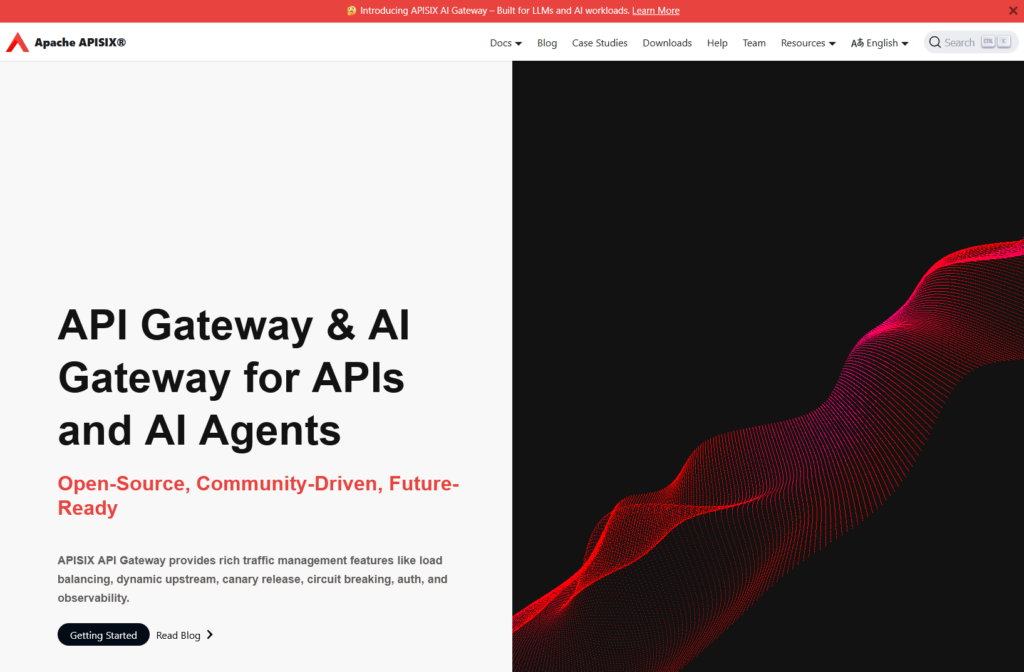
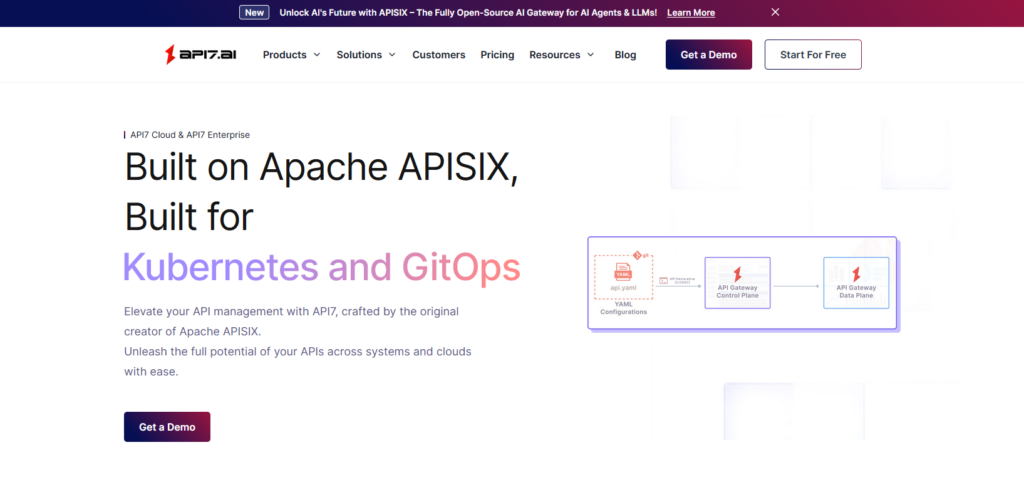
Apache APISIX is an open-source, plugin-driven API gateway used to manage and secure API traffic. It’s great at edge policy (keys, rate limiting, auth, transformations), traffic control, and observability patterns typical to gateways. It’s not a transparent multi-provider AI marketplace, and it does not aim to show you live provider stats (price, latency, uptime, availability) before you route LLM calls. That’s where a marketplace-style API like ShareAI complements a gateway.
How we evaluated the best Apache APISIX alternatives
Community & economics — whether your spend grows supply (incentives for providers).
Top 10 Apache APISIX alternatives
#1 — ShareAI (People-Powered AI API)
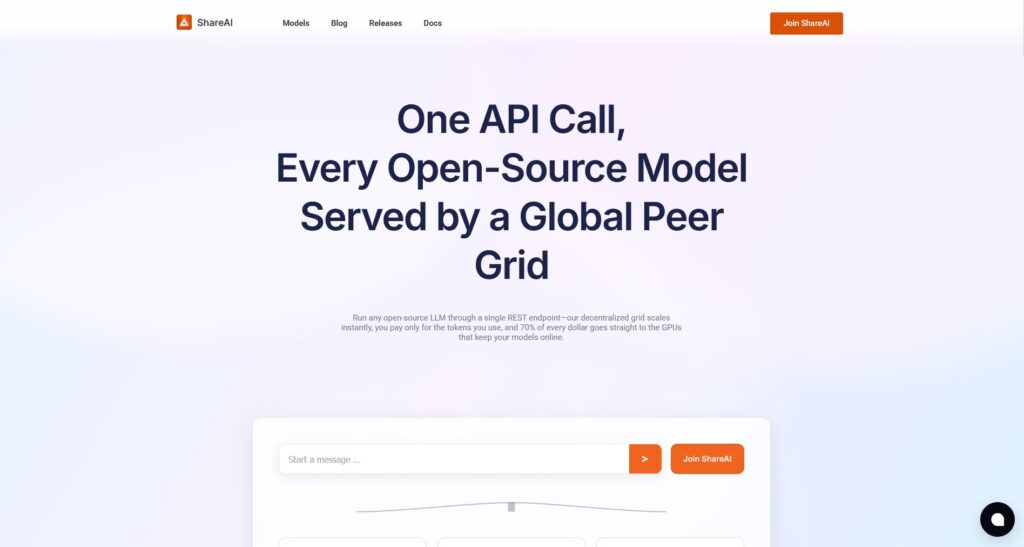
What it is. A multi-provider API with a transparent marketplace and smart routing. With one integration, browse a large catalog of models/providers, compare price, latency, uptime, availability, provider type, and route with instant failover. Economics are people-powered: providers (community or company) keep models online and earn.
Why it’s #1 here. If you want provider-agnostic aggregation with pre-route transparency and resilience, ShareAI is the most direct fit—and it pairs cleanly with your existing gateway: keep APISIX (or another gateway) for org-wide policies; add ShareAI for marketplace-guided routing.
One API → many providers; switch without rewrites.
Marketplace transparency: price, latency, uptime, availability, provider type—visible before routing.
Resilience by default: routing policies + instant failover.
Fair economics: people-powered supply; providers earn for keeping models online.
Governance: keep your gateway; enforce policies; route via ShareAI per model.
#2 — Kong Gateway / Kong AI Gateway
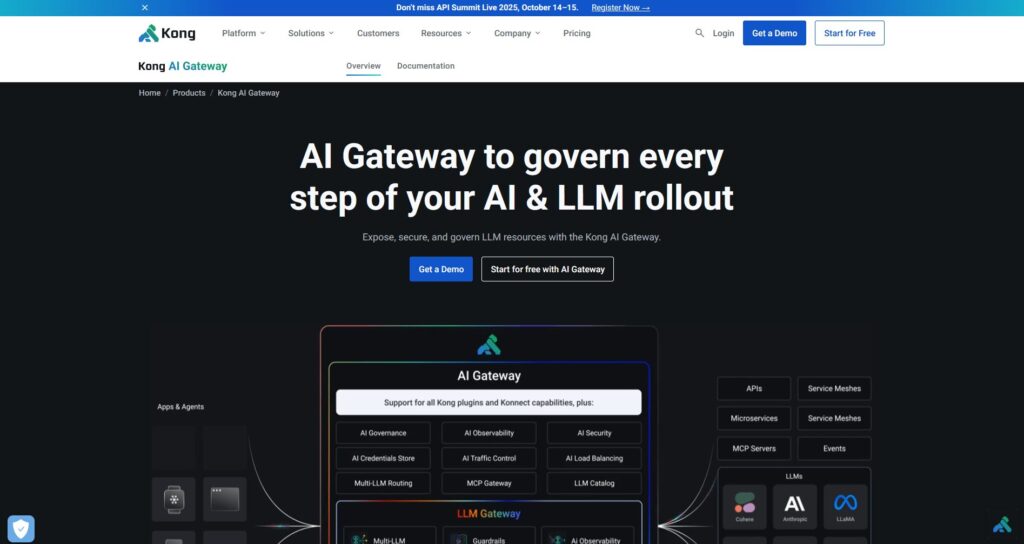
Enterprise-grade gateway focused on policies/plugins, traffic control, and runtime analytics. Pairs well with ShareAI for multi-provider routing.
#3 — Tyk
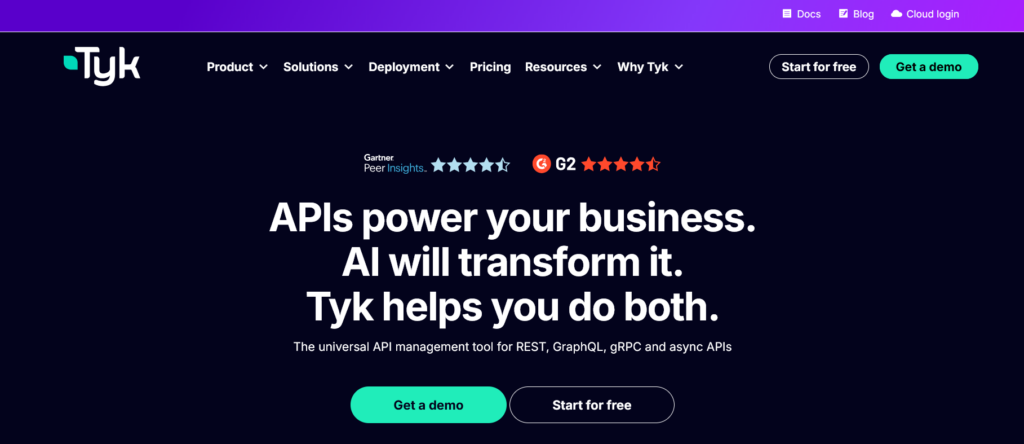
Developer-friendly gateway with granular control and strong policy features. Pair with ShareAI to choose providers by live price/latency/uptime.
#4 — NGINX
High-performance proxy/gateway; excellent for custom routing and enforcement. Add ShareAI for model marketplace + failover without DIYing multi-provider logic.
#5 — Apigee
Broad API management and monetization. Keep Apigee’s governance; route AI calls via ShareAI when you want provider-agnostic access and transparent costs.
#6 — Gravitee
Open-source gateway with policy packs and portal. Bring ShareAI to add pre-route visibility and resilient provider choice.
#7 — Traefik
Modern edge gateway with a thin AI layer available in its ecosystem. Pair with ShareAI for marketplace-driven routing + health-aware failover.
#8 — KrakenD
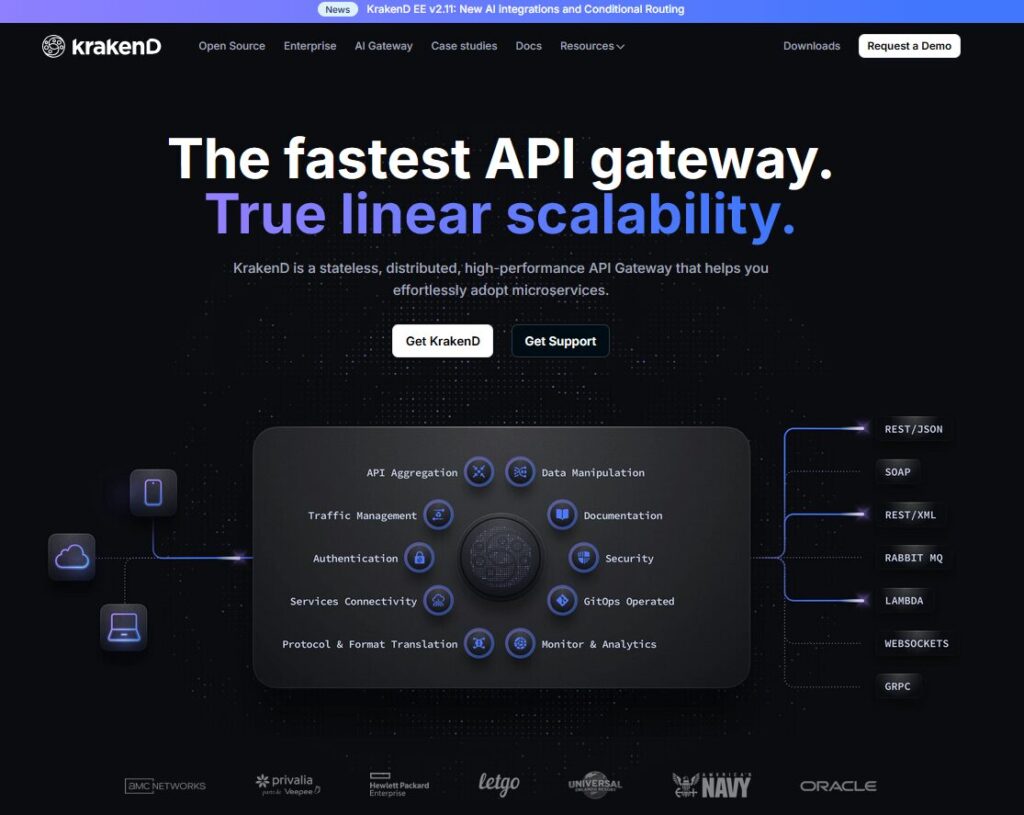
Stateless API gateway aggregation layer; great for shaping responses. Add ShareAI for the AI marketplace and cross-provider resiliency.
#9 — WSO2 API Manager
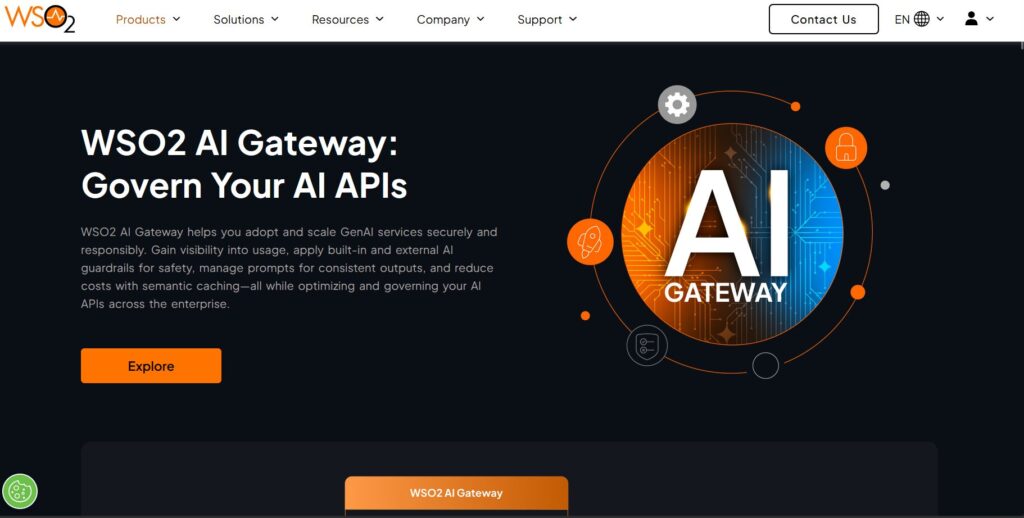
Feature-rich platform (policies, analytics). Use ShareAI for multi-provider AI and quick experimentation across models.
#10 — Amazon API Gateway (or MuleSoft)
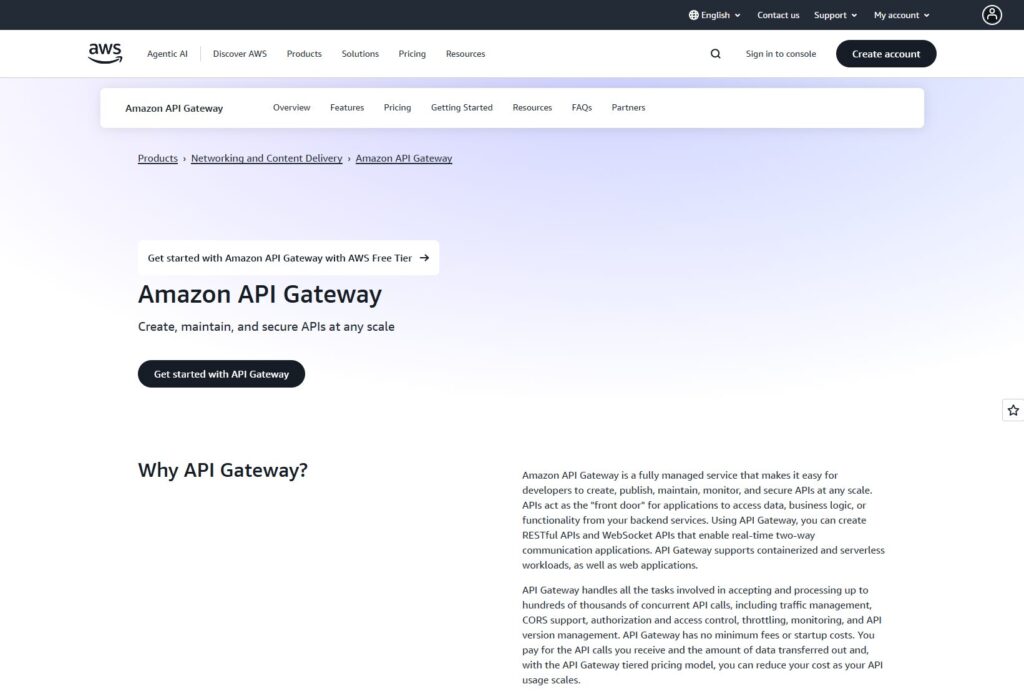
Managed control planes for enterprises. Keep governance; route AI across many providers through ShareAI for flexibility and cost/latency trade-offs.
Related: AI aggregation/orchestration alternatives APISIX users ask about
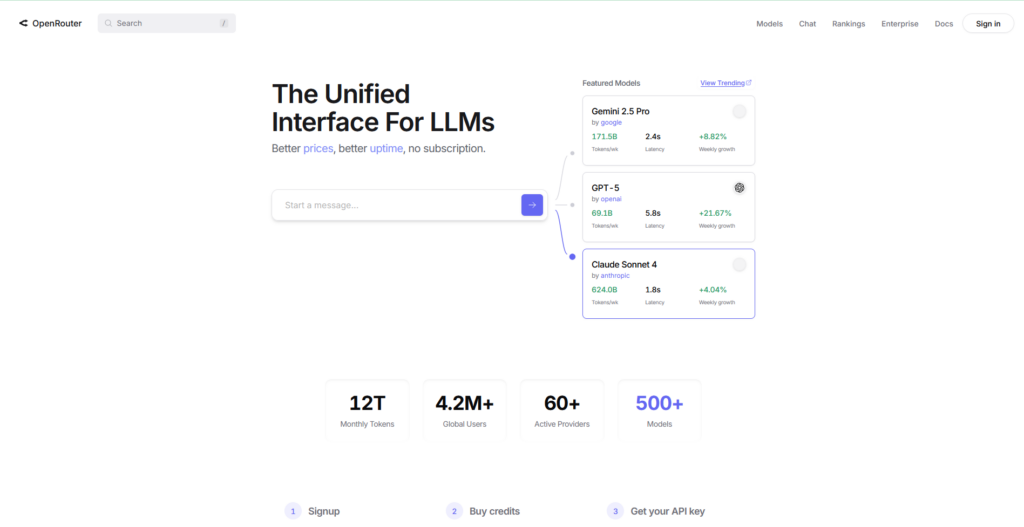
OpenRouter — unified API over many models; quick for experimentation.
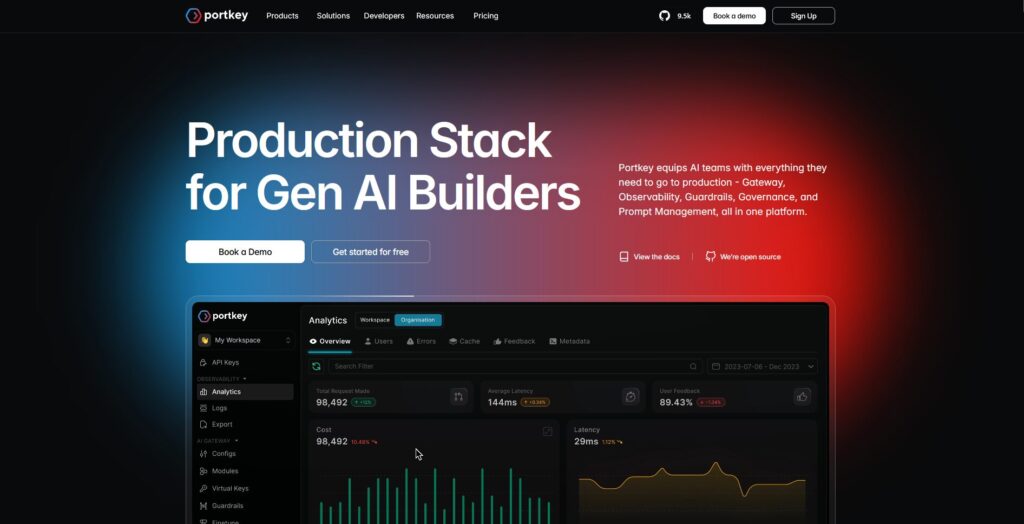
Portkey — AI gateway emphasizing observability, guardrails, governance.
Eden AI — multi-service aggregator (LLM, vision, TTS, translation).
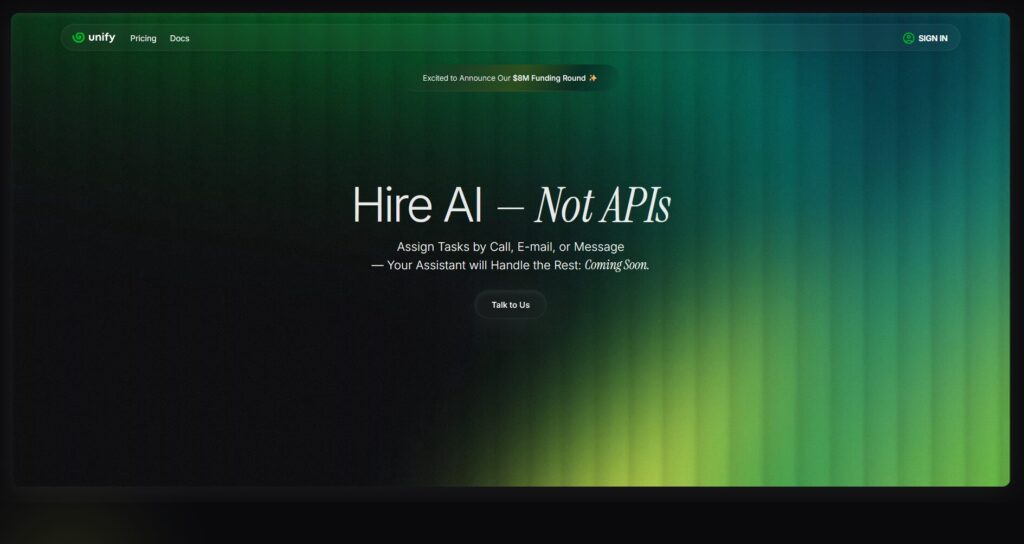
Unify — quality-driven routing/evaluation to select better models per prompt.
Orq — orchestration and collaboration flows for moving experiments to production.
If your goal is pre-route transparency with instant failover and provider-agnostic access, ShareAI centralizes those features in one API; you can still keep APISIX for edge policy.
Quick comparison (gateway vs marketplace)
Platform
Who it serves
Governance & security
Observability
Routing / failover
Marketplace transparency
Provider program
ShareAI
Product/platform teams needing one API + fair economics
Pricing & TCO: compare real costs (not just unit prices)
Raw $/1K tokens hides reality. Your effective cost shifts with retries/fallbacks, latency (affects user behavior), provider variance, observability storage, and evaluation runs. A transparent marketplace helps you choose routes that balance cost and UX.
Migration patterns: moving to (or pairing with) ShareAI
From APISIX (keep your gateway)
Keep APISIX for org policy (auth, quotas, rate limits).
Route AI calls via ShareAI per model.
Start with 10% shadow traffic, validate latency/error budgets, then ramp to 25% → 50% → 100%.
Use marketplace stats to swap providers without rewrites.
Keys & scopes stay centralized in your gateway; rotate and monitor in Console (User Guide).
From OpenRouter
Map model names, verify prompt parity, shadow traffic, then ramp as above.
From LiteLLM
Keep the self-hosted proxy where you’re comfortable operating it; move production routes to ShareAI for managed routing + failover.
From Unify / Portkey / Orq / Kong
Define feature-parity expectations (analytics, guardrails, orchestration). Many teams run a hybrid: keep specialized features where strongest; use ShareAI for transparent provider choice and resilience.
Security, privacy & compliance: a vendor-agnostic checklist
Data retention: where prompts/responses are stored and for how long; redaction defaults.
PII & sensitive content: masking; access controls; regional routing for data locality.
Observability: prompt/response logging; ability to filter or pseudonymize; propagate trace IDs consistently.
Incident response: escalation paths and provider SLAs.
For providers: earn by keeping models online
Anyone can become a ShareAI provider—Community or Company. Onboard via Windows, Ubuntu, macOS, or Docker. Contribute idle-time bursts or run always-on. Choose your incentive: Rewards (money), Exchange (tokens / AI Prosumer), or Mission (donate a % to NGOs). As you scale, you can set your own inference prices and gain preferential exposure.
Apache APISIX vs ShareAI — which for multi-provider AI routing?
ShareAI. It’s built for marketplace transparency (price, latency, uptime, availability, provider type) and smart routing/failover across many providers. APISIX is a gateway (centralized policy/observability). Many teams use both.
Apache APISIX vs Kong — gateway vs gateway?
Both are gateways with strong policy/observability. If you also want pre-route provider transparency and instant failover, layer ShareAI on whichever gateway you standardize.
Apache APISIX vs Tyk — developer ergonomics or marketplace transparency?
Tyk offers developer-friendly policy control. ShareAI adds live provider stats and resilient cross-provider routing—complementary to either gateway.
Apache APISIX vs NGINX — DIY control or turnkey marketplace routing?
NGINX is excellent for custom traffic shaping. ShareAI saves you from DIYing multi-provider routing, failover, and price/latency comparisons.
Apache APISIX vs Apigee — API management vs provider-agnostic AI?
Apigee is broad API management. ShareAI gives one API over many providers and a transparent marketplace to control effective cost and UX.
Apache APISIX vs Gravitee — open source policy vs live marketplace data?
Gravitee covers gateway governance; ShareAI covers price/latency/uptime transparency and instant failover across providers.
Apache APISIX vs KrakenD — aggregation vs aggregation+marketplace?
KrakenD aggregates upstreams at the gateway layer; ShareAI adds marketplace-level visibility and resilience across AI providers.
Apache APISIX vs WSO2 — platform depth vs multi-provider agility?
WSO2 is feature-rich; ShareAI optimizes for fast model/provider switching without rewrites.
Apache APISIX vs Amazon API Gateway — managed control vs provider choice?
Amazon API Gateway is managed governance. ShareAI gives provider-agnostic choice with pre-route cost/latency data.
Apache APISIX vs MuleSoft — enterprise integrations vs marketplace routing?
MuleSoft is enterprise integration + API management. ShareAI complements it with cross-provider AI routing and transparent pricing.
Apache APISIX vs OpenResty — Lua power vs no-code marketplace?
OpenResty is powerful for custom Lua; ShareAI avoids bespoke code for provider selection and failover.
Apache APISIX vs Portkey — who’s stronger on guardrails?
Portkey emphasizes governance/observability. If your main need is transparent provider choice and instant failover, choose ShareAI (and keep your gateway for policy). This comparison also helps teams searching for Portkey alternatives discover the marketplace approach.
Apache APISIX vs OpenRouter — fast multi-model access or resilient routing with live stats?
OpenRouter gives quick access to many models. ShareAI adds live price/latency/uptime/availability and policy-driven routing across providers.
Apache APISIX vs Eden AI — many AI services or marketplace transparency?
Eden AI aggregates several AI services; ShareAI focuses on transparent multi-provider routing and instant failover.
Apache APISIX vs LiteLLM — self-hosted proxy or managed marketplace?
LiteLLM is DIY; ShareAI is managed routing + marketplace. Many teams keep LiteLLM for dev and use ShareAI for production.
Apache APISIX vs Unify — best-model selection vs policy enforcement?
Unify optimizes for evaluation-driven selection; ShareAI optimizes for marketplace visibility + resilience. Keep your gateway for enforcement.
Apache APISIX vs Orq — orchestration vs egress?
Orq focuses on orchestration flows; ShareAI focuses on provider-agnostic routing and live marketplace stats; APISIX covers egress policy.
If you’re evaluating Higress alternatives, this guide stacks the options like a builder would. First, we clarify what Higress is—an AI-native, cloud-native API gateway built on Istio and Envoy with Wasm plugin support and a UI console—then we compare the 10 best alternatives. We place ShareAI first for teams that want one API across many providers, a transparent marketplace (price, latency, uptime, availability, provider type) before routing, instant failover, and people-powered economics (70% of spend flows to providers).
What Higress is (and isn’t)
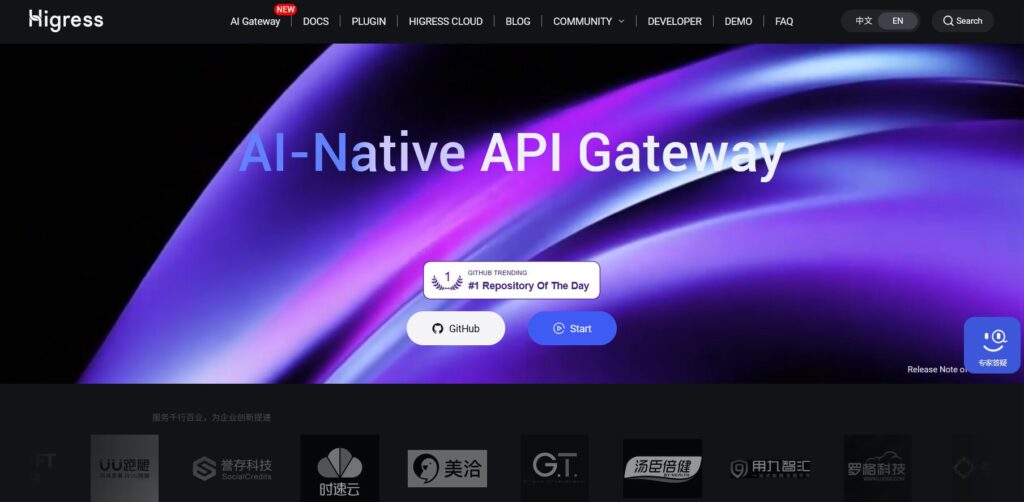
Higress and positions itself as an “AI Gateway | AI Native API Gateway.” It’s based on Istio and Envoy, fusing traffic, microservice, and security gateway layers into a single control plane and supporting Wasm plugins (Go/Rust/JS). It also offers a console and deployment via Docker/Helm. In short: a governance-first gateway for AI and microservices egress, not a transparent model marketplace.
Useful context: Higress emphasizes a “triple-gateway integration” (traffic + microservices + security) to reduce operational cost. It’s open source and community-backed.
Aggregators vs Gateways vs Agent Platforms
LLM aggregators: one API across many models/providers with pre-route transparency (price, latency, uptime, availability, provider type) and smart routing/failover.
AI gateways: policy/governance at the edge (keys, rate limits, guardrails) + observability; you bring the providers. Higress sits here.
Agent/chatbot platforms: packaged UX (sessions/memory/tools/channels), geared to shipping assistants rather than provider-agnostic aggregation.
How we evaluated the best Higress alternatives
Model breadth & neutrality: proprietary + open; easy switching; no rewrites.
What it is. A multi-provider API with a transparent marketplace and smart routing. With one integration, browse a large catalog of models and providers, compare price, latency, uptime, availability, provider type, and route with instant failover. Economics are people-powered: 70% of every dollar flows to providers (community or company) who keep models online.
Why it’s #1 here. If you want provider-agnostic aggregation with pre-route transparency and resilience, ShareAI is the most direct fit. Keep a gateway if you need org-wide policies; add ShareAI for marketplace-guided routing.
One API → 150+ models across many providers; no rewrites, no lock-in.
Transparent marketplace: choose by price, latency, uptime, availability, provider type.
Resilience by default: routing policies + instant failover.
Fair economics: 70% of spend goes to providers (community or company).
For providers: earn by keeping models online. Anyone can become a ShareAI provider—Community or Company. Onboard via Windows, Ubuntu, macOS, or Docker. Contribute idle-time bursts or run always-on. Choose your incentive: Rewards (money), Exchange (tokens/AI Prosumer), or Mission (donate a % to NGOs). As you scale, you can set inference prices and gain preferential exposure. Provider Guide
#2 — Kong AI Gateway
What it is. Enterprise AI/LLM gateway—governance, policies/plugins, analytics, observability for AI traffic at the edge. It’s a control plane, not a marketplace.
#3 — Portkey
What it is. AI gateway emphasizing observability, guardrails, and governance—popular with regulated teams.
#4 — OpenRouter
What it is. Unified API over many models; great for fast experimentation across a wide catalog.
#5 — Eden AI
What it is. Aggregates LLMs + broader AI (image, translation, TTS), with fallbacks/caching and batching.
#6 — LiteLLM
What it is. Lightweight Python SDK + self-hostable proxy that speaks an OpenAI-compatible interface to many providers.
#7 — Unify
What it is.Quality-oriented routing and evaluation to pick better models per prompt.
#8 — Orq AI
What it is. Orchestration/collaboration platform that helps teams move from experiments to production with low-code flows.
#9 — Apigee (with LLMs behind it)
What it is. Mature API management/gateway you can place in front of LLM providers to apply policies, keys, quotas.
#10 — NGINX
What it is. Use NGINX or APISIX to build custom routing, token enforcement, and caching for LLM backends if you prefer DIY control.
Higress vs ShareAI (which to choose?)
If you need one API over many providers with transparent pricing/latency/uptime/availability and instant failover, choose ShareAI. If your top requirement is egress governance—centralized credentials/policy enforcement and observability—Higress fits that lane (Istio/Envoy base, Wasm extensibility). Many teams pair them: gateway for org policy + ShareAI for marketplace routing.
Quick comparison
Platform
Who it serves
Model breadth
Governance & security
Observability
Routing / failover
Marketplace transparency
Provider program
ShareAI
Product/platform teams needing one API + fair economics
Pricing & TCO: compare real costs (not just unit prices)
Raw $/1K tokens hides the real picture. TCO shifts with retries/fallbacks, latency (which affects usage), provider variance, observability storage, and evaluation runs. A transparent marketplace helps you choose routes that balance cost and UX.
Prototype (~10k tokens/day): Optimize for time-to-first-token (Playground, quickstarts).
Mid-scale (~2M tokens/day): Marketplace-guided routing/failover can trim 10–20% while improving UX.
Spiky workloads: Expect higher effective token costs from retries during failover; budget for it.
Migration guide: moving to ShareAI
From Higress
Keep gateway-level policies where they shine, add ShareAI for marketplace routing + instant failover. Pattern: gateway auth/policy → ShareAI route per model → measure marketplace stats → tighten policies.
From OpenRouter
Map model names, verify prompt parity, then shadow 10% of traffic and ramp 25% → 50% → 100% as latency/error budgets hold. Marketplace data makes provider swaps straightforward.
From LiteLLM
Replace the self-hosted proxy on production routes you don’t want to operate; keep LiteLLM for dev if desired. Compare ops overhead vs managed routing benefits.
From Unify / Portkey / Orq / Kong
Define feature-parity expectations (analytics, guardrails, orchestration, plugins). Many teams run hybrid: keep specialized features where they’re strongest; use ShareAI for transparent provider choice and failover.
Developer quickstart (copy-paste)
Use an OpenAI-compatible surface. Replace YOUR_KEY with your ShareAI key — get one at Create API Key. See the API Reference for details. Then try the Playground.
Data retention: where prompts/responses are stored, for how long; redaction defaults.
PII & sensitive content: masking; access controls; regional routing for data locality.
Observability: prompt/response logging; ability to filter or pseudonymize; propagate trace IDs consistently (OTel).
Incident response: escalation paths and provider SLAs.
FAQ — Higress vs other competitors (and when ShareAI fits)
Higress vs ShareAI — which for multi-provider routing?
ShareAI. It’s built for marketplace transparency (price, latency, uptime, availability, provider type) and smart routing/failover across many providers. Higress is an egress governance tool (Istio/Envoy, Wasm, centralized policy). Many teams use both.
Higress vs Kong — two AI gateways?
Both are gateways (policies, plugins, analytics), not marketplaces. Kong leans enterprise plugins; Higress leans Istio/Envoy + Wasm. Pair either with ShareAI for transparent multi-provider routing.
Higress vs Traefik — thin AI layer or Istio/Envoy stack?
Traefik-style gateways bring middlewares and OTel-friendly observability; Higress rides on Istio/Envoy with Wasm extensibility. For one API over many providers with pre-route transparency, add ShareAI.
Higress vs Apache APISIX — Envoy vs NGINX/Lua
Higress is Envoy/Istio-based; APISIX is NGINX/Lua-based. If you want marketplace visibility and failover across many model providers, use ShareAI alongside.
Higress vs NGINX — DIY vs turnkey AI gateway
NGINX gives powerful DIY control; Higress packages a modern, Istio-friendly gateway. Add ShareAI when you need provider-agnostic routing and live pricing/latency before you choose.
Higress vs Apigee — AI egress vs API management
Apigee is broad API management; Higress is an AI-native gateway. ShareAI complements either with multi-provider access and marketplace transparency.
Higress vs Portkey — who’s stronger on guardrails?
Both emphasize governance/observability; depth and ergonomics differ. If your main need is transparent provider choice and instant failover, add ShareAI.
Higress vs OpenRouter — quick multi-model access or gateway controls?
OpenRouter makes multi-model access quick; Higress centralizes gateway policy. If you also want pre-route transparency, ShareAI combines multi-provider access with a marketplace view and resilient routing.
Higress vs LiteLLM — self-host proxy or managed gateway?
LiteLLM is a DIY proxy; Higress is a managed/operated gateway. Prefer ShareAI if you don’t want to run infra and need marketplace-driven routing.
Higress vs Unify — best-model selection vs policy enforcement?
Unify focuses on evaluation-driven model selection; Higress on policy/observability. For one API over many providers with live marketplace stats, use ShareAI.
Higress vs Orq — orchestration vs egress?
Orq helps orchestrate workflows; Higress governs egress traffic. ShareAI complements either with transparent provider choice.
Higress vs Eden AI — many AI services or egress control?
Eden AI aggregates several AI services (LLM, image, TTS). Higress centralizes policy/credentials. For transparent pricing/latency across many providers and instant failover, choose ShareAI.
OpenRouter vs Apache APISIX — aggregator vs NGINX/Lua gateway
OpenRouter: unified API over many models. APISIX: NGINX/Lua gateway you operate. If you need pre-route transparency and failover across providers, ShareAI is purpose-built.
Kong vs Traefik — enterprise plugins vs thin AI layer
Both are gateways; depth differs. Teams often keep a gateway and add ShareAI for marketplace-guided routing.
Portkey vs Kong — guardrails/observability vs plugin ecosystem
Different strengths; ShareAI introduces provider-agnostic routing plus marketplace metrics.
LiteLLM vs OpenRouter — self-host proxy vs aggregator
LiteLLM: you host; OpenRouter: managed aggregator. ShareAI adds pre-route transparency + failover across many providers.
NGINX vs Apigee — DIY gateway vs API management
NGINX: custom policies/caching; Apigee: full API management. If you also want transparent, multi-provider LLM routing, add ShareAI.
Unify vs Portkey — evaluation vs governance
Unify centers on model quality selection; Portkey on governance/observability. ShareAI complements with live price/latency/uptime and instant failover.
Orq vs Kong — orchestration vs edge policy
Orq orchestrates flows; Kong enforces edge policy. ShareAI handles cross-provider routing with marketplace visibility.
Eden AI vs OpenRouter — multi-service vs LLM-centric
Eden AI spans multiple modalities; OpenRouter focuses on LLMs. ShareAI gives transparent pre-route data and failover across providers.
Try ShareAI next
Open Playground — run a live request to any model in minutes
APIPark Alternatives 2026: Top 10 APIPark Alternatives
Updated September 2026
If you’re searching for APIPark alternatives, this guide breaks down the landscape from a builder’s perspective. We’ll clarify where APIPark (AI Gateway) fits—an egress/governance layer for AI traffic—then compare the 10 best alternatives. We place ShareAI first for teams that want one API across many providers, a transparent marketplace (price, latency, uptime, availability, provider type before routing), instant failover, and people-powered economics (70% of spend goes to providers who keep models online).
What it is. APIPark positions as an AI gateway/control layer: a place to centralize keys, apply policies/guardrails, and observe AI traffic as an API surface. It serves teams that want to govern AI egress across providers they already use.
What it isn’t. APIPark is not a transparent model marketplace that shows price/latency/uptime/availability across many providers before you route. If your priority is provider-agnostic choice and resilient multi-provider routing, you’ll likely pair a gateway with a marketplace API—or replace the gateway if governance needs are minimal.
Aggregators vs Gateways vs Agent platforms
LLM Aggregators (marketplaces): One API across many models/providers with pre-route transparency and smart routing/failover. Example: ShareAI (multi-provider, marketplace view).
AI Gateways: Policy/governance at the edge (keys, rate limits, guardrails) with observability. You bring your providers. Example: APIPark, Kong AI Gateway, Traefik, Apache APISIX (with AI backends).
Agent/chatbot platforms: Packaged UX, memory/tools, and channels—geared to end-user assistants versus provider-agnostic aggregation. Example: Orq (orchestration-first).
How we evaluated the best APIPark alternatives
Model breadth & neutrality: proprietary + open; easy switching; no rewrites.
Community & economics: whether your spend grows supply (incentives for GPU owners/providers).
Top 10 APIPark Alternatives
#1 — ShareAI (People-Powered AI API)
What it is. A multi-provider API with a transparent marketplace and smart routing. With one integration, browse a large catalog of models and providers, compare price, latency, uptime, availability, provider type, and route with instant failover. Economics are people-powered: 70% of every dollar flows to providers (community or company) who keep models online.
Why it’s #1 here. If you want provider-agnostic aggregation with pre-route transparency and resilience, ShareAI is the most direct fit. Keep a gateway if you need org-wide policies; add ShareAI for marketplace-guided routing.
One API → 150+ models across many providers; no rewrites, no lock-in.
Transparent marketplace: choose by price, latency, uptime, availability, provider type.
Resilience by default: routing policies + instant failover.
Fair economics:70% of spend goes to providers (community or company).
Anyone can become a ShareAI provider—Community or Company. Onboard via Windows, Ubuntu, macOS, or Docker. Contribute idle-time bursts or run always-on. Choose your incentive: Rewards (money), Exchange (tokens/AI Prosumer), or Mission (donate a % to NGOs). As you scale, you can set your own inference prices and gain preferential exposure.
Tip: If you keep a gateway for org policy, you can still route per request via ShareAI using marketplace data (price, latency, uptime, availability, provider type) to choose the best provider and failover target.
Pricing & TCO: compare real costs (not just unit prices)
Raw $/1K tokens hides the real picture. TCO shifts with retries/fallbacks, latency (which affects usage), provider variance, observability storage, and evaluation runs. A transparent marketplace helps you choose routes that balance cost and UX.
Mid-scale (~2M tokens/day): Marketplace-guided routing/failover can trim 10–20% while improving UX.
Spiky workloads: Expect higher effective token costs from retries during failover; budget for it.
Migration guides
From APIPark → ShareAI (complement or replace)
Keep gateway-level policies where they shine; add ShareAI for marketplace routing + instant failover. Common pattern: gateway auth/policy → ShareAI route per model → measure marketplace stats → tighten policies.
From OpenRouter
Map model names, verify prompt parity, then shadow 10% of traffic and ramp 25% → 50% → 100% as latency/error budgets hold. Marketplace data makes provider swaps straightforward.
From LiteLLM
Replace the self-hosted proxy on production routes you don’t want to operate; keep LiteLLM for dev if desired. Compare ops overhead vs managed routing benefits.
From Unify / Portkey / Orq / Kong / APISIX / Apigee
Define feature-parity expectations (analytics, guardrails, orchestration, plugins). Many teams run hybrid: keep specialized features where they’re strongest; use ShareAI for transparent provider choice and failover.
Developer quickstart (copy-paste)
The following use an OpenAI-compatible surface. Replace YOUR_KEY with your ShareAI key—get one at Create API Key.
Data retention: where prompts/responses are stored and for how long; redaction defaults.
PII & sensitive content: masking; access controls; regional routing for data locality.
Observability: prompt/response logging; ability to filter or pseudonymize; propagate trace IDs consistently.
Incident response: escalation paths and provider SLAs.
FAQ — APIPark vs other competitors (and where ShareAI fits)
APIPark vs ShareAI — which for multi-provider routing?
ShareAI. It’s built for marketplace transparency (price, latency, uptime, availability, provider type) and smart routing/failover across many providers. APIPark is about egress governance (centralized credentials/policy; observability). Many teams use both.
APIPark vs OpenRouter — quick multi-model access or governance?
OpenRouter makes multi-model access quick; APIPark centralizes policy and observability. If you also want pre-route transparency and instant failover, ShareAI combines multi-provider access with a marketplace view and resilient routing.
APIPark vs Kong AI Gateway — gateway vs marketplace?
Both APIPark and Kong are gateways (policies, plugins, analytics), not marketplaces. Pair a gateway with ShareAI for transparent multi-provider routing and failover.
APIPark vs Portkey — who’s stronger on guardrails?
Both emphasize governance/observability; depth and ergonomics differ. If your main need is transparent provider choice and failover, add ShareAI alongside either gateway.
APIPark vs Apache APISIX — open-source DIY or managed controls?
APISIX gives plugin-rich, open-source gateway control; APIPark provides managed governance. To avoid DIY complexity while also getting transparent provider selection, layer in ShareAI.
APIPark vs Traefik — two gateways, different ecosystems
Both govern AI egress with policies and observability. If you want one API over many providers with live marketplace stats, ShareAI complements either.
APIPark vs NGINX — DIY filters vs turnkey AI layer
NGINX offers DIY filters/policies; APIPark offers a packaged layer. To skip custom scripting and still get transparent provider choice, use ShareAI.
APIPark vs Apigee — broad API management vs AI-specific egress
Apigee is broad API management; APIPark is AI-focused egress governance. For provider-agnostic access with marketplace transparency, choose ShareAI.
APIPark vs LiteLLM — self-host proxy or managed governance?
LiteLLM is a DIY proxy you operate; APIPark is managed governance/observability. If you’d rather not run a proxy and want marketplace-driven routing, choose ShareAI.
APIPark vs Unify — best-model evaluation vs policy enforcement?
Unify focuses on evaluation-driven model selection; APIPark on policy/observability. For one API over many providers with live marketplace stats, use ShareAI.
APIPark vs Eden AI — many AI services or egress control?
Eden AI aggregates several AI services (LLM, image, TTS). APIPark centralizes policy/credentials with specialized AI middlewares. For transparent pricing/latency across providers and instant failover, choose ShareAI.
OpenRouter vs Apache APISIX — aggregator vs open-source gateway
OpenRouter simplifies model access; APISIX provides gateway control. Add ShareAI if you want pre-route transparency and failover across providers without operating your own gateway.
Try ShareAI next
Open Playground — run a live request to any model in minutes
If you’re evaluating Tyk alternatives, this guide maps the landscape like a builder would. We’ll clarify what Tyk is—an API gateway and management plane focused on policy, security, and observability—then compare the 10 best alternatives (plus a deep FAQ). We place ShareAI first for teams that want one API across many AI model providers, transparent marketplace signals (price, latency, uptime, availability, provider type) before routing, instant failover, and people-powered economics (70% of spend goes to providers).
Tyk is an API gateway: it centralizes authentication/authorization, rate-limits/quotas, request/response transformations, policies, and analytics—so you can govern and observe API traffic at the edge. That’s valuable when you need centralized egress control and observability across many services.
Tyk is not a transparent model marketplace. If your team needs pre-route visibility into AI providers and models (unit price, observed latency, uptime, availability, provider type) and the ability to fail over instantly between multiple providers—those are aggregator strengths, not traditional gateway features.
Aggregators vs Gateways vs Agent platforms
LLM aggregators (e.g., ShareAI, OpenRouter, Eden AI): one API across many models and providers, with pre-route transparency (price, latency, uptime, availability, provider type) and smart routing/failover.
API gateways (e.g., Tyk, Kong, Apigee, NGINX, Traefik, Gravitee, APISIX, KrakenD, AWS API Gateway, Azure API Management): centralized policies, keys, quotas, guardrails, and observability for your traffic. You bring your providers and models.
Agent/chatbot platforms (e.g., Unify, Orq): packaged UX for assistants, flows, tools, and evaluation—geared to end-user experiences rather than provider-agnostic aggregation.
Many teams use both: keep a gateway for org-wide policy and audit; add ShareAI for marketplace-guided routing across providers with instant failover.
How we evaluated the best Tyk alternatives
Model breadth & neutrality (for AI use cases): proprietary + open; easy switching; no rewrites.
Community & economics: whether your spend grows supply (incentives for GPU owners).
Top 10 Tyk alternatives
#1 — ShareAI (People-Powered AI API)
What it is. A multi-provider API with a transparent marketplace and smart routing. With one integration, browse a large catalog of models and providers, compare price, latency, uptime, availability, provider type, and route with instant failover. Economics are people-powered: 70% of every dollar flows to providers (community or company) who keep models online.
Why it’s #1 here. If your goal is provider-agnostic aggregation with pre-route transparency and resilience, ShareAI is the most direct fit. Keep your gateway if you need org-wide policies; add ShareAI for marketplace-guided routing.
One API → 150+ models across many providers; no rewrites, no lock-in.
Transparent marketplace: choose by price, latency, uptime, availability, provider type.
Resilience by default: routing policies + instant failover.
Fair economics: 70% of spend goes to providers (community or company).
For providers: earn by keeping models online. Anyone can become a ShareAI provider—Community or Company. Onboard via Windows, Ubuntu, macOS, or Docker. Contribute idle-time bursts or run always-on. Choose incentives: Rewards (money), Exchange (tokens/AI Prosumer), or Mission (donate a % to NGOs). As you scale, you can set your own inference prices and gain preferential exposure. Provider Guide
#2 — Kong Gateway / Kong AI Gateway
What it is. Enterprise-grade API gateway with strong policies/plugins, security, and analytics, plus AI-focused extensions for LLM traffic control. It’s a control plane, not a marketplace.
#3 — Apigee (Google Cloud)
What it is. Broad API management for enterprises—design, publish, secure, and monitor APIs at scale. Combines governance with analytics; you can front LLM providers behind Apigee, but you won’t get marketplace transparency.
#4 — NGINX
What it is. A performant reverse proxy you can compose into a DIY gateway (routing, token enforcement, caching). Powerful, but you’ll glue together policies and analytics yourself.
#5 — Traefik
What it is. A developer-friendly edge router/gateway with valuable middlewares; you can add a thin AI layer to govern LLM egress and integrate with OpenTelemetry.
#6 — Gravitee
What it is. Policy-first API management with a focus on security and developer portal experiences. Good for governance; pair with an AI aggregator if you need pre-route provider transparency.
#7 — Apache APISIX
What it is. High-performance, cloud-native gateway with a rich plugin ecosystem. Great for Lua/DIY teams that want control. You’ll add your own telemetry and routing logic.
#8 — KrakenD
What it is. High-throughput API composer/gateway supporting transformations and aggregation. A fit for teams building a unified edge over many services.
#9 — AWS API Gateway
What it is. Managed gateway inside AWS: policies, auth, quotas, and close integration with the AWS stack. No marketplace transparency; pair with ShareAI when you need multi-provider AI routing.
#10 — Azure API Management
What it is. Managed API gateway for Azure workloads; strong developer portal and policies. Like other gateways, it’s governance-first—not a provider marketplace.
Tyk vs ShareAI
If you need one API over many AI providers with transparent pricing/latency/uptime/availability and instant failover, choose ShareAI. If your top requirement is API governance—centralized credentials, policy enforcement, and observability—Tyk fits that lane. Many teams pair them: gateway for org policy + ShareAI for marketplace routing.
Quick comparison
Platform
Who it serves
Model breadth
Governance & security
Observability
Routing / failover
Marketplace transparency
Provider program
ShareAI
Product/platform teams needing one API + fair economics
TL;DR — Gateways govern; ShareAI routes intelligently across providers with pre-route transparency and instant failover.
Pricing & TCO: compare real costs (not just unit prices)
Raw $/1K tokens hides the real picture. TCO shifts with retries/fallbacks, latency (which affects user behavior), provider variance, observability storage, and evaluation runs. A transparent marketplace helps you choose routes that balance cost and UX.
Prototype (~10k tokens/day): Optimize for time-to-first-token (Playground + quickstarts). Mid-scale (~2M tokens/day): Marketplace-guided routing/failover can trim 10–20% while improving UX. Spiky workloads: Expect higher effective token costs from retries during failover; budget for it.
Migration guide: moving to (or pairing with) ShareAI
From Tyk
Keep gateway-level policies where they shine; add ShareAI for marketplace routing + instant failover. Pattern: gateway auth/policy → ShareAI route per model → measure marketplace stats → tighten policies.
From Kong / Apigee / NGINX / Traefik / Gravitee / APISIX / KrakenD / AWS / Azure
Define feature-parity expectations (analytics, guardrails, orchestration, plugins). Many teams run hybrid: keep specialized features where they’re strongest; use ShareAI for transparent provider choice and failover.
From OpenRouter / Eden AI
Map model names, verify prompt parity, then shadow 10% of traffic and ramp 25% → 50% → 100% as latency/error budgets hold. Marketplace stats make provider swaps straightforward.
From LiteLLM
Replace the self-hosted proxy on production routes you don’t want to operate; keep LiteLLM for dev if desired. Compare ops overhead vs. managed routing benefits.
From Unify / Orq / Portkey
Clarify scope: evaluation/orchestration/guardrails vs routing/marketplace. You can keep them alongside ShareAI; route via ShareAI when you need provider diversity and fast failover.
Developer quickstart (copy-paste)
The following examples use an OpenAI-compatible surface. Replace YOUR_KEY with your ShareAI key — get one at Create API Key.
#!/usr/bin/env bash
# cURL — Chat Completions via ShareAI
# Prereqs:
# export SHAREAI_API_KEY="YOUR_KEY"
curl -X POST "https://api.shareai.now/v1/chat/completions" \
-H "Authorization: Bearer $SHAREAI_API_KEY" \
-H "Content-Type: application/json" \
-d '{
"model": "llama-3.1-70b",
"messages": [
{ "role": "user", "content": "Give me a short haiku about reliable routing." }
],
"temperature": 0.4,
"max_tokens": 128
}'
// JavaScript (fetch) — Node 18+/Edge runtimes
// Prereqs:
//   process.env.SHAREAI_API_KEY = "YOUR_KEY"
async function main() {
  const res = await fetch("https://api.shareai.now/v1/chat/completions", {
    method: "POST",
    headers: {
      "Authorization": `Bearer ${process.env.SHAREAI_API_KEY}`,
      "Content-Type": "application/json"
    },
    body: JSON.stringify({
      model: "llama-3.1-70b",
      messages: [
        { role: "user", content: "Give me a short haiku about reliable routing." }
      ],
      temperature: 0.4,
      max_tokens: 128
    })
  });
  if (!res.ok) {
    console.error("Request failed:", res.status, await res.text());
    return;
  }
  const data = await res.json();
  console.log(JSON.stringify(data, null, 2));
}
main().catch(console.error);
Data retention: where prompts/responses are stored, for how long; redaction defaults.
PII & sensitive content: masking; access controls; regional routing for data locality.
Observability: prompt/response logging; ability to filter or pseudonymize; propagate trace IDs consistently.
Incident response: escalation paths and provider SLAs.
FAQ — Tyk vs other competitors
Tyk vs ShareAI — which for multi-provider AI routing? ShareAI. It’s built for marketplace transparency (price, latency, uptime, availability, provider type) and smart routing/failover across many providers. Tyk is an egress governance tool (centralized credentials/policy; analytics). Many teams use both.
Tyk vs Kong — two gateways Both are gateways (policies, plugins, analytics), not marketplaces. If you also want transparent multi-provider routing and instant failover, add ShareAI alongside your gateway.
Tyk vs Apigee — API management vs AI-specific routing Apigee is broad API management; Tyk is a leaner gateway stack. For provider-agnostic access with live marketplace stats, use ShareAI in addition.
Tyk vs NGINX — DIY vs turnkey NGINX enables DIY filters/policies; Tyk offers packaged gateway features. To avoid custom Lua and still get transparent provider selection, layer in ShareAI.
Tyk vs Traefik — edge router vs gateway Traefik is a developer-friendly edge router; Tyk is a gateway platform. Neither is a marketplace. Use ShareAI for one-API, multi-provider AI with instant failover.
Tyk vs Gravitee — policy-first vs policy-first Both emphasize governance. Your choice may hinge on plugins, UI, and portal. For pre-route provider transparency, add ShareAI.
Tyk vs Apache APISIX — plugin-driven vs productized APISIX is high-performance and plugin-centric; Tyk is more productized. Neither gives a provider marketplace—pair either with ShareAI.
Tyk vs KrakenD — API composition vs management KrakenD excels at aggregation and transformation; Tyk on policies and analytics. ShareAI complements either with marketplace routing.
Tyk vs AWS API Gateway — cloud-native choice If you’re all-in on AWS, AWS API Gateway is convenient. For multi-provider AI with transparent costs/latency and failover, add ShareAI.
Tyk vs Azure API Management — Azure-native choice APIM integrates tightly with Azure. As above, use ShareAI for model/provider diversity and fast failover.
Tyk vs OpenRouter — quick multi-model access or gateway controls? OpenRouter makes multi-model access quick; Tyk centralizes policy. If you also want pre-route transparency and instant failover, ShareAI combines multi-provider access with a marketplace view and resilient routing.
Tyk vs Eden AI — many AI services or egress control? Eden AI aggregates several AI services (LLM, image, TTS). Tyk centralizes policy/credentials. For transparent pricing/latency across many providers plus instant failover, choose ShareAI.
Tyk vs Portkey — guardrails vs governance Both emphasize governance and observability; depth and ergonomics differ. If your main need is transparent provider choice and failover, add ShareAI.
Tyk vs LiteLLM — self-host proxy or managed governance? LiteLLM is a DIY proxy you operate; Tyk is managed governance/observability for API egress. If you’d rather not run a proxy and want marketplace-driven routing, choose ShareAI.
Tyk vs Unify — best-model selection vs policy enforcement? Unify focuses on evaluation-driven model selection; Tyk on policy/observability. For one API over many providers with live marketplace stats, use ShareAI.
Tyk vs Orq — orchestration vs egress Orq helps orchestrate flows; Tyk governs egress traffic. ShareAI complements either with transparent multi-provider routing.
Provider facts (ShareAI)
Anyone can join as Community or Company provider.
Onboarding apps: Windows, Ubuntu, macOS, Docker.
Contribution modes: idle-time bursts or always-on.
Incentives: Rewards (earn money), Exchange (earn tokens to use later), Mission (donate a % to NGOs).
Perks as you scale: set your own inference prices, preferential exposure, and more. Learn more
Try ShareAI next
Open Playground — experiment with prompts/models in seconds.
Sign in / Sign up — authentication autoselects login/registration as needed.
Pomerium Alternatives 2026: Top 10
Updated September 2026
If you’re evaluating Pomerium alternatives, this guide maps the landscape like a builder would. First, we clarify what Pomerium’s Agentic Access Gateway is—an identity- and policy-forward access layer for agent/LLM traffic—then we compare the 10 best Pomerium alternatives. We place ShareAI first for teams that want one API across many providers, transparent marketplace data (price, latency, uptime, availability, provider type) before routing, instant failover, and people-powered economics (70% of spend flows to providers who keep models online).
What Pomerium Agentic Access Gateway is (and isn’t)
Pomerium sits in the gateway/governance lane. It centralizes credentials and policy, enforces access decisions, and exposes observability so each AI/agent endpoint can be lifecycle-managed like an API. That’s a strong fit when identity, SSO, and policy compliance are your first priorities.
It’s not a marketplace that shows price/latency/uptime/availability/provider type before you route, nor does it natively provide multi-provider smart routing and instant failover. If you want those capabilities, you’ll pair a gateway with a provider-agnostic aggregator like ShareAI.
Aggregators vs Gateways vs Agent platforms
LLM aggregators: one API across many providers with pre-route transparency (price, latency, uptime, availability, provider type) plus smart routing/failover to balance cost and UX.
AI/Access gateways: policy & governance at the edge (credentials, SSO, rate limits, guardrails) with observability; you bring the providers. Pomerium is in this category.
Agent/chatbot platforms: packaged UX (memory/tools/channels) to build assistants. They are not marketplaces and often assume a single upstream.
How we evaluated the best Pomerium alternatives
Model breadth & neutrality: proprietary + open; easy switching; no rewrites.
Community & economics: does your spend grow supply (e.g., incentives for GPU owners)?
Top 10 Pomerium alternatives
#1 — ShareAI (People-Powered AI API)
What it is. A multi-provider API with a transparent marketplace and smart routing. With one integration, you can browse a large catalog of models/providers, compare price, latency, uptime, availability, provider type, and route with instant failover. Economics are people-powered: 70% of every dollar flows to providers (community or company) who keep models online.
Why it’s #1 here. If you want provider-agnostic aggregation with pre-route transparency and resilience, ShareAI is the direct fit. Keep a gateway if you need org-wide policies; add ShareAI for marketplace-guided routing.
One API → 150+ models across many providers; no rewrites, no lock-in.
Transparent marketplace: choose by price, latency, uptime, availability, provider type.
Resilience by default: routing policies + instant failover.
Fair economics: 70% of spend goes to providers (community or company).
For providers: earn by keeping models online. Anyone can become a ShareAI provider—Community or Company. Onboard via Windows, Ubuntu, macOS, or Docker. Contribute idle-time bursts or run always-on. Choose your incentive: Rewards (money), Exchange (tokens/AI Prosumer), or Mission (donate a % to NGOs). As you scale, you can set your own inference prices and gain preferential exposure. Provider Dashboard.
#2 — OpenRouter
What it is. A unified API across many models—excellent for quick experiments and broad catalog access.
Where it fits. Use it when you want a single key and a wide menu of models. Add ShareAI when you need pre-route transparency and instant failover to control TCO and UX.
#3 — Traefik AI Gateway
What it is. AI egress governance on top of Traefik Hub with specialized middlewares and OTel-friendly observability.
Where it fits. Great when you need centralized policies, credentials, and traces at the edge. Pair with ShareAI to get marketplace routing across many providers.
#4 — Kong AI Gateway
What it is. Enterprise gateway with deep plugins, policies, and analytics.
Where it fits. Use for edge policy depth; combine with ShareAI for provider-agnostic routing and marketplace visibility.
#5 — Portkey
What it is. AI gateway emphasizing guardrails, governance, and detailed traces—popular in regulated environments.
Where it fits. Add ShareAI for transparent provider selection and failover if you want to balance safety with cost/latency.
#6 — Eden AI
What it is. Aggregator across LLMs and broader AI (vision/TTS/translation).
Where it fits. Useful for multi-capability projects. If you need pre-route transparency and resilience across many providers, ShareAI provides that view and routing control.
#7 — LiteLLM
What it is. Lightweight SDK + self-hostable proxy that speaks an OpenAI-compatible interface.
Where it fits. Great for DIY dev flow. Keep it for development; use ShareAI for managed routing and marketplace data in production.
#8 — Unify
What it is. Quality-oriented routing and evaluation to pick better models per prompt.
Where it fits. Pair with ShareAI for broader provider coverage and live marketplace stats when cost/latency/uptime matter.
#9 — Apache APISIX
What it is. General-purpose, high-performance API gateway with rich plugins.
Where it fits. Ideal for DIY edge control; add ShareAI when you need transparent multi-provider LLM routing rather than hard-coding a single upstream.
#10 — NGINX
What it is. Battle-tested web tier you can extend for LLM traffic (custom routing, token enforcement, caching).
Where it fits. For less bespoke glue and more transparent provider choice, pair your NGINX front with ShareAI.
Pomerium vs ShareAI (quick take)
If you need one API over many providers with transparent pricing/latency/uptime and instant failover, choose ShareAI. If your top requirement is egress governance—centralized credentials, identity-aware access, and OTel-friendly observability—Pomerium fits that lane. Many teams pair them: gateway for org policy + ShareAI for marketplace routing.
Quick comparison
Platform
Who it serves
Model breadth
Governance & security
Observability
Routing / failover
Marketplace transparency
Provider program
ShareAI
Product/platform teams needing one API + fair economics
Pricing & TCO: compare real costs (not just unit prices)
Raw $ / 1K tokens hides the real picture. Effective TCO moves with retries/fallbacks, latency (which affects usage and abandon), provider variance, observability storage, and evaluation runs. A transparent marketplace helps you choose routes that balance cost and UX.
Prototype (~10k tokens/day): Optimize for time-to-first-token — start in the Playground and use quickstarts.
Mid-scale (~2M tokens/day): Marketplace-guided routing/failover can trim 10–20% while improving UX.
Spiky workloads: Expect higher effective token costs from retries during failover; budget for it.
Migration guide: moving to ShareAI
From Pomerium
Keep gateway-level policies where they shine; add ShareAI for marketplace routing + instant failover. Pattern: gateway auth/policy → ShareAI route per model → measure marketplace stats → tighten policies as you learn.
From OpenRouter
Map model names, verify prompt parity, then shadow 10% of traffic and ramp 25% → 50% → 100% as latency/error budgets hold. Marketplace data makes provider swaps straightforward.
From LiteLLM
Replace the self-hosted proxy on production routes you don’t want to operate; keep LiteLLM for dev if desired. Compare ops overhead vs. managed routing benefits.
From Unify / Portkey / Kong
Define feature-parity expectations (analytics, guardrails, orchestration, plugins). Many teams run hybrid: keep specialized features where they’re strongest; use ShareAI for transparent provider choice and failover.
Developer quickstart (copy-paste)
These examples use an OpenAI-compatible surface. Replace YOUR_KEY with your ShareAI key — get one at Create API Key. See the API Reference for details.
Data retention: where prompts/responses are stored and for how long; redaction defaults.
PII & sensitive content: masking; access controls; regional routing for data locality.
Observability: prompt/response logging; ability to filter or pseudonymize; propagate trace IDs consistently (OTel).
Incident response: escalation paths and provider SLAs.
FAQ — Pomerium vs others (and competitor-vs-competitor)
Pomerium vs ShareAI — which for multi-provider routing?
ShareAI. It’s built for marketplace transparency (price, latency, uptime, availability, provider type) and smart routing/failover across many providers. Pomerium is an egress governance tool (centralized credentials/policy; identity-aware access; OTel-friendly observability). Many teams use both.
Pomerium vs OpenRouter — quick multi-model access or gateway controls?
OpenRouter makes multi-model access quick; Pomerium centralizes policy/observability. If you also want pre-route transparency and instant failover, ShareAI combines multi-provider access with a marketplace view and resilient routing.
Pomerium vs Traefik AI Gateway — two gateways, AI-specific controls
Both are gateways (policies/guardrails/observability). If you also need provider-agnostic routing with transparency, pair the gateway with ShareAI.
Pomerium vs Kong AI Gateway — policy depth and plugins
Kong offers deep edge plugins/policies; Pomerium focuses on identity-aware access. For transparent provider choice and failover, add ShareAI.
Pomerium vs Portkey — who’s stronger on guardrails?
Both emphasize governance and traces; depth/ergonomics differ. If your main need is transparent provider selection and instant failover, use ShareAI alongside either.
Pomerium vs Eden AI — many AI services or egress control?
Eden AI aggregates multiple AI services; Pomerium governs egress. For pricing/latency transparency across many providers, choose ShareAI.
Pomerium vs LiteLLM — self-host proxy or managed governance?
LiteLLM is a DIY proxy; Pomerium is managed governance/observability. If you’d rather not run a proxy and want marketplace-driven routing, choose ShareAI.
Pomerium vs Unify — evaluation-driven vs policy-driven
Unify focuses on evaluation-based model selection; Pomerium on policy/observability. For one API with live marketplace stats, pick ShareAI.
Pomerium vs Apache APISIX — DIY gateway vs identity-aware access
APISIX is a general API gateway; Pomerium centers on identity-aware access. Need transparent multi-provider LLM routing? Use ShareAI.
Pomerium vs NGINX
NGINX is DIY (custom Lua, policies, caching); Pomerium is a packaged access layer. To avoid bespoke glue and still get transparent provider selection, layer in ShareAI.
If you’re evaluating GitLab AI Gateway alternatives, this guide maps the landscape like a builder would. First, we clarify what GitLab’s AI Gateway lane is—egress governance (centralized credentials/policies), an LLM-aware control layer, and observability—then we compare the 10 best alternatives. We place ShareAI first for teams that want one API across many providers, a transparent marketplace with price / latency / uptime / availabilitybefore routing, instant failover, and people-powered economics (70% of every dollar flows back to providers—community or company).
What GitLab AI Gateway is (and isn’t)
What it is. A governance-first layer focused on routing AI traffic with policies, key management, and observability—so application teams can control LLM usage with the same discipline they bring to any production API.
What it isn’t. A neutral marketplace that helps you choose providers/models based on real-time price, latency, uptime, and availability or automatically fail over across multiple providers. Gateways standardize control; aggregators optimize choice and resilience.
Aggregators vs Gateways vs Agent platforms (quick primer)
LLM aggregators. One API across many models/providers with pre-route transparency (price, latency, uptime, availability, provider type), plus smart routing/failover.
AI gateways.Policy/governance at the edge (credentials, rate limits, guardrails), plus observability. You bring your providers. GitLab AI Gateway lives here.
Agent/chatbot platforms. Packaged UX, memory/tools, channels—great for end-user assistants, not provider-agnostic routing.
How we evaluated the best GitLab AI Gateway alternatives
Model breadth & neutrality. Proprietary + open; switch providers with no rewrites.
Community & economics. Whether your spend grows supply (incentives for GPU owners; fair revenue share).
Top 10 GitLab AI Gateway alternatives
#1 — ShareAI (People-Powered AI API)
What it is. A multi-provider API with a transparent marketplace and smart routing. With one integration, browse a large catalog of models and providers, compare price, latency, uptime, availability, provider type, and route with instant failover. Economics are people-powered: 70% of every dollar flows to providers (community or company) who keep models online.
Why it’s #1 here. If you want provider-agnostic aggregation with pre-route transparency and resilience, ShareAI is the most direct fit. Keep a gateway if you need org-wide policies; add ShareAI for marketplace-guided routing and “always-on” availability across providers.
One API → 150+ models across many providers; no rewrites, no lock-in.
Transparent marketplace: choose by price, latency, uptime, availability, provider type.
Resilience by default: routing policies + instant failover.
Fair economics:70% of spend goes to providers, returning value to the community.
For providers: earn by keeping models online Anyone can become a ShareAI provider—Community or Company. Onboard via Windows, Ubuntu, macOS, or Docker. Contribute idle-time bursts or run always-on. Choose your incentive: Rewards (money), Exchange (tokens / AI Prosumer), or Mission (donate a % to NGOs). As you scale, set your own inference prices and gain preferential exposure. Provider Guide · Sign in / Sign up
#2 — Kong AI Gateway
Enterprise AI/LLM gateway—strong policies/plugins, analytics, and observability for AI traffic. It’s a control plane rather than a marketplace.
#3 — Portkey
AI gateway emphasizing observability, guardrails, and governance—popular where compliance is strict.
#4 — OpenRouter
Unified API over many models; excellent for fast experimentation across a wide catalog.
#5 — Eden AI
Aggregates LLMs plus broader AI (vision, translation, TTS), with fallbacks/caching and batching.
#6 — LiteLLM
Lightweight SDK + self-hostable proxy exposing an OpenAI-compatible interface to many providers.
#7 — Unify
Quality-oriented routing and evaluation to pick better models per prompt.
#8 — Orq AI
Orchestration/collaboration platform to move experiments → production with low-code flows.
#9 — Apigee (with LLMs behind it)
Mature API management/gateway you can place in front of LLM providers to apply policies, keys, and quotas.
#10 — NGINX
DIY path: build custom routing, token enforcement, and caching for LLM backends if you prefer tight control.
GitLab AI Gateway vs ShareAI (tl;dr): Need one API over many providers with marketplace transparency and instant failover? Choose ShareAI. Need egress governance—centralized credentials, policy, observability—and you already picked your providers? GitLab AI Gateway fits that lane. Many teams pair them: gateway for org policy + ShareAI for marketplace-guided routing.
Quick comparison (at a glance)
Platform
Who it serves
Model breadth
Governance & security
Observability
Routing / failover
Marketplace transparency
Provider program
ShareAI
Product/platform teams needing one API + fair economics
Pricing & TCO: compare real costs (not just unit prices)
Raw $/1K tokens hides the real picture. TCO shifts with retries/fallbacks, latency (which affects usage), provider variance, observability storage, and evaluation runs. A transparent marketplace helps you choose routes that balance cost and UX.
Prototype (~10k tokens/day): Optimize for time-to-first-token (Playground, quickstarts).
Mid-scale (~2M tokens/day): Marketplace-guided routing/failover can trim 10–20% while improving UX.
Spiky workloads: Expect higher effective token costs from retries during failover—budget for it.
Migration playbooks: moving to ShareAI
From GitLab AI Gateway
Keep gateway-level policies where they shine. Add ShareAI for marketplace routing + instant failover. Pattern: gateway auth/policy → ShareAI route per model → measure marketplace stats → tighten policies.
From OpenRouter
Map model names, verify prompt parity, then shadow 10% of traffic and ramp 25% → 50% → 100% as latency/error budgets hold. Marketplace data makes provider swaps straightforward.
From LiteLLM
Replace the self-hosted proxy on production routes you don’t want to operate; keep LiteLLM for dev if desired. Compare ops overhead vs. managed routing benefits.
From Unify / Portkey / Orq / Kong
Define feature-parity expectations (analytics, guardrails, orchestration, plugins). Many teams run hybrid: keep specialized features where they’re strongest; use ShareAI for transparent provider choice and failover.
Developer quickstart (copy-paste)
The following use an OpenAI-compatible surface. Replace YOUR_KEY with your ShareAI key—get one at Create API Key.
Data retention: where prompts/responses are stored, for how long; redaction defaults.
PII & sensitive content: masking; access controls; regional routing for data locality.
Observability: prompt/response logging; ability to filter/pseudonymize; propagate trace IDs consistently.
Incident response: escalation paths and provider SLAs.
FAQ — GitLab AI Gateway vs other competitors
GitLab AI Gateway vs ShareAI — which for multi-provider routing?
ShareAI. It’s built for marketplace transparency (price, latency, uptime, availability, provider type) and smart routing/failover across many providers. GitLab AI Gateway is egress governance (centralized credentials, policy, observability). Many teams use both.
GitLab AI Gateway vs OpenRouter — quick multi-model access or gateway controls?
OpenRouter makes multi-model access quick; GitLab centralizes policy and observability. If you also want pre-route transparency and instant failover, ShareAI combines multi-provider access with a marketplace view and resilient routing.
GitLab AI Gateway vs Eden AI — many AI services or egress control?
Eden AI aggregates several AI services (LLM, image, TTS). GitLab centralizes policy/credentials. For transparent pricing/latency across many providers and instant failover, choose ShareAI.
GitLab AI Gateway vs LiteLLM — self-host proxy or managed governance?
LiteLLM is a DIY proxy you operate; GitLab is managed governance/observability for AI egress. If you’d rather not run a proxy and want marketplace-driven routing, choose ShareAI.
GitLab AI Gateway vs Portkey — who’s stronger on guardrails?
Both emphasize governance/observability; depth and ergonomics differ. If your main need is transparent provider choice + failover, add ShareAI.
GitLab AI Gateway vs Unify — best-model selection vs policy enforcement?
Unify focuses on evaluation-driven model selection; GitLab focuses on policy/observability. For one API over many providers with live marketplace stats, use ShareAI.
GitLab AI Gateway vs Orq — orchestration vs egress?
Orq helps orchestrate workflows; GitLab governs egress traffic. ShareAI complements either with marketplace routing.
GitLab AI Gateway vs Kong AI Gateway — two gateways
Both are gateways (policies, plugins, analytics), not marketplaces. Many teams pair a gateway with ShareAI for transparent multi-provider routing and failover.
GitLab AI Gateway vs Traefik AI Gateway — specialized AI middlewares or broader platform?
Traefik’s thin AI layer and specialized middlewares pair well with ShareAI’s marketplace transparency; GitLab provides governance inside the GitLab ecosystem.
GitLab AI Gateway vs Apigee — API management vs AI-specific egress
Apigee is broad API management; GitLab is AI-focused egress governance within your DevOps flow. If you need provider-agnostic access with marketplace transparency, use ShareAI.
GitLab AI Gateway vs NGINX — DIY vs turnkey
NGINX offers DIY filters/policies; GitLab offers a packaged layer. To avoid custom scripting and get transparent provider selection, layer in ShareAI.
OpenRouter vs Apache APISIX — marketplace speed or edge policy?
OpenRouter accelerates model trialing; APISIX is a programmable gateway. If you also want pre-route price/latency transparency with instant failover, use ShareAI.
LiteLLM vs OpenRouter — DIY proxy or hosted aggregator?
LiteLLM gives you a self-host proxy; OpenRouter hosts aggregation. ShareAI adds live marketplace stats + failover and returns 70% of revenue to providers—giving back to the community.
Kong vs Apache APISIX — enterprise plugins or open-source edge?
Both are strong gateways. If you want transparent provider choice and multi-provider resilience, route through ShareAI and keep your gateway for policy.
Portkey vs Unify — guardrails vs quality-driven selection?
Portkey leans into guardrails/observability; Unify into model quality selection. ShareAI brings market transparency and resilient routing to either stack.
NGINX vs Apache APISIX — two DIY paths
Both require engineering investment. If you’d rather delegate multi-provider routing + failover and keep policy at the edge, layer in ShareAI.
If you’re evaluating WSO2 alternatives, this guide maps the landscape the way a builder would. We start by clarifying where a gateway like WSO2 fits—governance at the edge, policy enforcement, and observability for AI/LLM traffic—then compare the 10 best WSO2 AI Gateway alternatives. We place ShareAI first for teams that want one API across many providers, a transparent marketplace showing price, latency, uptime, and availability before routing, instant failover, and people-powered economics (70% of spend goes to providers).
WSO2’s AI/Gateway approach is rooted in classic API management: centralized credentials, policy controls, and observability for traffic you send to the models you choose. That’s a governance-first control plane—you bring your providers and enforce rules at the edge—rather than a transparent model marketplace that helps you compare providers and route intelligently across many of them.
If your top priority is organization-wide governance, a gateway makes sense. If you want provider-agnostic access with pre-route transparency and automatic failover, look at an aggregator/marketplace such as ShareAI—or run the two side-by-side.
Aggregators vs Gateways vs Agent platforms
LLM Aggregators / Marketplaces. One API over many models/providers with pre-route transparency (price, latency, uptime, availability, provider type) and smart routing/failover. Example: ShareAI.
AI Gateways.Governance at the edge (keys, rate limits, guardrails), plus observability; you supply the providers. Examples: WSO2, Kong, Portkey.
Agent/Chatbot platforms. Packaged UX (chat, tools, memory, channels) aimed at end-user assistants, not provider-agnostic aggregation. Example: Orq (orchestration-first).
How we evaluated the best WSO2 alternatives
Model breadth & neutrality. Proprietary and open models; easy switching without rewrites.
Community & economics. Does your spend grow supply (incentives for GPU owners/providers)?
Top 10 WSO2 Alternatives
#1 — ShareAI (People-Powered AI API)
What it is. A multi-provider API with a transparent marketplace and smart routing. With one integration, browse a large catalog of models and providers, compare price, latency, uptime, availability, and provider type, and route with instant failover. Economics are people-powered: 70% of every dollar flows to providers (community or company) who keep models online.
Why it’s #1 here. If you want provider-agnostic aggregation with pre-route transparency and resilience by default, ShareAI is the most direct fit. Keep any gateway you already use for org-wide policies; add ShareAI for marketplace-guided routing.
One API → 150+ models across many providers; no rewrites, no lock-in. → Browse Models
Transparent marketplace: choose by price, latency, uptime, availability, provider type.
Resilience by default: routing policies + instant failover.
Fair economics:70% of spend goes to providers (community or company).
For providers: earn by keeping models online Anyone can become a ShareAI provider—Community or Company—and onboard via Windows, Ubuntu, macOS, or Docker. Contribute idle-time bursts or run always-on. Choose your incentive: Rewards (money), Exchange (tokens / AI Prosumer), or Mission (donate a % to NGOs). As you scale, you can set your own inference prices and gain preferential exposure. → Provider Guide
#2 — Kong AI Gateway
What it is. Enterprise AI/LLM gateway—governance, policies/plugins, analytics, and observability at the edge. A control plane rather than a marketplace.
#3 — Portkey
What it is. AI gateway emphasizing guardrails and deep observability, common in regulated industries.
#4 — OpenRouter
What it is. Unified API over many models; great for fast experimentation across a wide catalog.
#5 — Eden AI
What it is. Aggregates LLMs and broader AI (vision, translation, TTS); offers fallbacks/caching and batching.
#6 — LiteLLM
What it is. A lightweight Python SDK + self-hostable proxy that speaks an OpenAI-compatible interface to many providers.
#7 — Unify
What it is.Quality-oriented routing and evaluation to pick better models per prompt.
#8 — Orq AI
What it is.Orchestration/collaboration platform to move from experiments to production with low-code flows.
#9 — Apigee (with LLMs behind it)
What it is. Mature API management/gateway you can place in front of LLM providers to apply policies, keys, and quotas.
#10 — NGINX
What it is.DIY control: build custom routing, token enforcement, and caching for LLM backends if you prefer hand-rolled policies.
WSO2 vs ShareAI (at a glance)
If you need one API across many providers with transparent pricing/latency/uptime and instant failover, choose ShareAI.
If your top requirement is egress governance—centralized credentials, policy enforcement, and observability—WSO2 fits that lane.
Many teams pair them: gateway for org policy + ShareAI for marketplace routing.
Quick comparison
Platform
Who it serves
Model breadth
Governance & security
Observability
Routing / failover
Marketplace transparency
Provider program
ShareAI
Product/platform teams needing one API + fair economics
Pricing & TCO: compare real costs (not just unit prices)
Raw $/1K tokens can hide the real picture. Your TCO shifts with retries/fallbacks, latency (which affects usage), provider variance, observability storage, and evaluation runs. A transparent marketplace helps you choose routes that balance cost and UX.
Prototype (~10k tokens/day): Optimize for time-to-first-token. Use the Open Playground and quickstarts.
Mid-scale (~2M tokens/day): Marketplace-guided routing/failover can trim 10–20% while improving UX.
Spiky workloads: Expect higher effective token costs from retries during failover; budget for it.
Migration guide: moving to ShareAI
From WSO2
Keep gateway-level policies where they shine; add ShareAI for marketplace routing + instant failover. Pattern: gateway auth/policy → ShareAI route per model → measure marketplace stats → tighten policies.
From OpenRouter
Map model names, verify prompt parity, then shadow 10% of traffic and ramp 25% → 50% → 100% as latency/error budgets hold. Marketplace data makes provider swaps straightforward.
From LiteLLM
Replace the self-hosted proxy on production routes you don’t want to operate; keep LiteLLM for dev if desired. Compare ops overhead vs managed routing benefits.
From Unify / Portkey / Orq / Kong
Define feature-parity expectations (analytics, guardrails, orchestration, plugins). Many teams run hybrid: keep specialized features where they’re strongest; use ShareAI for transparent provider choice and failover.
Developer quickstart (copy-paste)
Use an OpenAI-compatible surface. Replace YOUR_KEY with your ShareAI key—get one at Create API Key. See the API Reference for details.
Data retention: where prompts/responses are stored; duration; redaction defaults.
PII & sensitive content: masking; access controls; regional routing for data locality.
Observability: prompt/response logging; ability to filter/pseudonymize; propagate trace IDs consistently.
Incident response: escalation paths and provider SLAs.
FAQ — WSO2 alternatives & comparison matchups
WSO2 vs ShareAI — which for multi-provider routing?
ShareAI. It’s built for marketplace transparency (price, latency, uptime, availability, provider type) and smart routing/failover across many providers. WSO2 is a governance tool (centralized credentials/policy; gateway-first observability). Many teams use both.
WSO2 vs Kong AI Gateway — who’s stronger on edge policy?
Both are gateways; Kong is known for a deep plugin ecosystem and edge policies, while WSO2 aligns closely with API-management workflows. If you also want pre-route transparency and instant failover, layer in ShareAI.
WSO2 vs Portkey — governance and guardrails?
Portkey emphasizes guardrails and tracing depth; WSO2 offers policy-driven governance. For provider-agnostic choice with marketplace stats and automatic failover, add ShareAI.
WSO2 vs OpenRouter — marketplace breadth or gateway control?
OpenRouter offers a broad model catalog; WSO2 centralizes policy. If you want breadth + resilience with live marketplace metrics, ShareAI combines multi-provider routing with transparent pre-route data.
WSO2 vs Orq — orchestration vs egress?
Orq helps orchestrate workflows; WSO2 governs egress. Keep your orchestration where it shines and use ShareAI for provider-agnostic routing with a market view.
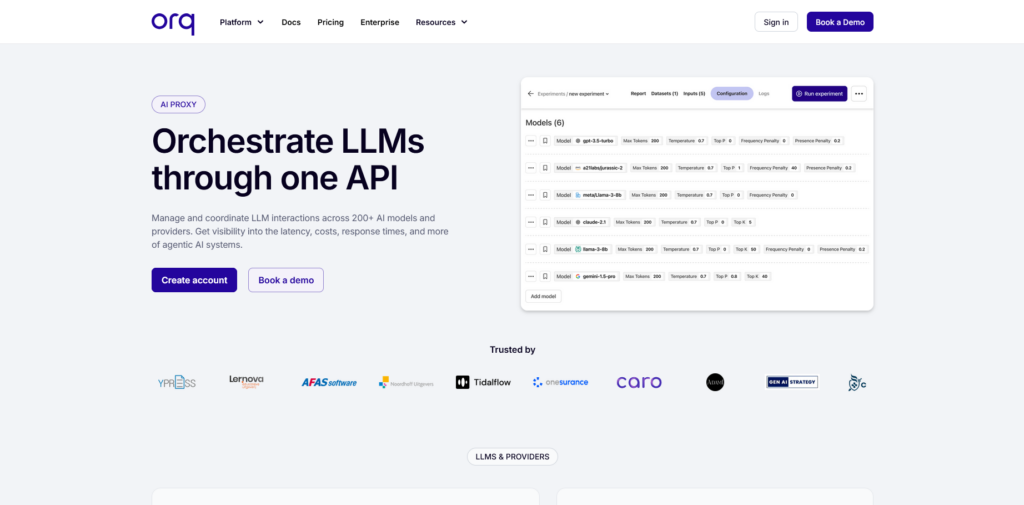
If you’re researching Orq AI Proxy alternatives, this guide maps the landscape the way a builder would. We’ll quickly define where Orq fits (an orchestration-first proxy that helps teams move from experiments to production with collaborative flows), then compare the 10 best alternatives across aggregation, gateways, and orchestration. We place ShareAI first for teams that want one API across many providers, transparent marketplace signals (price, latency, uptime, availability, provider type) before routing, instant failover, and people-powered economics (providers—community or company—earn the majority of spend when they keep models online).
Orq AI Proxy sits in an orchestration-first platform. It emphasizes collaboration, flows, and taking prototypes to production. You’ll find tooling for coordinating multi-step tasks, analytics around runs, and a proxy that streamlines how teams ship. That’s different from a transparent model marketplace: pre-route visibility into price/latency/uptime/availability across many providers—plus smart routing and instant failover—is where a multi-provider API like ShareAI shines.
In short:
Orchestration-first (Orq): ship workflows, manage runs, collaborate—useful if your core need is flow tooling.
Marketplace-first (ShareAI): pick best-fit provider/model with live signals and automatic resilience—useful if your core need is routing across providers without lock-in.
Aggregators vs. Gateways vs. Orchestration Platforms
LLM Aggregators (e.g., ShareAI, OpenRouter, Eden AI): One API across many providers/models. With ShareAI you can compare price, latency, uptime, availability, provider type before routing, then fail over instantly if a provider degrades.
AI Gateways (e.g., Kong, Portkey, Traefik, Apigee, NGINX): Policy/governance at the edge (centralized credentials, WAF/rate limits/guardrails), plus observability. You typically bring your own providers.
Orchestration Platforms (e.g., Orq, Unify; LiteLLM if self-hosted proxy flavor): Focus on flows, tooling, and sometimes quality selection—helping teams structure prompts, tools, and evaluations.
Use them together when it helps: many teams keep a gateway for org-wide policy while routing via ShareAI for marketplace transparency and resilience.
How we evaluated the best Orq AI Proxy alternatives
Model breadth & neutrality: proprietary + open; easy to switch; minimal rewrites.
Community & economics: does your spend grow supply (incentives for GPU owners/providers)?
Top 10 Orq AI Proxy alternatives
#1 — ShareAI (People-Powered AI API)
What it is. A multi-provider API with a transparent marketplace and smart routing. With one integration, browse a large catalog of models and providers, compare price, latency, uptime, availability, provider type, and route with instant failover. Economics are people-powered: providers (community or company) earn the majority of spend when they keep models online.
Why it’s #1 here. If you want provider-agnostic aggregation with pre-route transparency and resilience, ShareAI is the most direct fit. Keep a gateway if you need org-wide policies; add ShareAI for marketplace-guided routing and better uptime/latency.
One API → 150+ models across many providers; no rewrites, no lock-in.
Transparent marketplace: choose by price, latency, uptime, availability, provider type.
Resilience by default: routing policies + instant failover.
Fair economics: people-powered—providers earn when they keep models available.
Anyone can become a ShareAI provider—Community or Company. Onboard via Windows, Ubuntu, macOS, or Docker. Contribute idle-time bursts or run always-on. Choose your incentive: Rewards (money), Exchange (tokens/AI Prosumer), or Mission (donate a % to NGOs). As you scale, set your own inference prices and gain preferential exposure.
What it is. A unified API over many models; great for fast experimentation across a broad catalog.
When to pick. If you want quick access to diverse models with minimal setup.
Compare to ShareAI. ShareAI adds pre-route marketplace transparency and instant failover across many providers.
#3 — Portkey
What it is. An AI gateway emphasizing observability, guardrails, and governance.
When to pick. Regulated environments that require deep policy/guardrail controls.
Compare to ShareAI. ShareAI focuses on multi-provider routing + marketplace transparency; pair it with a gateway if you need org-wide policy.
#4 — Kong AI Gateway
What it is. An enterprise gateway: policies/plugins, analytics, and edge governance for AI traffic.
When to pick. If your org already runs Kong or needs rich API governance.
Compare to ShareAI. Add ShareAI for transparent provider choice and failover; keep Kong for the control plane.
#5 — Eden AI
What it is. An aggregator for LLMs and broader AI services (vision, TTS, translation).
When to pick. If you need many AI modalities behind one key.
Compare to ShareAI. ShareAI specializes in marketplace transparency for model routing across providers.
#6 — LiteLLM
What it is. A lightweight SDK + self-hostable proxy that speaks an OpenAI-compatible interface to many providers.
When to pick. DIY teams who want a local proxy they operate themselves.
Compare to ShareAI. ShareAI is managed with marketplace data and failover; keep LiteLLM for dev if desired.
#7 — Unify
What it is.Quality-oriented selection and evaluation to pick better models for each prompt.
When to pick. If you want evaluation-driven routing.
Compare to ShareAI. ShareAI adds live marketplace signals and instant failover across many providers.
#8 — Orq (platform)
What it is.Orchestration/collaboration platform that helps teams move from experiments to production with low-code flows.
When to pick. If your top need is workflow orchestration and team collaboration.
Compare to ShareAI. ShareAI is provider-agnostic routing with pre-route transparency and failover; many teams pair Orq with ShareAI.
#9 — Apigee (with LLM backends)
What it is. A mature API management platform you can place in front of LLM providers to apply policies, keys, quotas.
When to pick. Enterprise orgs standardizing on Apigee for API control.
Compare to ShareAI. Add ShareAI to gain transparent provider choice and instant failover.
#10 — NGINX (DIY)
What it is. A do-it-yourself edge: publish routes, token enforcement, caching with custom logic.
When to pick. If you prefer full DIY and have ops bandwidth.
Compare to ShareAI. Pairing with ShareAI avoids bespoke logic for provider selection and failover.
Orq AI Proxy vs ShareAI (quick view)
If you need one API over many providers with transparent price/latency/uptime/availability and instant failover, choose ShareAI. If your top requirement is orchestration and collaboration—flows, multi-step tasks, and team-centric productionization—Orq fits that lane. Many teams pair them: orchestration inside Orq + marketplace-guided routing in ShareAI.
Quick comparison
Platform
Who it serves
Model breadth
Governance & security
Observability
Routing / failover
Marketplace transparency
Provider program
ShareAI
Product/platform teams needing one API + fair economics
150+ models, many providers
API keys & per-route controls
Console usage + marketplace stats
Smart routing + instant failover
Price, latency, uptime, availability, provider type
Yes—open supply; providers earn
Orq (Proxy)
Orchestration-first teams
Wide support via flows
Platform controls
Run analytics
Orchestration-centric
Not a marketplace
n/a
OpenRouter
Devs wanting one key
Wide catalog
Basic API controls
App-side
Fallbacks
Partial
n/a
Portkey
Regulated/enterprise teams
Broad
Guardrails & governance
Deep traces
Conditional routing
Partial
n/a
Kong AI Gateway
Enterprises needing gateway policy
BYO
Strong edge policies/plugins
Analytics
Proxy/plugins, retries
No (infra tool)
n/a
Eden AI
Teams needing LLM + other AI services
Broad
Standard controls
Varies
Fallbacks/caching
Partial
n/a
LiteLLM
DIY/self-host proxy
Many providers
Config/key limits
Your infra
Retries/fallback
n/a
n/a
Unify
Quality-driven teams
Multi-model
Standard API security
Platform analytics
Best-model selection
n/a
n/a
Apigee / NGINX
Enterprises / DIY
BYO
Policies
Add-ons / custom
Custom
n/a
n/a
Pricing & TCO: compare real costs (not just unit prices)
Raw $/1K tokens hides the real picture. TCO shifts with retries/fallbacks, latency (which affects end-user usage), provider variance, observability storage, and evaluation runs. A transparent marketplace helps you choose routes that balance cost and UX.
Prototype (~10k tokens/day): Optimize for time-to-first-token (Playground, quickstarts).
Mid-scale (~2M tokens/day):Marketplace-guided routing + failover can trim 10–20% while improving UX.
Spiky workloads: Expect higher effective token costs from retries during failover; budget for it.
Migration guide: moving to ShareAI
From Orq
Keep Orq’s orchestration where it shines; add ShareAI for provider-agnostic routing and transparent selection. Pattern: orchestration → ShareAI route per model → observe marketplace stats → tighten policies.
From OpenRouter
Map model names, verify prompt parity, then shadow 10% of traffic and ramp 25% → 50% → 100% as latency/error budgets hold. Marketplace data makes provider swaps straightforward.
From LiteLLM
Replace the self-hosted proxy on production routes you don’t want to operate; keep LiteLLM for dev if desired. Compare ops overhead vs. managed routing benefits.
From Unify / Portkey / Kong / Traefik / Apigee / NGINX
Define feature-parity expectations (analytics, guardrails, orchestration, plugins). Many teams run hybrid: keep specialized features where they’re strongest; use ShareAI for transparent provider choice + failover.
Developer quickstart (copy-paste)
The following use an OpenAI-compatible surface. Replace YOUR_KEY with your ShareAI key—get one at Create API Key.
Data retention: where prompts/responses are stored, and for how long; redaction defaults.
PII & sensitive content: masking; access controls; regional routing for data locality.
Observability: prompt/response logging; ability to filter or pseudonymize; propagate trace IDs consistently.
Incident response: escalation paths and provider SLAs.
FAQ — Orq AI Proxy vs other competitors
Orq AI Proxy vs ShareAI — which for multi-provider routing?
ShareAI. It’s built for marketplace transparency (price, latency, uptime, availability, provider type) and smart routing/failover across many providers. Orq focuses on orchestration and collaboration. Many teams run Orq + ShareAI together.
Orq AI Proxy vs OpenRouter — quick multi-model access or marketplace transparency?
OpenRouter makes multi-model access quick; ShareAI layers in pre-route transparency and instant failover across providers.
Orq AI Proxy vs Portkey — guardrails/governance or marketplace routing?
Portkey emphasizes governance & observability. If you need transparent provider choice and failover with one API, pick ShareAI (and you can still keep a gateway).
Orq AI Proxy vs Kong AI Gateway — gateway controls or marketplace visibility?
Kong centralizes policies/plugins; ShareAI provides provider-agnostic routing with live marketplace stats—often paired together.
Orq AI Proxy vs Traefik AI Gateway — thin AI layer or marketplace routing?
Traefik’s AI layer adds AI-specific middlewares and OTel-friendly observability. For transparent provider selection and instant failover, use ShareAI.
Orq AI Proxy vs Eden AI — many AI services or provider neutrality?
Eden aggregates multiple AI services. ShareAI focuses on neutral model routing with pre-route transparency.
Orq AI Proxy vs LiteLLM — self-host proxy or managed marketplace?
LiteLLM is DIY; ShareAI is managed with marketplace data and failover. Keep LiteLLM for dev if you like.
Orq AI Proxy vs Unify — evaluation-driven model picks or marketplace routing?
Unify leans into quality evaluation; ShareAI adds live price/latency/uptime signals and instant failover across providers.
Orq AI Proxy vs Apigee — API management or provider-agnostic routing?
Apigee is broad API management. ShareAI offers transparent, multi-provider routing you can place behind your gateway.
Orq AI Proxy vs NGINX — DIY edge or managed routing?
NGINX offers DIY filters/policies. ShareAI avoids custom logic for provider selection and failover.
Orq AI Proxy vs Apache APISIX — plugin ecosystem or marketplace transparency?
APISIX brings a plugin-rich gateway. ShareAI brings pre-route provider/model visibility and resilient routing. Use both if you want policy at the edge and transparent multi-provider access.
If you’re evaluating Arch Gateway alternatives, this guide maps the landscape like a builder would. First, we clarify what Arch Gateway is—a prompt-aware gateway for LLM traffic and agentic apps—then compare the 10 best alternatives. We place ShareAI first for teams that want one API across many providers, pre-route transparency (price, latency, uptime, availability) before routing, instant failover, and people-powered economics (70% of spend goes to providers).
What it is. Arch Gateway (often shortened to “Arch” / archgw) is an AI-aware gateway for agentic apps. It sits at the edge of your stack to apply guardrails, normalize/clarify inputs, route prompts to the right tool or model, and unify access to LLMs—so your app can focus on business logic instead of infrastructure plumbing.
What it isn’t. Arch is a governance-and-routing layer for prompts and agents; it’s not a transparent model marketplace that shows provider price, latency, uptime, availability before you route. That’s where ShareAI shines.
Aggregators vs Gateways vs Agent platforms
LLM aggregators — One API across many models/providers with pre-route transparency (price, latency, uptime, availability, provider type) and smart routing/failover. Example: ShareAI.
AI gateways — Edge governance for LLM traffic (keys, policies, rate limits, guardrails) plus observability. You bring your providers. Examples: Arch Gateway, Kong AI Gateway, Portkey.
Agent/chatbot platforms — Packaged UX (memory/tools/channels) for assistants; closer to product than infra. Example: Orq.
How we evaluated the best Arch Gateway alternatives
Model breadth & neutrality — proprietary + open; easy switching; no rewrites.
Community & economics — whether your spend grows supply (incentives for GPU owners).
Top 10 Arch Gateway alternatives
#1 — ShareAI (People-Powered AI API)
What it is. A multi-provider API with a transparent marketplace and smart routing. With one integration, browse a large catalog of models and providers, compare price, latency, uptime, availability, provider type, and route with instant failover.
Why it’s #1 here. If you want provider-agnostic aggregation with pre-route transparency and resilience, ShareAI is the most direct fit. Keep a gateway if you need org-wide policies; add ShareAI for marketplace-guided routing.
One API → 150+ models across many providers; no rewrites, no lock-in.
Transparent marketplace: choose by price, latency, uptime, availability, provider type.
Resilience by default: routing policies + instant failover.
Fair economics:70% of spend goes to providers (community or company).
What it is. Enterprise AI/LLM gateway—governance, policies/plugins, analytics, and observability for AI traffic at the edge. It’s a control plane rather than a marketplace.
#3 — Portkey
What it is. AI gateway emphasizing guardrails and observability—popular in regulated environments.
#4 — OpenRouter
What it is. Unified API over many models; great for fast experimentation across a wide catalog.
#5 — Eden AI
What it is. Aggregates LLMs plus broader AI capabilities (vision, translation, TTS), with fallbacks/caching and batching.
#6 — LiteLLM
What it is. A lightweight Python SDK + self-hostable proxy that speaks an OpenAI-compatible interface to many providers.
#7 — Unify
What it is. Quality-oriented routing and evaluation to pick better models per prompt.
#8 — Orq AI
What it is. Orchestration/collaboration platform that helps teams move from experiments to production with low-code flows.
#9 — Apigee (with LLMs behind it)
What it is. A mature API management/gateway you can place in front of LLM providers to apply policies, keys, and quotas.
#10 — NGINX
What it is. Use NGINX to build custom routing, token enforcement, and caching for LLM backends if you prefer DIY control.
Arch Gateway vs ShareAI
If you need one API over many providers with transparent pricing/latency/uptime/availability and instant failover, choose ShareAI. If your top requirement is egress governance—centralized credentials, policy enforcement, and prompt-aware routing—Arch Gateway fits that lane. Many teams pair them: gateway for org policy + ShareAI for marketplace routing.
Quick comparison
Platform
Who it serves
Model breadth
Governance & security
Observability
Routing / failover
Marketplace transparency
Provider program
ShareAI
Product/platform teams needing one API + fair economics
Teams building agentic apps needing prompt-aware edge
BYO providers
Guardrails, keys, policies
Tracing/observability for prompts
Conditional routing to agents/tools
No (infra tool, not a marketplace)
n/a
Kong AI Gateway
Enterprises needing gateway-level policy
BYO
Strong edge policies/plugins
Analytics
Retries via plugins
No
n/a
Portkey
Regulated/enterprise teams
Broad
Guardrails & governance
Deep traces
Conditional routing
Partial
n/a
OpenRouter
Devs wanting one key
Wide catalog
Basic API controls
App-side
Fallbacks
Partial
n/a
Eden AI
Teams needing LLM + other AI services
Broad
Standard controls
Varies
Fallbacks/caching
Partial
n/a
LiteLLM
DIY/self-host proxy
Many providers
Config/key limits
Your infra
Retries/fallback
n/a
n/a
Unify
Quality-driven teams
Multi-model
Standard API security
Platform analytics
Best-model selection
n/a
n/a
Orq
Orchestration-first teams
Wide support
Platform controls
Platform analytics
Orchestration flows
n/a
n/a
Apigee / NGINX
Enterprises / DIY
BYO
Policies
Add-ons / custom
Custom
n/a
n/a
Pricing & TCO: compare real costs (not just unit prices)
Raw $/1K tokens hides the true picture. TCO shifts with retries/fallbacks, latency (affects usage), provider variance, observability storage, and evaluation runs. A transparent marketplace helps you choose routes that balance cost and UX.
Prototype (~10k tokens/day): Optimize for time-to-first-token (Playground, quickstarts).
Mid-scale (~2M tokens/day): Marketplace-guided routing/failover can trim 10–20% while improving UX.
Spiky workloads: Expect higher effective token costs from retries during failover; budget for it.
Migration guide: moving to ShareAI
From Arch Gateway
Keep gateway-level policies where they shine, add ShareAI for marketplace routing + instant failover. Pattern: gateway auth/policy → ShareAI route per model → measure marketplace stats → tighten policies.
From OpenRouter
Map model names, verify prompt parity, then shadow 10% of traffic and ramp 25% → 50% → 100% as latency/error budgets hold. Marketplace data makes provider swaps straightforward.
From LiteLLM
Replace the self-hosted proxy on production routes you don’t want to operate; keep LiteLLM for dev if desired. Compare ops overhead vs. managed routing benefits.
From Unify / Portkey / Orq / Kong
Define feature-parity expectations (analytics, guardrails, orchestration, plugins). Many teams run hybrid: keep specialized features where they’re strongest; use ShareAI for transparent provider choice and failover.
Developer quickstart (copy-paste)
The following use an OpenAI-compatible surface. Replace YOUR_KEY with your ShareAI key — get one at Create API Key. See the API Reference for details.
Data retention: where prompts/responses are stored, for how long; redaction defaults.
PII & sensitive content: masking; access controls; regional routing for data locality.
Observability: prompt/response logging; ability to filter or pseudonymize; propagate trace IDs consistently.
Incident response: escalation paths and provider SLAs.
FAQ — Arch Gateway vs other competitors
Arch Gateway vs ShareAI — which for multi-provider routing?
ShareAI. It’s built for marketplace transparency (price, latency, uptime, availability, provider type) and smart routing/failover across many providers. Arch Gateway is a prompt-aware governance/routing layer (guardrails, agent routing, unified LLM access). Many teams use both.
Arch Gateway vs OpenRouter — quick multi-model access or gateway controls?
OpenRouter gives quick multi-model access; Arch centralizes policy/guardrails and agent routing. If you also want pre-route transparency and instant failover, ShareAI combines multi-provider access with a marketplace view and resilient routing.
Arch Gateway vs Traefik AI Gateway — thin AI layer or marketplace routing?
Both are gateways (credentials/policies; observability). If the goal is provider-agnostic access with transparency and failover, add ShareAI.
Arch Gateway vs Kong AI Gateway — two gateways
Both are gateways (policies/plugins/analytics), not marketplaces. Many teams pair a gateway with ShareAI for transparent multi-provider routing and failover.
Arch Gateway vs Portkey — who’s stronger on guardrails?
Both emphasize governance and observability; depth and ergonomics differ. If your main need is transparent provider choice and failover, add ShareAI.
Arch Gateway vs Unify — best-model selection vs policy enforcement?
Unify focuses on evaluation-driven model selection; Arch on guardrails + agent routing. For one API over many providers with live marketplace stats, use ShareAI.
Arch Gateway vs Eden AI — many AI services or egress control?
Eden AI aggregates several AI services (LLM, image, TTS). Arch centralizes policy/credentials and agent routing. For transparent pricing/latency across many providers and instant failover, choose ShareAI.
Arch Gateway vs LiteLLM — self-host proxy or managed gateway?
LiteLLM is a DIY proxy you operate; Arch is a managed, prompt-aware gateway. If you’d rather not run a proxy and want marketplace-driven routing, choose ShareAI.
Arch Gateway vs Orq — orchestration vs egress?
Orq orchestrates workflows; Arch governs prompt traffic and agent routing. ShareAI complements either with transparent provider selection.
Arch Gateway vs Apigee — API management vs AI-specific egress
Apigee is broad API management; Arch is LLM/agent-focused egress governance. Need provider-agnostic access with marketplace transparency? Use ShareAI.
Arch Gateway vs NGINX — DIY vs turnkey
NGINX offers DIY filters/policies; Arch offers packaged, prompt-aware gateway features. To avoid custom scripting and still get transparent provider selection, layer in ShareAI.
For providers: earn by keeping models online
Anyone can become a ShareAI provider—Community or Company. Onboard via Windows, Ubuntu, macOS, or Docker. Contribute idle-time bursts or run always-on. Choose your incentive: Rewards (money), Exchange (tokens/AI Prosumer), or Mission (donate a % to NGOs). As you scale, you can set your own inference prices and gain preferential exposure.
If you’re researching Helicone alternatives, this guide lays out the landscape like a builder would. First we clarify what Helicone is (and isn’t), then we compare the 10 best alternatives—placing ShareAI first for teams that want one API across many providers, pre-route transparency (price, latency, uptime, availability, provider type), instant failover, and people-powered economics (70% of spend goes to providers who keep models online).
What Helicone is (and isn’t)
Helicone began as an open-source LLM observability platform—a proxy that logs and analyzes your LLM traffic (latency, cost, usage) to help you debug and optimize. Over time, the product added an AI Gateway with one API to 100+ models, while continuing to emphasize routing, debugging, and analytics.
From the official site and docs:
Open-source LLM observability with one-line setup; logs/metrics for requests.
AI Gateway with a unified surface to access 100+ models and automatically log requests.
Positioning: route, debug, and analyze your AI apps.
Interpretation: Helicone blends observability (logging/metrics) with a gateway. It offers some aggregation, but its center of gravity is still telemetry-first (investigate, monitor, analyze). That’s different from a transparent multi-provider marketplace where you decide routes based on pre-route model/provider price, latency, uptime, and availability—and swap quickly when conditions change. (That’s where ShareAI shines.)
Aggregators vs Gateways vs Observability platforms
LLM aggregators/marketplaces: one API across many providers with pre-route transparency (price, latency, uptime, availability, provider type) and smart routing/failover.
AI gateways: governance and policy at the edge (centralized keys, rate limits, guardrails), observability, some routing; you bring providers.
Community & economics: whether your spend grows supply (incentives for GPU owners).
Top 10 Helicone alternatives
#1 — ShareAI (People-Powered AI API)
What it is. A multi-provider API with a transparent marketplace and smart routing. With one integration, browse a large catalog of models and providers, compare price, latency, uptime, availability, provider type, and route with instant failover. Economics are people-powered: 70% of every dollar flows to providers (community or company) who keep models online.
Why it’s #1 here. If you want provider-agnostic aggregation with pre-route transparency and resilience, ShareAI is the most direct fit. Keep a gateway if you need org-wide policies; add ShareAI for marketplace-guided routing.
One API → 150+ models across many providers; no rewrites, no lock-in.
Transparent marketplace: choose by price, latency, uptime, availability, provider type.
Resilience by default: routing policies + instant failover.
Fair economics: 70% of spend goes to providers (community or company).
For providers: earn by keeping models online Anyone can become a ShareAI provider—Community or Company. Onboard via Windows, Ubuntu, macOS, or Docker. Contribute idle-time bursts or run always-on. Choose your incentive: Rewards (money), Exchange (tokens/AI Prosumer), or Mission (donate a % to NGOs). As you scale, you can set your own inference prices and gain preferential exposure. Provider links — Provider Guide · Provider Dashboard
#2 — OpenRouter
Unified API across a wide catalog—great for fast experimentation and coverage. It’s strong on breadth and quick trials; pair with a marketplace for pre-route transparency and failover.
#3 — Eden AI
Aggregates LLMs plus broader AI (vision, translation, speech). Handy for teams that need multi-modality beyond text; add marketplace-guided routing to balance cost and latency.
#4 — Portkey
AI gateway emphasizing observability, guardrails, and governance—popular in regulated settings. Keep for policy depth; add ShareAI for provider choice and failover.
#5 — LiteLLM
Lightweight Python SDK and self-host proxy that speaks an OpenAI-compatible interface to many providers. Great for DIY; swap to ShareAI when you don’t want to operate a proxy in production.
#6 — Unify
Quality-oriented routing and evaluation to pick better models per prompt. Complement with ShareAI when you also need live marketplace stats and instant failover.
#7 — Orq AI
Orchestration and collaboration to move from experiment to production with low-code flows. Run side-by-side with ShareAI’s routing and marketplace layer.
#8 — Kong AI Gateway
Enterprise gateway: policies, plugins, analytics, and observability for AI traffic at the edge. It’s a control plane rather than a marketplace.
#9 — Traefik AI Gateway
Thin AI layer atop Traefik’s API gateway—specialized middlewares, centralized credentials, and OpenTelemetry-friendly observability. Pair with ShareAI for transparent multi-provider routing.
#10 — Apigee / NGINX (DIY)
General API management (Apigee) and programmable proxy (NGINX). You can roll your own AI gateway controls; add ShareAI for marketplace transparency and failover without custom plumbing.
Helicone vs ShareAI (at a glance)
If you need one API over many providers with transparent pricing/latency/uptime and instant failover, choose ShareAI.
If your top requirement is telemetry and debugging, Helicone’s observability-first approach is valuable; with the newer AI Gateway, it offers unified access but not a provider marketplace with pre-route transparency.
Quick comparison
Platform
Who it serves
Model breadth
Governance & security
Observability
Routing / failover
Marketplace transparency
Provider program
ShareAI
Product & platform teams needing one API + fair economics
Pricing & TCO: compare real costs (not just unit prices)
Raw $/1K tokens hides the real picture. TCO shifts with retries/fallbacks, latency (which affects user behavior), provider variance, observability storage, and evaluation runs. A transparent marketplace helps you choose routes that balance cost and UX.
Prototype (~10k tokens/day): Optimize for time-to-first-token (Playground, quickstarts).
Mid-scale (~2M tokens/day): Marketplace-guided routing/failover can trim 10–20% while improving UX.
Spiky workloads: Budget for higher effective token costs from retries during failover.
Migration guide: moving to ShareAI (from Helicone or others)
From Helicone
Use Helicone where it shines—telemetry—and add ShareAI for marketplace routing and instant failover. Common pattern: App → (optional gateway policy) → ShareAI route per model → measure marketplace stats → tighten policies over time. When you switch routes, verify prompt parity and expected latency/cost in the Playground before full rollout.
From OpenRouter
Map model names, confirm prompt compatibility, then shadow 10% of traffic and ramp 25% → 50% → 100% if latency/error budgets hold. Marketplace data makes provider swaps straightforward.
From LiteLLM
Replace the self-hosted proxy on production routes you don’t want to operate; keep LiteLLM for development if you prefer. Compare operational overhead versus managed routing benefits.
From Unify / Portkey / Orq / Kong / Traefik
Define feature-parity expectations (analytics, guardrails, orchestration, plugins). Many teams run hybrid: keep specialized features where they’re strongest; use ShareAI for transparent provider choice and failover.
Developer quickstart (copy-paste)
The following use an OpenAI-compatible surface. Replace YOUR_KEY with your ShareAI key — create one at Create API Key. See the API Reference for details.
Data retention: where prompts/responses are stored, how long; redaction defaults.
PII & sensitive content: masking; access controls; regional routing for data locality.
Observability: prompt/response logging; ability to filter or pseudonymize; propagate trace IDs consistently (OTel).
Incident response: escalation paths and provider SLAs.
FAQ — Helicone vs other competitors (and where ShareAI fits)
Helicone vs ShareAI — which for multi-provider routing?
ShareAI. It’s built for marketplace transparency (price, latency, uptime, availability, provider type) and smart routing/failover across many providers. Helicone centers on observability and now adds an AI Gateway; it’s useful telemetry, but not a marketplace with pre-route transparency. Many teams use both: Helicone for logs; ShareAI for routing choice.
Helicone vs OpenRouter — quick multi-model access or marketplace transparency?
OpenRouter makes multi-model access quick; Helicone adds deep logging/analysis. If you also want pre-route transparency and instant failover, ShareAI combines multi-provider access with a marketplace view and resilient routing.
Helicone vs Portkey — who’s stronger on guardrails?
Portkey focuses on governance/guardrails; Helicone on telemetry + gateway. If your main need is transparent provider choice and failover, add ShareAI.
Helicone vs LiteLLM — self-host proxy or managed layers?
LiteLLM is a DIY proxy/SDK; Helicone is observability + gateway. If you’d rather not run a proxy and you want marketplace-driven routing, pick ShareAI.
Helicone vs Unify — best-model selection vs logging?
Unify emphasizes evaluation-driven model selection; Helicone emphasizes logging. ShareAI adds live marketplace stats and routing when you want cost/latency control before you send traffic.
Helicone vs Eden AI — many AI services or observability + gateway?
Eden AI aggregates lots of modalities; Helicone blends observability + model access. For transparent pricing/latency across providers and instant failover, use ShareAI.
Helicone vs Orq — orchestration vs telemetry?
Orq helps orchestrate workflows; Helicone helps log and analyze them. Layer ShareAI for provider-agnostic routing tied to marketplace stats.
Helicone vs Kong AI Gateway — gateway depth vs telemetry?
Kong is a robust gateway (policies/plugins/analytics); Helicone is observability + gateway. Many teams pair a gateway with ShareAI for transparent routing.
Helicone vs Traefik AI Gateway — OTel governance or marketplace routing?
Traefik AI Gateway centralizes egress policies with OTel-friendly observability; Helicone offers telemetry plus a gateway surface. For one API over many providers with pre-route transparency, use ShareAI.
Helicone vs Apigee / NGINX — turnkey vs DIY?
Apigee/NGINX offer general API controls; Helicone is AI-specific telemetry + gateway. If you want transparent provider selection and failover without DIY, ShareAI is designed for that.
Sources & further reading (Helicone)
Helicone homepage — AI Gateway & LLM Observability; “route, debug, analyze;” one API to 100+ models.
Helicone docs — AI Gateway with model access and automatic logging.
Color theme: {theme}LightDarkSystemMatching articles: {count}Copied {identifier}Remove {label} filterServerlessAccessProvidersCreatorsTrainingRetentionHeadquartersGPU Cluster / DatacenterPoliciesAccess · RecommendedCreditsUse ShareAI credits to support GPU owners in exchange for the computing power they are not using.Your credits reward the people and companies sharing idle compute. We recommend this option to support more sustainable use of existing hardware.ShareAI combines technical safeguards with provider agreements to help protect your data.Token exchangeShareAI providers can serve inference for others and earn input and output tokens for the work they contribute. They can then use those tokens for their own inference when they need it.Like energy prosumers who both produce and consume electricity, you can become an AI prosumer: contribute compute when it is idle and use the network when you need it.Fun factIn March 2025, ShareAI became the world’s first platform for AI prosumers. Offset your own AI usage through token exchange, or earn payouts at month-end through paid contributions.CommunityCommunity providers are individuals who share their computing power in exchange for credits or tokens through token exchange.They put otherwise unused compute to work for others across the ShareAI network.ShareAI takes steps to protect your data, and every provider, Community or Company, signs an agreement. For sensitive workloads, we recommend Company providers.CompanyEvery Company provider signs a rigorous agreement. ShareAI’s safeguards extend beyond code to the company’s accountability and reputation.We review where the company is headquartered, who formed it and its ownership structure to understand the ultimate beneficial owners behind it.Region & your personal dataPersonal-data rules differ between countries and regions. A provider can remain subject to the laws of the country where it is established, even when its datacenters are elsewhere.Hosting data in another region does not automatically remove those obligations. Rules where the data is processed, and protections that apply to you, may also matter.Check the provider’s legal entity, processing locations and privacy policy before sharing personal data.Close region informationClose explanationSearching…Explore documentationNo articles found. Try another search or knowledge base.Search is unavailable. Please try again.Copied!Page copied.Copy failedCopy failed. Select the page text to copy it manually.Copy pagePage link copied.Could not copy the link. Copy it from the address bar.Preparing Markdown…Could not copy. Try again or open View as Markdown.Copy identifierCopiedCopy model identifierCopy from providerCopy prefixCopy failed. Select the prefix to copy it manually.Model identifier copiedCopied {prefix}. Add the model identifier after the slash.Could not copy. Select this identifier: {identifier}Verification could not load. Please retry or open a ticket from your ShareAI account.Verification could not load. Please try again.Please complete the verification before sending your message.Your message has been sent. Thank you — the ShareAI team will reply by email.We could not confirm delivery. Please check your connection before trying again.Sending…We could not send your message. Please try again.Please send this form from ShareAI.Your message is too long. Please keep it under 10,000 characters.Please enter a valid email address.Enter a valid email address.Please enter a message of up to 10,000 characters.Please shorten your name or subject.Please complete the verification.Complete the verification.Please check this field.Verification failed. Please try again.Please check your details and try again.We could not confirm delivery. Please try again later or open a support ticket.{date}: {uptime}. Online {online}, offline {offline}, unobserved {unknown}.No observations{percent} observed uptime{percent} uptimeObserved daily uptime and recording coverage for {days} days. Missing observations are gaps, not zero uptime. Use the arrow keys or daily details controls to explore.Recording coverageOnlineOfflineUnobservedObserved uptime{percent} of this period coveredOf the recorded timeWaiting for observationsDisconnected during checksNo history available yetLast {days} daysHistory is buildingNo observations in this period{date} is the first recorded day in this view.Recorded checks will appear here as they arrive.Showing the last {days} days. {details}Online observedOffline observedClose navigationOpen navigationUse the form to send your message.Form not found.Unsupported form data.Invalid form data.We couldn’t submit your application. Your answers are still here—please try again.Submitting your application…Application received.Thanks for sharing your project. We’ll review it and contact you about fit and next steps.Apply for the €250 pilotOpen Source Pilot · €250 creditsCopy routing JSONRouting JSON copiedCould not copy. Select the routing JSON to copy it manually.cURL request copiedRequest body copiedCould not copy. Select the endpoint, headers and body to copy them manually.Could not copy. Select the request body to copy it manually.