

Register an application for OAuth
Create a Builder application, configure its SSO client, register exact HTTPS callback URLs and prepare account authorization with PKCE.
On this page
Use an application OAuth client when customers should sign in with ShareAI and optionally authorize inference against their own personal or organization account. Each application integration needs its own configured client and callback.
Create the application#
- Sign in to Console and select the workspace that owns your Builder program.
- Open Builder and create or select your application. Complete the application’s details and business setup.
- Open the application’s SSO configuration and create a confidential client.
- Set the app title, logo, exact HTTPS redirect URLs, Terms, Privacy and data-deletion destination. Save the configuration.
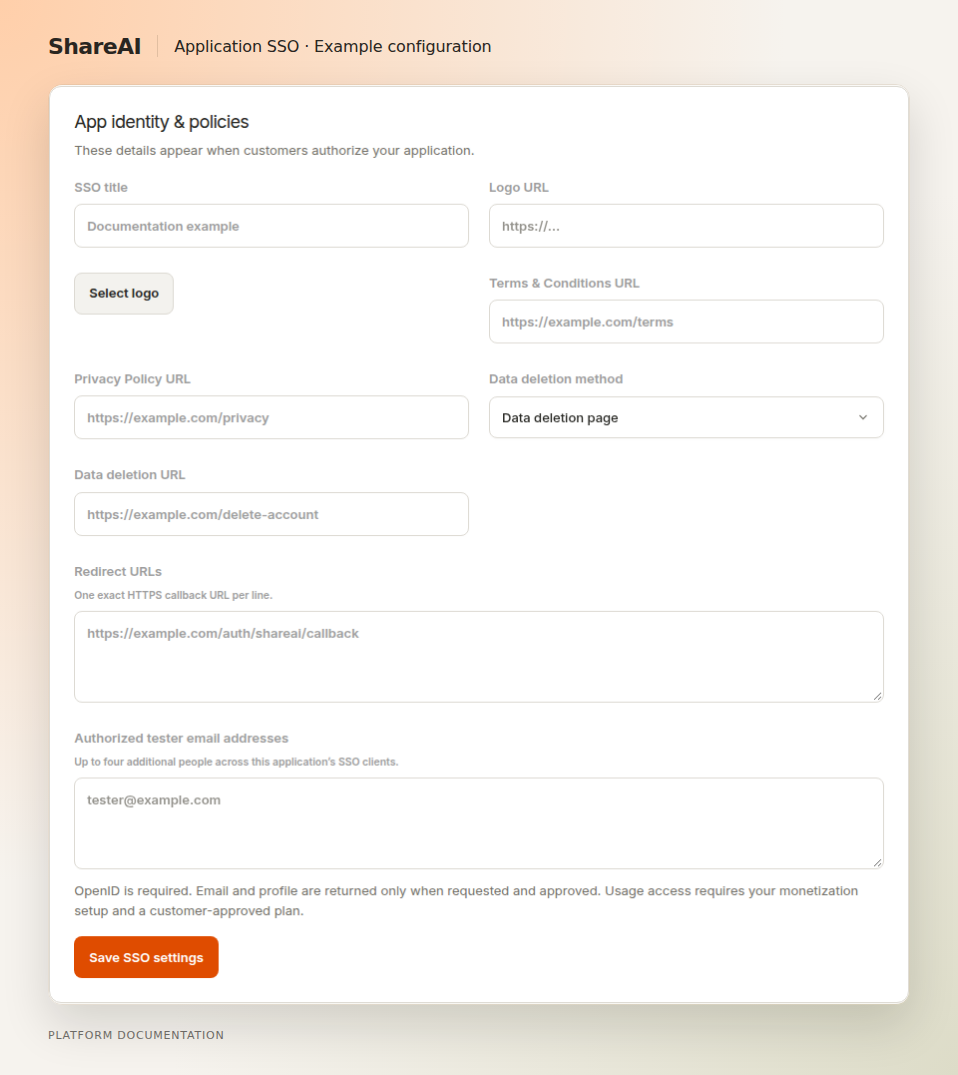
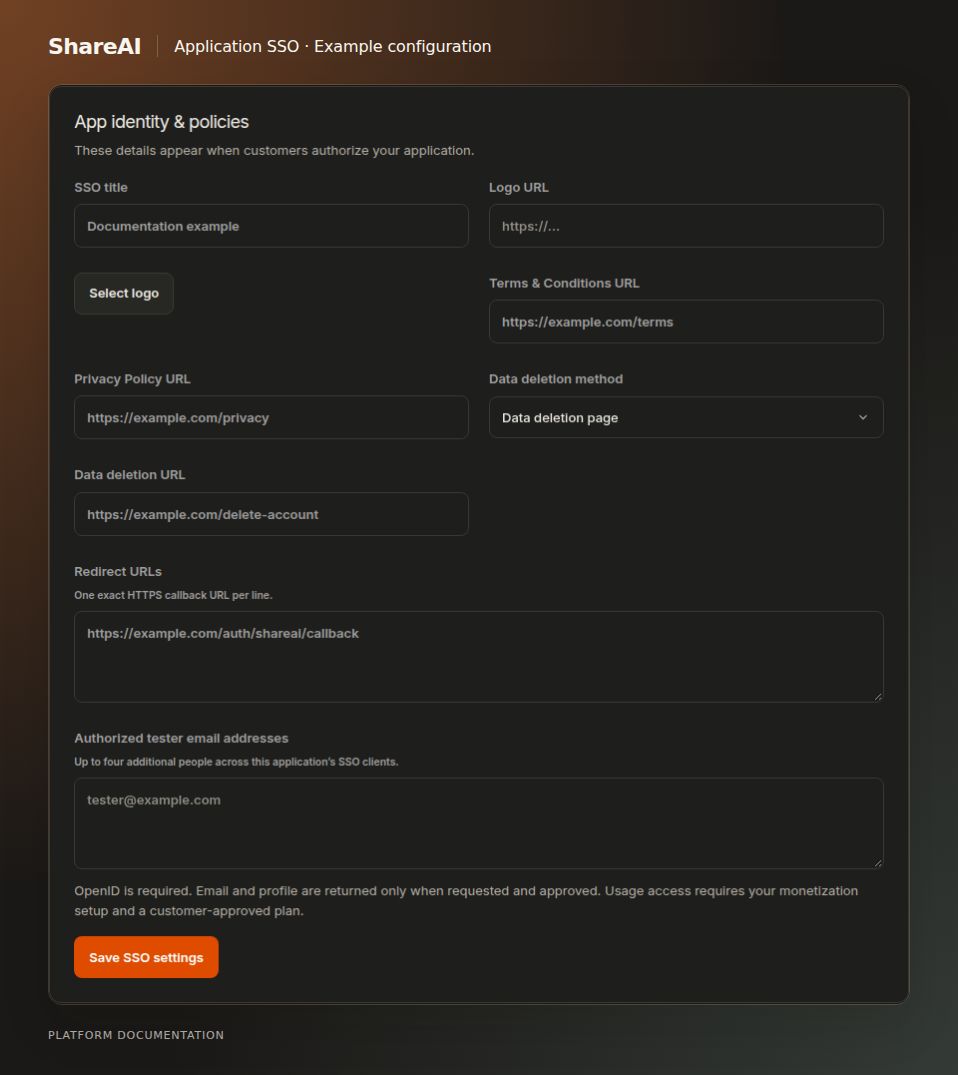
Store the client credentials#
Keep the client ID and secret on your backend. The current managed Builder flow uses a confidential client and S256 PKCE together. A browser-only app needs a backend that performs token exchange; shipping the secret in frontend JavaScript is not a supported substitute.
Use exact redirects#
The redirect_uri sent during authorization and token exchange must match the registered redirect. Use separate registered callback URLs or separate clients for development and production. Treat trailing slashes and path differences as meaningful.
Separate identity from inference permission#
Request openid for sign-in. Add profile or email only when needed. Configure usage-based monetization and a published usage plan before requesting surcharge for account-funded inference.
Test before publication#
Testing access is restricted by the application’s tester settings. Testing can still spend real credits when an authorized inference request runs. Check the users, limits and warning shown in Console before testing.
Next step#
Last updated September 15, 2026